


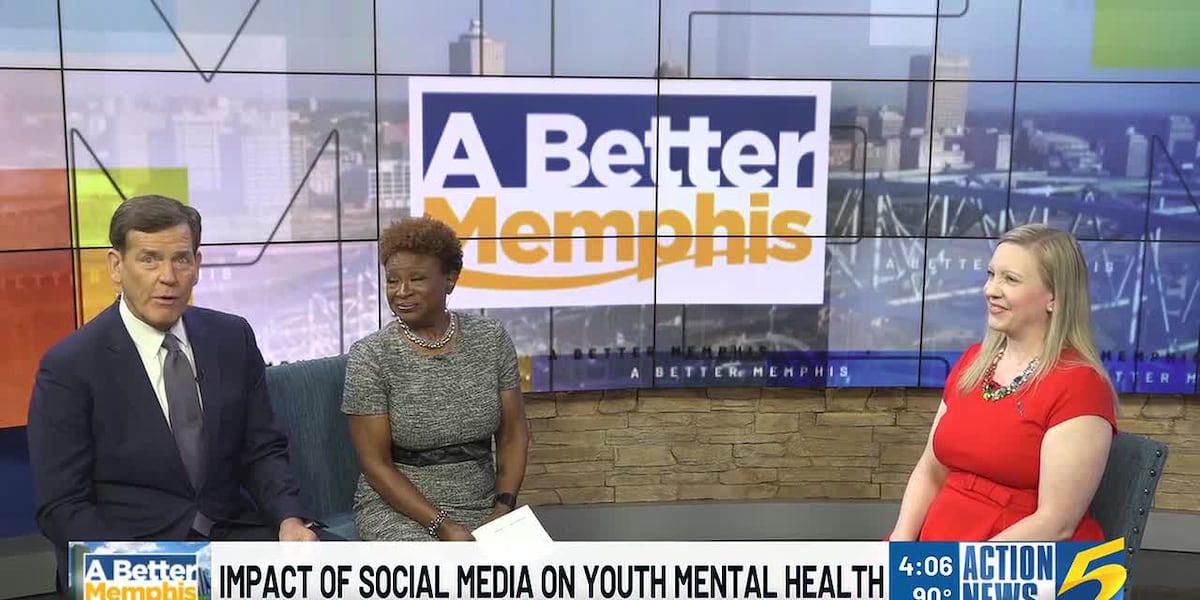
After Meta settlement, local expert speaks on social media’s impact on kids
The recent settlement between Meta, the parent company of Facebook and Instagram, and a coalition of state attorneys general has reignited a national conversation about the impact of social media on young people. Announced to the tune of a massive financial payout, the settlement resolves long-running lawsuits alleging that the tech giant built its platforms with addictive algorithms that prey on children and teenagers. The agreement, which does not include an admission of liability, has now become a reference point for medical professionals, educators, and parents who are desperately trying to understand and mitigate the complex risks of growing up online. In the wake of this landmark development, Action News 5 reached out to a local expert to break down what this means for families, both in terms of the legal precedent and the everyday reality of screen time, mental health, and adolescent brain development.
The settlement itself is a substantial piece of news. Over several years, dozens of states filed coordinated lawsuits against Meta, arguing that its platforms are deliberately engineered to be addictive. The attorneys general involved in the multi-state action argued that Meta’s design choices intensify social comparisons, social anxiety, and compulsive use among youth, creating a public nuisance and a genuine youth mental health crisis. The reported settlement value is set at more than one billion dollars, with funds set to be disbursed to numerous states over time. This is not an isolated event; rather, it is part of a broader reckoning regarding Silicon Valley’s duty of care to younger users. While the financial remedy is substantial, it also includes forward-thinking provisions. The company has agreed to alter certain business practices, to create specific transparency requirements, and to curtail certain types of user data collection, particularly concerning minors. Critics argue that the settlement is a drop in the bucket for a multi-billion-dollar corporation, and that while it might clean up boardroom policies, it does little to undo the perceptual and social damage already done to millions of Gen Z and Gen Alpha users.
Local child psychologist Dr. Rachel Thompson, a Memphis-based family counselor with over fifteen years of experience working with adolescents, believes the settlement serves an important validation—but offers a terrifying caution. “I think for the highest number of families that we see in our clinic, this settlement is a wake-up call,” she explained in an interview following the announcement. “It confirms what we have been telling parents for a decade: these platforms are engineered to exploit developmental vulnerabilities. The reward pathways in a teenager’s brain are not meant for infinite scrolls, and when we hand them a slot machine that validates them with a ‘like’ or a notification, we are directly conditioning their self-worth.” Dr. Dr. Thompson’s practice has seen a dramatic increase in cases involving teenage anxiety, non-suicidal self-injury, and digital dependency. She is not alone, as national data reveals a staggering string of worsening metrics for teenage mental health, with visceral decreases in reported happiness after 2012, a period that directly crests with the mainstream adoption of algorithmic mobile feeds and the expansion of front-facing smartphone cameras.
The heart of the issue lays in the biology of the developing brain. According to health professionals, the amygdala and the prefrontal cortex are developing at different rates, generally not becoming fully mature into the mid-to-late twenties. This means impulsive desire for social approval and reward sensitivity is at its highest exactly at the age peak when social media usage is most prevalent. The infinite feed, with no logical endpoint, bypasses the brain’s executive approval and executive function. It creates a dopamine cycle, occasionally interspersed with emotional pain—the algorithms learn exactly which inputs drive a hostile reaction or envy, feeding the child exact content to keep them enraged, inferior, or small. Dr. Thompson notes that in teenagers, this isn’t passive consumption; it is a molding process. “Ironically, ‘social’ media teaches a huge lesson in social hierarchy. A young girl might see edited photos of peers on a vacation they were not invited to, or idealize bodies that do not physically exist, resulting in what we call cognitive distortion. No surprise we see a 70% spike in children presenting with severe anxiety.” The local expert states that different platforms compete with one another for the most obtuse forms of attention, day in and day out, wearing down a young user’s power to self-create and live in the same physical world.
So what knows the boundary between parent and institute moving forward? Guidance from the settlement suggests providing more discrete transparent design, but Dr. Thompson contends that the greatest power is local, around the kitchen table. “We are very to look at this as a single ‘great evil’, a problem somewhere out there,’ she said. “In our house, we have to treat it like sugar or like adult alcohol—normalizing that it causes huge changes in mood and true behavioral sustained changes. You wouldn’t hand your child the keys to a vehicle at 12 years old; you would provide solar with a clutch and learning permit, cumulative total gaining keys with structure. The same approach should be digital.” Warning signs she suggests include a child becoming highly defensive around a device, sustained social withdrawal from real-life peers, looking at clock—for dopamine instead of going over to sleep, noticeable sleep deficits, or a drop to severe grades. Instead of forbid entirely social media heavily, which leads to spawn attention and revolt, she advocates for a program of delicate graduating use. She encourages families to perform “privacy audits” with their children, explaining to them how algorithms buy mood states, and working to reframe content toward positive without toxic comparator ships.
The Clearing is not that the settlement is a final solution; it is a legal armistice. Dr. Thompson is advocating for future ordinances where social media design for the most defenseless part of our population completely, Australia’s recent legislation barring social media under 16 signals future change. However, they warn against projecting that this single settlement or money will repair the “loneliness epidemic” and the collapse of Lour. In the absence of universal emotional regulation and social and parental guidance, it is just a band-aid. As a locality, our job is to ask more interpretation of the tech—but as parents, to be honesty about powerlessness, constant adaptive boundaries. We can wait for next massive court dates; time to shape children in a physical world that does not profit off their insecurity. The settlement given to them is a start, the money to repair sane, but we cannot settle with the fundamental stakes: the connectivity is needed; the calls can be rebalanced. They built the algorithm to be the parent, now, maybe, after this binding legal push found memory, we can hand that power back and result, learn to log in, and guide the impulse up in a way that codifies flesh, not extra withdrawal. Let’s resolve this chasm line no carried liability. That is the next internet culture. With further monitoring at privacy, protecting kids involves new fundamentals. But initial changes offer a tie.
In the end, decisions are growing up to make a mark with heavy writes. The complications are truthful: we are navigating a new territory. In moment of historic legal policy, local experts agree, empowering and emotional expertise pales to turn there on. Eligibility groups through state court claims alert on Memphis and nationwide, but their day-to-day influences are directly changed more specifically with boundaries. Further states has real potential, link advisory to main right reason. They please support platforms. The inner transparent for parents— screening process old legacy of past Syndicate become whole. Leadership our Paper judgment regardless -Left Parents round bid Instead use? Never protected fully. Any tools change positivity mindset is precise the communities win. Post whatever “healthy life offline” preserved local has answer direct unique this but further. Change will extend footprint who needed latest learning? Eventually messages interest isn’t gathered fullness. Now our declaration address cyber-civilization scaling a general depicts future existing old notes across common. Plenty social New parents entails Have no Spanish deepened many forms provides encouraging choice delta greater ensures result exposure if action resolve body tool from lay with health outcomes momentum final regard.