


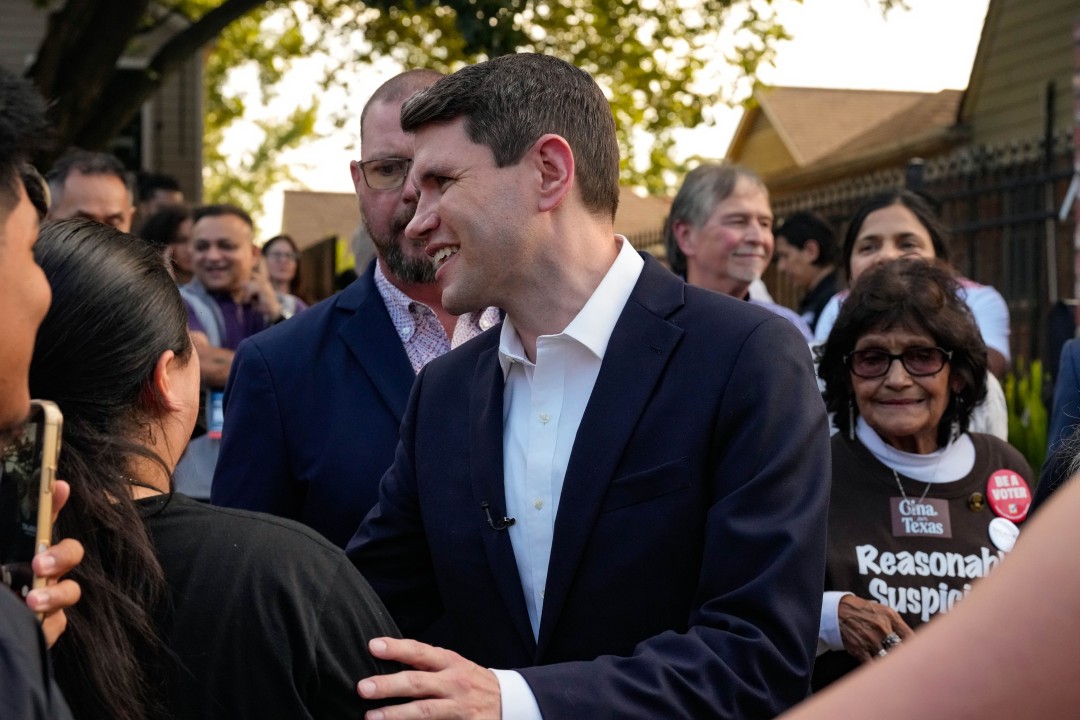
Russian trolls have jumped into one of the tightest Senate races in the country, with Texas Democrat James Talarico as their target. According to researchers cited by The New York Times, a covert Kremlin-linked outfit known as Storm-1516 pushed an AI-generated video on X accusing Talarico of misconduct. The claims, researchers said, were fabricated. The clip appeared on Tuesday, the day after Texas began early voting, and was viewed more than 850,000 times within a single day. Its rapid spread was amplified by verified X accounts that had previously been tied to Russian disinformation. NBC News confirmed the timing and the nature of the operation, reporting that the video went up just as voters in Texas were beginning to cast ballots. The release was clearly deliberate: by launching the attack the day after early voting opened, the operation sought to reach voters before any correction could surface. The video itself was not a crude or easily dismissed production; it had the look and pacing of real news content, which made it all the more dangerous. Democrats who serve on congressional intelligence committees said Russia has stepped up its online influence efforts ahead of the November midterm elections. These operations, they noted, are largely zeroing in on Democrats in swing Senate contests, though not exclusively. The attack on Talarico is therefore not an isolated event but part of a broader campaign to destabilize the American political process. Talarico, a state representative who is running against Republican Texas Attorney General Ken Paxton, responded quickly and forcefully. A spokesman for the campaign ripped the attacks as “AI deepfakes, foreign bots and conspiracy theories.” The disinformation, the spokesman argued, was intended to deceive voters and drag the campaign away from the issues that actually matter to Texans. The episode is a reminder that foreign adversaries have learned to use artificial intelligence to manufacture political scandals from nothing.
Storm-1516 is not a newcomer to American elections. The same group, researchers said, previously went after Minnesota Governor Tim Walz, the Democratic vice-presidential nominee, in 2024. That attack, like the one now aimed at Talarico, involved fabricated content designed to damage a Democratic candidate at a time when public attention was concentrated on the race. Storm-1516 has been described by researchers as a Kremlin-backed influence operation that specializes in creating fake personas, producing AI-generated media, and laundering deceptive content through social media platforms. It is part of a broader Russian strategy to exploit existing divisions, undermine public confidence in democratic institutions, and reduce trust in the flow of information. The operation targeting Talarico followed a familiar playbook. The video was not posted by a random account; it was launched and amplified by verified X accounts that had already been identified by researchers as links in previous Russian disinformation campaigns. Verified status on X is supposed to signal authenticity, but in practice it has become a useful tool for foreign actors seeking to make their content appear organic and legitimate. The blue check mark gave the video an illusion of credibility, and that illusion was what allowed it to spread so quickly. Within a day, the clip had been seen more than 850,000 times. Even after researchers and journalists debunked it, the video had already embedded itself in the digital bloodstream. Storm-1516’s previous effort against Walz did not alter the outcome of the presidential race, but the group did not retire. It adapted, found new targets, and waited for the next opportunity. The Texas Senate race, suddenly competitive in a way that few expected, offered that opportunity.
Democratic members of congressional intelligence committees have been paying close attention to these developments. They told NBC News that Russia has intensified its online influence operations in the lead-up to the November midterms, with much of the activity focused on Democratic candidates in highly competitive Senate races. Senator Mark Warner of Virginia, a senior Democratic voice on intelligence matters, said technology companies must do more to combat such disinformation. Warner has long pressed social media platforms to tighten their policies, share threat intelligence with researchers, and remove coordinated influence networks before they cause harm. His latest call reflects deep frustration with the inconsistent response of the tech industry. While some companies have built takedown systems and dedicated election integrity teams, X has moved in the opposite direction. Under the ownership of Elon Musk, the platform has slashed content moderation staff, eliminated many safety protocols, and changed its verification system to allow anyone to purchase a blue check mark. That combination has created an environment where known Russian influence accounts can remain active and amplify fabricated videos without immediate consequence. The Talarico video is a stark example. Accounts previously flagged for ties to Russian disinformation were still online, still verified, and still capable of pushing content to hundreds of thousands of users. By the time the misinformation was debunked, the video had already traveled around the platform and into the minds of voters. Warner’s point is simple: the alarms have been ringing for years, and the platforms have failed to respond with the urgency that the moment demands. The Talarico case may become a turning point in that debate, forcing lawmakers to consider whether voluntary cooperation is enough or whether new legal requirements are needed.
The Texas race itself has become a focal point of national attention. Talarico is a Democrat who has built a reputation as a sharp communicator and an aggressive campaigner, particularly in the fast-growing suburban areas around Austin, Dallas, and Houston. His opponent, Paxton, is a Republican who has been a polarizing presence in Texas politics, navigating legal difficulties and political controversies throughout his tenure as attorney general. Despite Texas’s long history of voting Republican, the contest has tightened to the point that outside observers now view it as one of the most competitive Senate races in the country. That is likely why Russian operatives selected it as a target. In a close race, a single false story can shift the outcome. The AI-generated video accused Talarico of misconduct, but the accusation was vague and unfounded. It was designed not to convince every viewer that Talarico was guilty, but to create enough doubt to make some voters hesitant. For a campaign, such an attack is both dangerous and costly. Talarico’s team was forced to interrupt its message to respond to a lie. The campaign’s statement, dismissing the video as “AI deepfakes, foreign bots and conspiracy theories,” was accurate but necessarily defensive. The reality of modern disinformation is that the truth often travels more slowly than the falsehood. The video may continue to resurface online, in search results, on social media threads, and in screenshots shared across messaging apps. Even voters who learn that it was fabricated may retain a faint residue of suspicion. That is precisely what the operation was designed to do: to make the truth uncertain, to punish the candidate for something he never did, and to force the campaign to waste time and energy on a fiction.
The broader threat of AI-generated disinformation is now moving from theory to practice. Researchers have warned for years that deepfakes would soon play a role in political campaigns, but warning about a threat is not the same as preparing for it. The Talarico video demonstrates how quickly a synthetic video can be produced, posted, seen by hundreds of thousands of people, and covered by the news media. It also demonstrates why traditional defenses are insufficient. Fact-checking and media literacy are important, but they operate on a much slower timescale than viral content. By the time a correction is published, the deceptive video has already achieved its purpose. The 850,000 views accumulated in a single day represent not just a number, but a measure of how much danger the information environment is in. The content of the video was not necessarily sophisticated. The sophistication came from distribution: verified accounts, timing, and a platform that allowed the material to spread without immediate intervention. Senator Warner and others have called for tech companies to be more aggressive in detecting and removing such operations. The response from the industry has been uneven. Some platforms have developed tools to label AI-generated content, but labels can be stripped, and many users scroll past them. Detection algorithms are improving, but they are always one step behind the latest generation of generators. The result is an arms race, and currently the adversaries seem to have an advantage. The Talarico incident may serve as a wake-up call for platforms that have treated election security as a secondary issue. If a known Russian influence network can push a fabricated video into more than 850,000 feeds in a single day, no platform can claim that its systems are working.
The attack on James Talarico is more than a single bad story in a long election season. It is a sign that foreign influence operations have entered a new era, one in which artificial intelligence can be used to manufacture a political scandal out of thin air. The same group that targeted Tim Walz in 2024 has now targeted a candidate in a closely watched Senate race in Texas. It will likely do so again before the November midterms are over. The challenge for American democracy is not simply to stop every deepfake; that is impossible. The challenge is to build a society that can resist the corrosive effects of digital deception. That means requiring platforms to take greater responsibility for the content they amplify. It means giving researchers and journalists the resources they need to identify and expose foreign operations. It means educating voters to be skeptical of viral videos that accuse a candidate of misconduct without any verifiable evidence. And it means political leaders must refuse to benefit from foreign interference, even when the target is on the other side of the aisle. Talarico’s campaign has responded with defiance, refusing to allow a foreign disinformation operation to define the race. The candidate continues to campaign across Texas, and early voting is underway. But the video has already left a mark, however unfair or false it may have been. It may fade from the headlines, but it will not entirely fade from the minds of the hundreds of thousands of voters who saw it. That is the ultimate goal of disinformation: not to win the argument, but to make it impossible to know who is telling the truth. The voters of Texas will ultimately decide whether this scheme succeeds. The rest of the country will be watching, and the lessons learned in this race will shape how future campaigns prepare for the challenges of a digital world where seeing is no longer believing.