


Russia’s Disinformation Machine: From Prigozhin’s Troll Factory to AI-Powered Propaganda
The shadow of Yevgeny Prigozhin, the architect of Russia’s online disinformation apparatus, looms large over the landscape of modern information warfare. His chilling words, promising "pinpoint operations" to surgically remove dissent, encapsulate the Kremlin’s aggressive approach to manipulating public opinion. Prigozhin’s Internet Research Agency (IRA), or "troll factory," has been a key instrument in this strategy since its inception in 2013, flooding social media with conspiracy theories, anti-Western sentiments, and divisive narratives designed to undermine democratic institutions and sow discord. This article delves into the evolution of the IRA, its tactics, and the ongoing challenges posed by state-sponsored disinformation in the digital age.
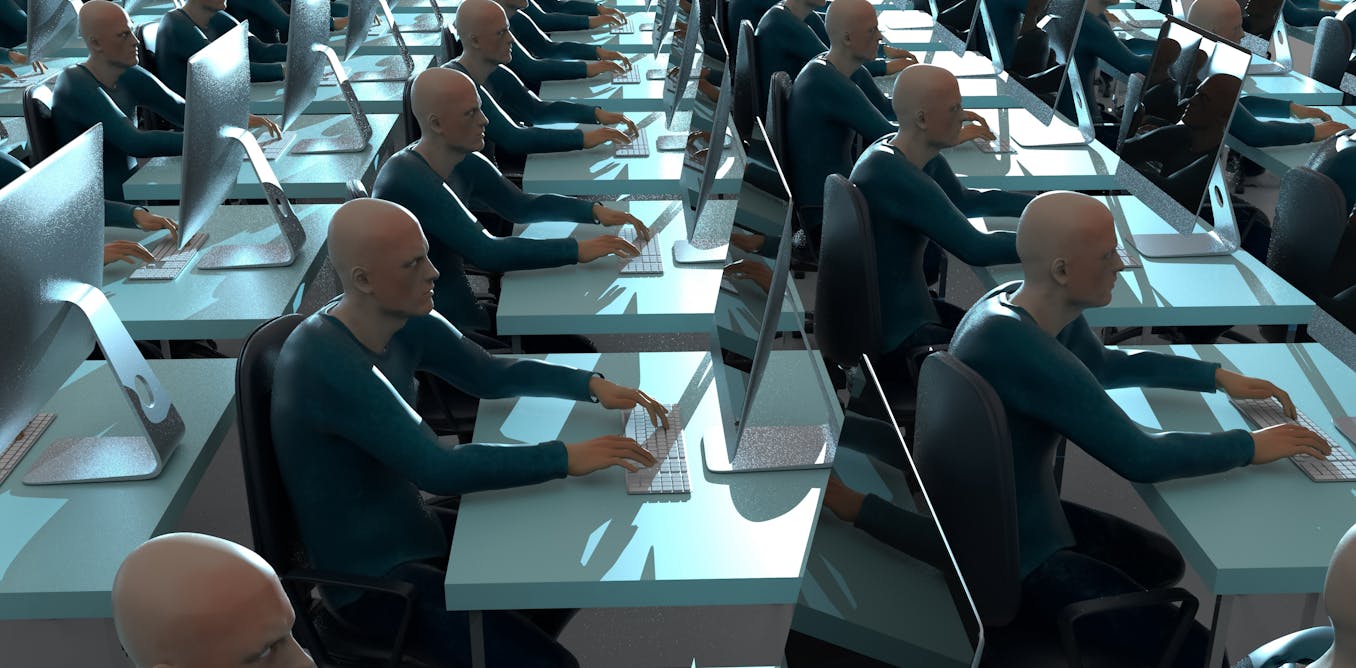
From its modest beginnings targeting Russian opposition figures, the IRA rapidly expanded its operations to focus on international audiences, particularly the United States. The agency played a significant role in attempts to interfere in the 2016 US presidential election, a fact later confirmed by Prigozhin himself. Operating through a network of front companies, the IRA employed hundreds of "trolls," primarily young individuals recruited through job advertisements. These individuals worked in shifts, using VPNs and other technologies to mask their identities and locations, creating fake social media profiles and disseminating misleading content. Their activities were meticulously organized, well-funded, and subject to strict internal monitoring and ideological indoctrination.
Whistleblowers, often at great personal risk, have provided crucial insights into the inner workings of the IRA. Ludmila Savchuk and Marat Mindiyarov, former employees, painted a picture of an Orwellian environment where employees were closely monitored and pressured to adhere to the Kremlin’s agenda. Savchuk described the agency as a "factory for producing lies," while Mindiyarov likened it to a prison, highlighting the strict control and surveillance. Their revelations exposed the IRA’s multi-faceted operations, encompassing social media posts, comments on news articles, the creation of fake news stories, and the production of YouTube videos.
The IRA’s tactics have evolved over time, adapting to the changing social media landscape and leveraging established propaganda techniques. Three core strategies stand out: tailored messaging, repeated exposure, and false grassroots campaigns. Tailored messaging involves crafting narratives to resonate with specific target audiences, exploiting existing anxieties and beliefs. Repeated exposure aims to normalize disinformation through constant repetition, while false grassroots campaigns, or "astroturfing," create an illusion of widespread organic support for the Kremlin’s agenda. These tactics, with roots in 20th-century propaganda theory, have been effectively retooled for the digital age.
The IRA’s interference in the 2016 US presidential election exemplifies its manipulative tactics. Exploiting widespread voter dissatisfaction and pre-existing societal divisions, the trolls amplified divisive rhetoric on both sides of the political spectrum, exacerbating tensions around issues such as immigration, gun rights, and race. While ostensibly supporting both candidates, the agency showed a clear bias towards Donald Trump, particularly in the aftermath of the election. The trolls also engaged in astroturfing, organizing and promoting real-world events to create a false impression of grassroots support for their agenda.
During the COVID-19 pandemic, the IRA exploited the prevailing fear and uncertainty to spread disinformation and conspiracy theories. The trolls promoted falsehoods about the virus’s origins, undermined public health efforts, and amplified existing conspiracy narratives, such as the "Great Reset" and the claim that COVID-19 was a US bioweapon. This campaign aimed to sow distrust in Western institutions and promote the Kremlin’s narrative of authoritarian regimes’ supposed superiority in crisis management.
The IRA’s activities during the annexation of Crimea in 2014 demonstrate its early use of linguistic manipulation. The trolls employed euphemisms and dysphemisms to frame the annexation as a "reunification" and a "restoration of historical justice," while portraying Ukraine as a "neo-Nazi regime." This narrative aimed to delegitimize Ukraine’s sovereignty and justify Russia’s actions. The consistent repetition of these themes, despite skepticism from ordinary users, highlights the effectiveness of repeated exposure as a propaganda tactic.
The IRA’s operations, while seemingly autonomous, are ultimately part of a broader Russian disinformation ecosystem. While the Kremlin sets the overarching agenda, the execution involves a complex interplay of state and non-state actors, including intelligence agencies and private contractors. This fragmented structure contributes to a climate of "information disorder," making it challenging to attribute specific actions and hold perpetrators accountable. The lack of transparency and accountability within Russia’s authoritarian system further complicates efforts to combat its disinformation campaigns.
The use of social media for disinformation is not unique to Russia. Numerous countries, including some in the West, engage in similar practices. However, Russia’s campaigns distinguish themselves by their persistence, centralized coordination, and extensive international reach. The US military’s anti-vaccine campaign targeting China’s Sinovac vaccine stands as a notable example of similar tactics employed by a Western power, raising concerns about digital transparency and trust in democracies.
The death of Yevgeny Prigozhin in August 2023 did not mark the end of the IRA’s activities. The troll factory continues to operate, albeit in a more fragmented form, with increased speculation about the involvement of Russian intelligence and the Kremlin. Ilya Gambashidze, a Moscow-based political strategist, has been identified as a potential successor to Prigozhin, leading the Social Design Agency (SDA), a firm sanctioned by the US for its role in online disinformation campaigns.
The rise of artificial intelligence (AI) poses new challenges in the fight against disinformation. State-sponsored actors are increasingly leveraging AI tools to generate realistic fake content and target specific audiences with greater precision. Recent reports have uncovered covert Russian operations using OpenAI’s tools to create social media content in multiple languages. While these operations have faced limitations, the evolving sophistication of AI technologies presents a growing threat to efforts aimed at combating disinformation. The use of AI-generated deepfakes and increasingly sophisticated manipulation techniques are likely to make discerning real from fake even more difficult.
Combating this evolving threat requires multi-faceted approach involving increased transparency from social media platforms, ongoing vigilance from users and the media, and robust action from governments and international organizations. Promoting media literacy and critical thinking skills is crucial to empower individuals to identify and resist disinformation. International cooperation and information sharing are essential to counter the transnational nature of these campaigns. The battle against state-sponsored disinformation is a continuous struggle, requiring constant adaptation and innovation to stay ahead of increasingly sophisticated tactics. The stakes are high, as disinformation campaigns threaten to erode trust in democratic institutions, undermine social cohesion, and destabilize international relations.