


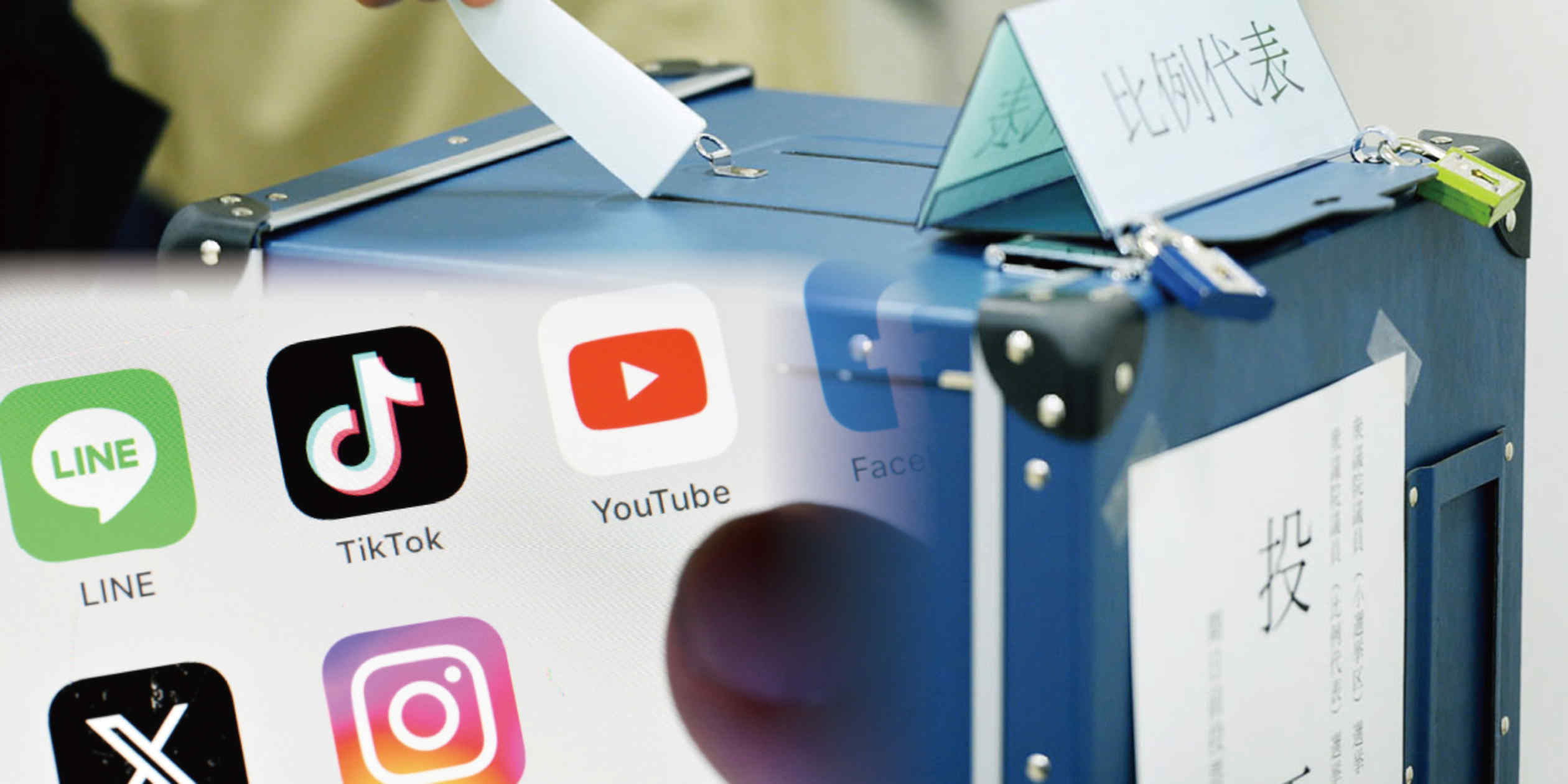
TOKYO — Japan’s government on Friday released a draft set of guidelines aimed squarely at the world’s largest digital platforms, calling on Google, X (formerly Twitter), and other social media operators to take concrete measures to curb the spread of false and misleading information during elections. The proposal, which marks one of the most explicit steps Tokyo has taken in the online information domain, includes a potentially transformative request: temporarily suspending monetization systems that allow users to earn revenue based on the number of times their posts are viewed. The draft guidelines reflect a growing recognition that social media has become both a vital forum for democratic debate and an increasingly dangerous vehicle for disinformation, amplified by algorithms optimized for engagement rather than accuracy. Japanese officials have grown alarmed in recent years by the rising volume of fake news surrounding elections, from doctored images of candidates to fabricated statements attributed to political leaders, and by the possibility that both domestic actors and foreign adversaries might exploit these platforms to distort the will of voters. The move signals that Tokyo is no longer willing to treat online falsehoods as a peripheral nuisance, but rather as a direct threat to the integrity of its electoral processes. By targeting revenue-sharing models, the government is aiming at the commercial heart of the misinformation economy, where viral falsehoods can generate substantial advertising income for the accounts that spread them.
The draft guidelines, while not yet legally binding, sketch a broad set of expectations for platform operators during election periods. Central among these is the call to disable or at least suspend programs that reward users financially for high view counts on posts that contain false or misleading information. In practice, this would affect systems like X’s creator ad-revenue sharing, which pays verified users a portion of advertising income based on impressions generated by their posts, and similar monetization features on YouTube and other video platforms. The government’s concern is straightforward: if a post containing false information goes viral, the creator can earn money from the very engagement that amplifies the harm. By cutting off this revenue stream temporarily, the guidelines would remove a powerful financial incentive to produce sensational and misleading content. Beyond monetization, the draft outlines additional responsibilities, including clearer labeling of political advertisements, stricter scrutiny of accounts that repeatedly disseminate falsehoods, faster response to complaints from candidates and voters, and greater transparency around algorithmic amplification. The platforms are also expected to cooperate more closely with Japan’s election management authorities, sharing data and responding to official requests to correct or remove posts that could disrupt a fair electoral process. Taken together, these measures would amount to a substantial overhaul of how social media companies operate during Japanese elections, although the extent to which they comply will depend on the platforms’ own policies and legal interpretations.
The Japanese government’s move comes amid a global wave of concern about the impact of social media on elections, and it reflects a particular sensitivity in Tokyo to the vulnerabilities of its own political system. Japan has experienced a number of high-profile incidents of online disinformation in recent years, including fake news about natural disasters, false statements about COVID-19, and, more recently, fabricated audio and video content using artificial intelligence to impersonate politicians. While Japanese election law imposes strict regulations on traditional campaign activities, such as door-to-door canvassing, posters, and broadcast advertising, the online sphere has remained far less regulated, creating an opening for malicious actors. The government has also watched with concern the playbooks used in elections in the United States, Britain, France, and other democracies, where coordinated social media campaigns have sought to suppress turnout, manipulate voters’ perceptions of candidates, and sow distrust in the electoral process itself. Japanese officials have repeatedly called for voluntary self-regulation by platforms, but Friday’s draft guidelines go further by proposing specific operational changes, including the demonetization measure, which is likely to be resisted by some companies because it touches on core business models. Still, by framing the request as an election-integrity measure, the government is attempting to create a powerful moral and public pressure campaign that could make it difficult for platforms to reject the guidelines outright without appearing indifferent to democratic values.
The response from the platforms themselves is likely to be cautious. Google, as the owner of YouTube, one of the largest information platforms in Japan, has a long track record of enforcing ad policies that restrict monetization of harmful content, but it has also faced criticism for inconsistent enforcement during elections around the world. X, under the leadership of Elon Musk, has dramatically reduced the size of its trust and safety teams since its takeover, reinstated previously banned accounts, and courted controversy over its handling of election misinformation in several countries. Other platforms, including Meta’s Facebook and Instagram, Line, and TikTok (if not explicitly named, they fall under “others”), have their own policies and moderation mechanisms, but all share a common challenge: balancing their responsibility to prevent harm against the principle of free expression. Some platform executives may argue that “false and misleading information” is too vague a standard to serve as the basis for monetization decisions, and that suspending payouts could inadvertently penalize legitimate political speech. Others may worry that the guidelines could be used by future governments to pressure platforms to suppress politically inconvenient views, rather than truly harmful falsehoods. The draft document attempts to address these concerns by emphasizing that measures should be temporary, targeted, and limited to election periods, but the devil will be in the details. The government is expected to open the guidelines for public comment, giving platforms and civil society groups an opportunity to shape the final text before it is formally issued.
Japan’s initiative also needs to be understood in the broader international legal and political context. In the European Union, the Digital Services Act imposes legally enforceable obligations on very large online platforms to assess and mitigate risks related to electoral manipulation, including requirements to label political ads, provide data to researchers, and take action against disinformation. The United Kingdom’s Online Safety Act places duties on platforms to remove illegal content and protect users from harmful material, while Singapore has enacted the Protection from Online Falsehoods and Manipulation Act, which allows the government to order corrections or removals of false posts. Japan’s draft guidelines are notably softer than any of these, carrying no explicit fines or penalties, but they share an intellectual kinship with the concept of demonetization as a tool that sits between censorship and persuasion. Rather than ordering platforms to delete speech, the Japanese approach seeks to make harmful falsehoods financially unattractive, thereby reducing their spread without completely suppressing their existence. This technique has been advocated by researchers and policymakers who argue that money is the fuel for much of the modern disinformation ecosystem, and that removing monetization can be more effective, and more defensible, than far-reaching content removal. At the same time, the guidelines acknowledge that monetization is not the only factor driving the spread of misinformation; many actors who spread falsehoods are motivated by ideology, political allegiance, or state sponsorship rather than by financial gain. Therefore, the draft also calls for platform cooperation in countering coordinated inauthentic behavior, such as bot networks and troll farms, which are often financed and organized outside the normal advertiser-funded creator economy.
Looking ahead, the release of the draft guidelines is only the opening move in what is likely to be a lengthy negotiation between Tokyo, global technology companies, and domestic political actors. With no nationwide election imminent in Japan at the moment, the government has time to refine the rules and test the willingness of platforms to comply. The next major electoral test could come in the form of upper house or local elections, and officials want the framework in place well before then. The public comment period will provide a window into how far Japanese voters and civil society believe the government should go in restricting online speech, and it may also reveal how much influence the platforms are willing to wield behind the scenes to weaken or reshape the guidelines. Some lawmakers have already argued that voluntary guidelines are not enough, and that Japan should follow the EU and the UK by enacting a binding law that imposes heavy fines on platforms that fail to address disinformation. Others have warned against overregulation, echoing concerns that governments can misuse election-integrity powers to stifle dissent. The outcome of this debate will shape the future of digital politics in Japan, not just for the next election, but for the long term. What is clear from Friday’s announcement is that Japan has decisively entered the global conversation about how to make social media safe for democracy, and it is doing so with a distinctive proposal that targets the financial engines of viral falsehood. Whether that proposal succeeds will depend on the cooperation of Google, X, and others, but also on the willingness of the Japanese public to accept that protecting electoral integrity may require temporary constraints on the laissez-faire economics of online speech. The world, in turn, will be watching to see whether a country with one of the most developed digital societies in the world can find a workable balance between open expression and the urgent need to preserve trust in elections.