


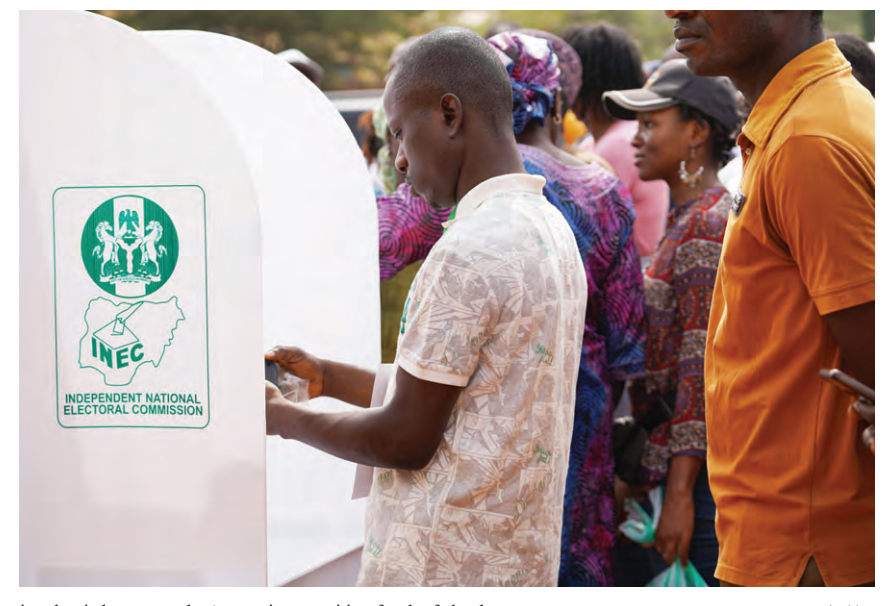
Experts Urge Responsible AI Adoption to Safeguard Nigeria’s 2027 Elections as Abuja Hackathon Seeks Tech-Driven Solutions
A coalition of technology experts, legal practitioners, and electoral administrators has called for the responsible deployment of artificial intelligence to address misinformation, enhance public access to electoral information, and strengthen cybersecurity ahead of Nigeria’s 2027 general election. The experts made this appeal in Abuja during the official launch of the “AI for Elections Programme and Hackathon,” an initiative organised by Rise Networks in collaboration with the Independent National Electoral Commission (INEC) and the MacArthur Foundation. The programme is designed to develop technology-based solutions to some of the most persistent challenges facing Nigeria’s electoral process. It brought together software developers, journalists, election experts, data analysts, and other professionals to brainstorm and build innovations in five critical areas: trustworthy electoral information, electoral data analysis, inclusive civic technology, cybersecurity, and election observation. The launch underscored a growing recognition that artificial intelligence, while presenting considerable risks to democratic processes, also offers powerful tools for protecting the integrity of elections if properly harnessed and governed.
Speaking at the event, Meta’s Head of Public Policy for Anglophone West Africa, Sade Dada, warned that artificial intelligence has made the modern information environment significantly more challenging. She pointed to the proliferation of synthetic voices, cloned videos, and other AI-generated content as major threats to the spread of reliable information during electoral periods. Dada, however, stressed that the same technology could be used to support efforts to identify manipulated content and provide citizens with trustworthy information in languages they understand. “Elections are decided by voters. Voters make decisions based on what they believe, and what they believe depends on what they can trust,” she said. She highlighted several practical approaches that could support information integrity, including the labelling of AI-generated content, transparency in political advertising disclosures, and the development of multilingual verification tools. Her remarks reflect a growing global concern about the impact of deepfakes and AI-driven disinformation on democratic processes, particularly in countries with large youth populations and high social media usage like Nigeria. The call for proactive measures comes as many electoral management bodies around the world struggle to keep pace with the rapid evolution of digital manipulation techniques.
In his presentation, the Director of Information and Communication Technology at INEC, Dr. Bayode Lawrence, said artificial intelligence could significantly improve electoral administration if deployed in a manner that does not compromise the integrity, transparency, and credibility of elections. Lawrence disclosed that the commission was already exploring AI applications in several key areas, including voter information services, electoral data management, operational efficiency, and the detection of misinformation and disinformation. He further revealed that INEC was deploying intelligent document processing technology within its election result management system. This innovation is intended to digitise result sheets and check electronically entered figures against scanned copies before results are uploaded. According to him, any discrepancies must be resolved before the system permits the upload of results, a measure designed to reduce human error and ensure that the results displayed on INEC’s portal accurately reflect what was recorded at polling units across the country. This kind of technological safeguard is seen as essential in a nation where disputes over election results often lead to lengthy legal battles and, at times, violent conflict.
Presenting the programme, the convener, Toyosi Akerele-Ogunsiji, said the hackathon would also address the needs of underserved communities through multilingual civic technology and solutions that improve access to electoral information. She explained that participants would work with sample datasets provided for the exercise, and that all proposed solutions would be expected to comply with cybersecurity standards without interfering with existing electoral infrastructure. Akerele-Ogunsiji said the initiative would extend far beyond the hackathon itself, with plans to establish an AI Innovations Development Hub and a Community of Practice aimed at sustaining collaboration among Nigerians working on electoral issues. These structures are meant to ensure that the solutions developed are not abandoned after the event but are refined, tested, and scaled where possible. In addition, lawyer Tsema Ede, who spoke on the legal, ethical, and regulatory considerations of AI in elections, said the technology offered opportunities for automated monitoring of electoral malpractice, voter education, and cybersecurity. However, she also cautioned that AI carries risks that require appropriate safeguards. Ede noted that artificial intelligence has both beneficial and potentially harmful applications, making legal and ethical considerations indispensable in the development of election-related solutions.
The organisers announced that the hackathon opened nationwide on Thursday and would close on November 12, 2026. Nigerians aged 18 and above living in the country are eligible to participate in the competition. Entries will undergo a robust selection process, after which finalists will proceed to mentoring, prototyping, and screening stages. The programme enjoys support from a broad range of technology and civil society partners, including Meta, Microsoft, the International Centre for Investigative Reporting (ICIR), Real Broadcasting Network, nithub, CLEEN Foundation, Top Initiative, and Google. The involvement of these organisations underscores the multi-sectoral approach necessary to address the complex intersection of technology and electoral integrity. The launch event itself served as a platform for dialogue among stakeholders who might not ordinarily collaborate, including tech developers and electoral officials. The hope is that by bringing these groups together early, Nigeria can build an electoral ecosystem that is resilient to AI-enabled threats while also leveraging AI to expand civic participation, particularly among young people, women, persons with disabilities, and those in rural or underserved communities.
The significance of this initiative cannot be overstated in the context of Nigeria’s democratic trajectory. The 2023 general election saw extensive use of digital platforms for voter education and citizen reporting, but it also witnessed the spread of fake news, hate speech, and manipulated content. With the 2027 election cycle already beginning to take shape, there is an urgent need to establish trust in the information ecosystem and in the systems that transmit and verify election results. The AI for Elections Programme represents a proactive attempt to address these challenges before they escalate. By focusing on responsible AI use, the initiative acknowledges that the same tools that can generate realistic fake videos and voices can also be used to detect them, that algorithms capable of spreading division can be redirected to deliver accurate information, and that data-driven systems can either obscure or illuminate electoral truth depending on how they are designed and governed. The emphasis on legal and ethical guardrails is particularly important, as it signals a commitment to ensuring that the deployment of AI in elections does not infringe on citizens’ rights or undermine democratic principles. If successful, the programme could serve as a model not only for Nigeria but for other African nations and democracies around the world grappling with the challenges and opportunities of artificial intelligence. Ultimately, the message from experts is clear: the future of Nigerian elections will be shaped not by technology alone, but by the wisdom and responsibility with which that technology is applied.