


Paragraph 1
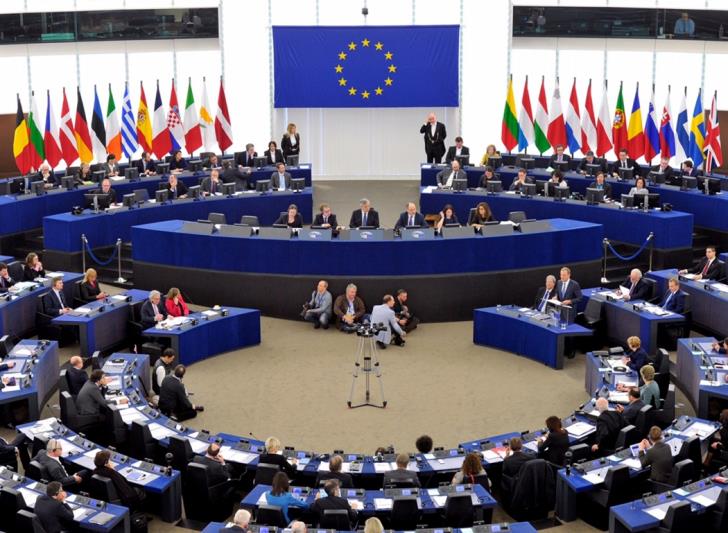
The European Parliament is set to cast a decisive vote on Thursday on a sweeping report that calls for stronger safeguards for children and young people in the online environment, elevating the issue to the top of the bloc’s political agenda. The report, titled “Impact of social media and the online environment on young people,” was prepared by the Parliament’s Committee on Culture and Education, with Socialist & Democrats MEP Sandro Ruotolo serving as rapporteur. Speaking to journalists in Strasbourg on Wednesday, Ruotolo delivered a stark warning about the digital ecosystem, saying: “Algorithms are controlling what we watch, and this is getting increasingly dangerous, especially for all those underaged.” He insisted that the response cannot be left to individual countries, adding: “This must be a joint European initiative. It is an issue that transcends borders and it is an issue that is affecting all European states.” The text is an own-initiative report, not a piece of legislation. This means that MEPs are not directly adopting a new law on social media platforms. Instead, the Parliament is setting out its political position and formally asking the European Commission and EU member states to strengthen and better enforce the existing rules that govern the digital environment. The vote is being watched closely by campaigners, child-safety groups, digital-rights advocates, and the technology industry alike, because it signals the direction of travel for European regulation in one of the most sensitive and fast-moving policy areas of the decade. The report lands at a moment when governments across Europe and beyond are wrestling with how to respond to growing public concern about the effects of social media on young people’s mental health, self-image, attention spans, and safety. By adopting a comprehensive, cross-cutting position, the European Parliament aims to turn concern into concrete policy pressure, forcing the executive branch and national capitals to move beyond voluntary commitments and vague promises. For Ruotolo and the political groups backing him, the report is a direct response to the reality that young Europeans now grow up in a digital world shaped by commercial algorithms, and that the rights and protections designed for the offline world have not been fully transferred online. The vote therefore represents not an end, but a beginning: if adopted, the report will become a reference point for future EU legislation, regulatory enforcement actions, and public debates about the responsibilities of digital platforms toward minors.
Paragraph 2
The urgency of the report stems from the sheer scale of young people’s online presence across the European Union. According to Eurostat, by 2024, 97 percent of young people in the EU used the internet daily, while more than 80 percent used social media every day. In practical terms, this means that nearly all European adolescents and young adults are spending substantial parts of their lives inside digital environments operated by a small number of powerful global companies. The report argues that the conversation about children online has evolved significantly in recent years. It is no longer enough to focus solely on whether children might stumble across harmful or inappropriate content such as violence, pornography, or hate speech. Policymakers are increasingly concerned about the very design of digital platforms and how that design shapes young people’s behaviour, emotions, and mental health. Features such as recommendation algorithms, endless scrolling, notifications, and “likes” are not neutral technical functions; they are engineered to maximise engagement and keep users online for as long as possible. For children and adolescents, whose brains are still developing and whose self-control and critical judgment are not fully mature, these mechanisms can encourage prolonged and potentially unhealthy use. The report cites a growing body of research linking excessive screen time and problematic social media use to mental-health and wellbeing concerns, including anxiety, depression, loneliness, poor sleep, and reduced physical activity. At the same time, MEPs are careful not to paint a one-sided picture. The report explicitly recognises that social media can bring genuine benefits for young people, including opportunities for creativity, communication, education, civic participation, and access to information. Many young people use digital platforms to express themselves, connect with like-minded peers, learn new skills, and engage in social and political causes. The challenge, as the report frames it, is not to ban young people from social media but to ensure that the digital environments they inhabit are designed in a way that protects their rights, supports their development, and minimises the risks to their physical and psychological safety. This dual approach—acknowledging both the opportunities and the dangers—is central to the report’s credibility and is intended to avoid the moral panic and outright prohibitionist language that has sometimes dominated public debate in other countries.
Paragraph 3
The report examines a wide range of issues, including cyberbullying, harmful content, disinformation, body-image pressures, self-harm material, manipulative advertising, and addictive platform design. These are not treated as separate problems but as interconnected dimensions of a single structural issue: the business model of many social media platforms relies on capturing attention, profiling users, and optimising engagement, often at the expense of user wellbeing. The report therefore argues that protecting young people online should not rest solely on parents and individual users. While parental supervision remains important, the report contends that it is unreasonable to expect families to counter the combined force of advanced algorithms and persuasive design techniques developed by some of the most sophisticated technology companies in the world. Instead, the report calls for platforms to make their services safer by design, through measures including privacy-by-design and safety-by-default. This means that the safest possible settings should be the default option for all users, especially minors, and that platforms should not be allowed to rely on users or parents opting out of risky features. The report also calls on platforms to address the specific features that can contribute to addictive behaviour and exposure to harmful content, such as infinite scrolling, autoplay, and algorithm-driven recommendation systems that push users toward increasingly extreme or sensational material. The report was not produced in isolation. It involved several European Parliament committees, reflecting the fact that the issue cuts across consumer protection, privacy, children’s rights, education, gender equality, and artificial intelligence. The Committee on Culture and Education approved the report on 14 July by 17 votes to three, with four abstentions. That vote showed broad cross-party support, although it also revealed some political divergence, particularly around questions of how far regulation should go, how to balance protection with freedom of expression, and whether additional legal measures should be proposed at EU level. Nevertheless, the approval in committee gave the report strong momentum heading into the full plenary vote, where it is expected to pass with a comfortable majority, even if some amendments and reservations remain among certain political groups.
Paragraph 4
One of the most important aspects of the report is its legal and political strategy. Because it is an own-initiative report, it does not itself introduce new laws or directly oblige platforms to change their behaviour. Its power lies in its status as a formal expression of the European Parliament’s position, and in the pressure it places on the European Commission and EU governments to act. The report explicitly calls for stronger enforcement of existing rules, most notably the Digital Services Act and the General Data Protection Regulation. The DSA, which has been fully applicable since early 2024, already imposes obligations on platforms regarding transparency, risk assessment, and the protection of minors. The GDPR includes provisions on children’s data and requires that information and communications addressed to a child be in clear and plain language. However, the report argues that these laws have not been sufficiently implemented or enforced, and that gaps remain in the protection of young people. By publishing this report, the Parliament is signalling to the Commission that it expects the executive to use the full range of its powers under the DSA and GDPR to investigate platforms, impose fines, and require changes to design features that harm children. The report also invites the Commission to consider whether new legislative proposals are necessary, possibly including specific rules on age verification, age-appropriate design, and algorithmic accountability for platforms targeting minors. The timing is significant. Ruotolo, speaking at the press briefing on Wednesday, said he expects Commission President Ursula von der Leyen to mention the issue in her State of the Union address, which is scheduled for the morning after the Parliament’s vote. If that happens, it would be a clear sign that the Parliament’s initiative has caught the attention of the highest level of the EU executive and that the issue is becoming a central priority for the current Commission. A mention in the State of the Union would also give the report political weight beyond the walls of the Parliament, placing it alongside other major EU initiatives and signalling to member states that they should treat child online safety as a matter of urgency.
Paragraph 5
The political dynamics behind the report are complex. The Socialists & Democrats, who supplied the rapporteur, have made child online safety one of their flagship digital-policy issues, alongside workers’ rights and the fight against disinformation. The centre-right European People’s Party, the largest group in the Parliament, has also expressed support for stronger protections for minors, although it has tended to emphasise parental control and media literacy alongside platform regulation. The liberal Renew Europe group has generally backed the report’s approach while warning against overregulation and excessive restrictions on legitimate online expression. The Greens and the Left have been more supportive of stringent measures, including limits on addictive design features and greater transparency around algorithms. Meanwhile, some MEPs have raised concerns about the potential unintended consequences of regulation, particularly where age verification is concerned. Age verification tools can be intrusive, may undermine privacy, and could potentially exclude young people from accessing beneficial content or services. The report attempts to address these concerns by calling for age-appropriate design and for measures that respect children’s right to privacy and development. Another sensitive issue is the balance between protecting children and preserving freedom of expression. Some civil liberties advocates worry that sweeping restrictions on recommendation algorithms or content moderation could lead to censorship or reduce the diversity of information available to young people. The report tries to navigate this tension by focusing on the design of platforms and the default settings, rather than on banning specific content, and by emphasising that measures should be proportionate and targeted. The technology industry, for its part, has pushed back against the narrative that social media is inherently harmful, pointing to the benefits it provides and arguing that existing rules and voluntary measures already offer significant protections. Industry representatives have also warned that overly prescriptive regulation could harm smaller European platforms and innovators, making it harder for them to compete with larger US-based companies. The report, however, reflects the growing conviction among many policymakers that voluntary self-regulation has not worked and that binding obligations are needed to ensure consistent protection across the single market.
Paragraph 6
Looking ahead, the vote on Thursday is expected to be the starting point for a broader European push on child online safety. If the report is adopted as expected, the Parliament will send a clear and unified message to the Commission, member states, and digital platforms that the status quo is unacceptable. The immediate next steps will involve follow-up in the Parliament’s committees, which will monitor the Commission’s response and press for concrete action. The Commission may announce new initiatives, possibly including guidance on age-appropriate design, further designations of very large online platforms for enhanced DSA obligations, or a proposal for a European standard on child safety by design. The report may also influence national legislation, as EU countries respond to growing public concern and political pressure from domestic parliaments and civil society. Several member states have already introduced or debated measures to restrict social media use for minors, and the European Parliament’s report could encourage convergence around a common set of principles. At the same time, the report is likely to intensify the debate about the broader societal impact of digital technology, including questions about algorithmic transparency, digital literacy, and the accountability of technology companies. The issue of children and social media has moved from the margins to the mainstream of EU policy, and it is unlikely to disappear from the agenda in the coming years. For Ruotolo and the co-authors, the report is not only about protecting young people from harm; it is also about asserting the EU’s role as a global leader in digital rights and about ensuring that the digital transformation works for everyone, especially the most vulnerable. The vote on Thursday will be a test of whether the Parliament can transform concern into coherent political action, but in many ways the harder work begins after the vote, in the corridors of the Commission, the national capitals, and the offices of the technology companies whose platforms dominate young people’s lives. The report may not be a law, but it is a powerful political marker—and one that is likely to shape the future of digital regulation in Europe for years to come.