


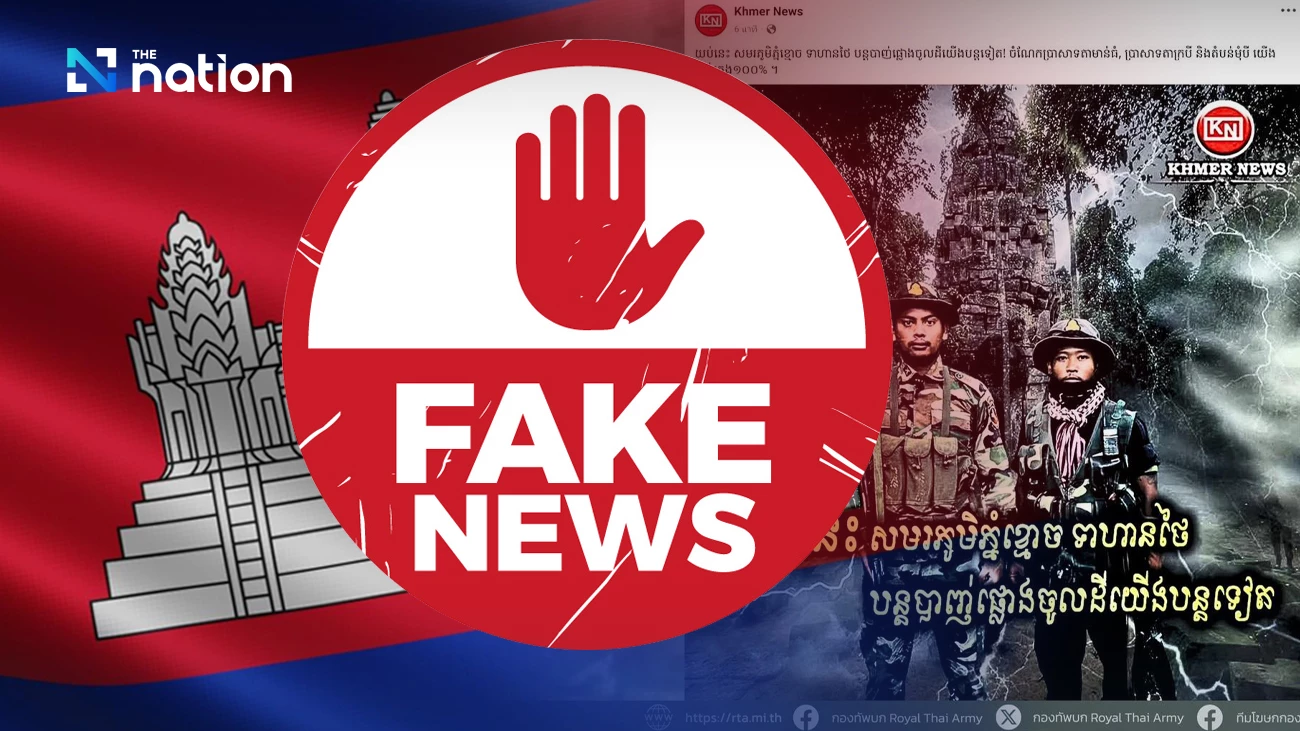
Information Operations Take Center Stage in Thailand-Cambodia Border Dispute
The ongoing territorial clashes between Thailand and Cambodia have escalated beyond physical confrontations, spilling into the digital realm where information operations (IO) are being waged with increasing intensity. Fake news, manipulated narratives, and carefully crafted disinformation campaigns have become powerful weapons in this conflict, aimed at shaping public perception, bolstering troop morale, and garnering crucial international support. Both sides are actively engaged in these information warfare tactics, leveraging the pervasive reach of social media platforms to disseminate their versions of events and influence global audiences.
The digital landscape has provided a fertile ground for the proliferation of propaganda and misinformation. Unlike traditional media, which often operates under stricter regulatory frameworks and journalistic ethics, social media platforms offer a largely unregulated space where information, regardless of its veracity, can spread rapidly and widely. Twitter, Facebook, TikTok, and Telegram, among other platforms, have become battlegrounds in this information war. Their ease of access, coupled with the ability to share content instantly with vast networks, amplifies the impact of even the most fabricated stories. The algorithms that drive these platforms can further exacerbate the problem, creating echo chambers where users are primarily exposed to information that confirms their pre-existing biases, making them more susceptible to disinformation.
The very nature of these platforms poses significant challenges for governments seeking to control the flow of information. The decentralized and global nature of the internet makes it difficult to effectively police online content, allowing false narratives to spread unchecked across borders. Furthermore, the speed at which information travels online far outpaces the capacity of traditional fact-checking mechanisms. By the time a fabricated story is debunked, it may have already reached millions, irrevocably influencing perceptions and shaping public opinion. This rapid spread of misinformation poses a significant threat to the stability of the region and can exacerbate existing tensions, potentially leading to further escalation of the conflict.
The use of IO in the Thailand-Cambodia border dispute underscores the evolving nature of modern warfare. While traditional military strategies remain important, the battlefield has expanded to encompass the digital sphere, where narratives and perceptions are as crucial as physical territory. Both sides understand the power of shaping the narrative and are actively employing sophisticated tactics to manipulate information and influence public opinion. This includes the use of deepfakes, manipulated images and videos, and the creation of fake social media accounts designed to amplify propaganda. The goal is to control the narrative, discredit the opposition, and ultimately gain the upper hand, not only on the battlefield but also in the court of public opinion.
For individuals seeking to understand the complexities of the conflict, navigating this information battlefield requires a critical and discerning approach. Blindly accepting information presented by either side, regardless of the source, is fraught with risk. Fact-checking, cross-referencing information with reputable news organizations, and critically evaluating the source’s potential biases are essential steps in separating fact from fiction. It is crucial to look beyond the headlines and delve deeper into the evidence presented, considering the context and potential motivations behind the information being disseminated. Developing media literacy skills is paramount in the digital age, especially during times of conflict where misinformation can be weaponized to devastating effect.
The escalating use of IO in the Thailand-Cambodia border clashes serves as a stark reminder of the challenges posed by disinformation in the 21st century. The ease with which false narratives can be created and disseminated, coupled with the difficulty in effectively controlling the flow of information online, creates a volatile environment where truth can become obscured. As these information operations become increasingly sophisticated and pervasive, the need for critical thinking, media literacy, and robust fact-checking mechanisms becomes more crucial than ever. Understanding the tactics and motivations behind these information campaigns is vital in navigating the increasingly complex landscape of modern conflict and ensuring that informed decisions are based on factual evidence rather than manipulated narratives. The Thailand-Cambodia border dispute offers a valuable, albeit concerning, case study on the evolving role of information warfare in the 21st century and the crucial need for vigilance in the face of disinformation.