


WindEurope joins European Literacy Coalition to combat falling literacy and disinformation
WindEurope, the Brussels-based trade association representing the European wind energy sector, has joined the European Literacy Coalition, a cross-sector alliance formally launched in Brussels on 22 September. The coalition brings together organisations from across the continent to strengthen literacy in all its forms. For the wind industry, the decision is rooted in three interlocking concerns: skills, competitiveness, and Europe’s resilience to disinformation and misinformation. In a statement accompanying the launch, WindEurope said the initiative would help build the informed, critically literate workforce the continent needs as it undergoes a rapid energy transition. The coalition is part of the European Commission’s Union of Skills and the Action Plan on Basic Skills, which aim to address gaps in foundational competencies among European citizens. WindEurope has also endorsed the Warsaw Memorandum, the founding document of the coalition, which frames literacy as a dynamic, evolving capability rather than a static achievement. The memorandum will guide the coalition’s work in the coming years. By joining, WindEurope becomes part of a broad network that includes educators, civil society groups, public authorities and industries. The coalition was set up following a recognition within EU institutions and member states that literacy levels across Europe have been declining for years, with serious consequences for democracy and economic resilience. Organisations joining the coalition commit themselves to promoting critical thinking, media literacy, digital literacy and information literacy, as well as traditional reading and writing. For an industry that relies on both highly specialised experts and broad public acceptance, this agenda is essential. The launch event on 22 September brought together representatives from European institutions, national governments, educational bodies and business sectors. The Commission has said that basic skills are the foundation on which the Union of Skills must be built. WindEurope’s decision to join reflects the view that the energy transition will not succeed if it is not understood, scrutinised and supported by citizens. The coalition is intended to be a long-term mechanism for cooperation, not a one-off campaign.
Declining literacy levels across Europe are by now well documented. The latest results from the Programme for International Student Assessment, or PISA, show that average reading scores across OECD countries fell by 28 points between 2015 and 2025. PISA, which is operated by the OECD, measures the ability of 15-year-olds to apply their knowledge and skills to real-world problems. The 28-point decline is not merely a statistical shift; it represents a widespread erosion of foundational competencies that societies rely on for communication, learning and decision-making. Perhaps more troubling, the sharpest decline was in the skills that matter most in today’s information environment: evaluating information, connecting different sources and thinking critically about what we read. These skills make up what educators call critical literacy. They enable people to judge whether a claim is supported by evidence, to spot errors in reasoning and to weigh competing narratives. The PISA findings suggest that young Europeans are leaving school better able to decode text but less able to question it. This is a particular concern in an era of social media, algorithmic recommendation systems and instantly disseminated content. A decrease of this magnitude in one decade is considered a warning sign among education researchers and policymakers. It indicates that conventional reading instruction is no longer sufficient for the demands of contemporary citizenship and employment. Governments across Europe have begun to adapt their curricula, but the scale of the challenge requires broader engagement from employers, civil society and public institutions. That is why the European Literacy Coalition is organised as a multisector initiative. The decline in critical literacy has direct implications for public discourse. If citizens cannot compare information from different sources or recognise persuasive manipulation, their ability to make informed decisions on matters such as health, finance and energy is compromised. The PISA data also show that the decline is not limited to any one country or income group, suggesting a structural problem in modern education and media environments. The pattern has led to calls for a broader definition of literacy, one that encompasses digital, media and artificial intelligence competencies. The European Commission’s Action Plan on Basic Skills is part of that response, and the European Literacy Coalition is its practical expression. For industries that depend on a well-qualified and adaptable workforce, the implications are urgent.
WindEurope’s membership in the literacy coalition is, in part, a competitiveness strategy. Europe’s wind sector currently employs 480,000 people. The industry estimates that it will need 600,000 workers by 2030 if European climate and energy security targets are to be met. That means recruiting, training and retaining a significant number of additional engineers, technicians, data analysts, project managers and support staff in just a few years. Yet literacy and critical thinking are not only qualifications for white-collar roles. All employees in modern wind farms need to interpret safety instructions, understand maintenance data, communicate with colleagues and operate increasingly digitalised equipment. Basic literacy is the platform on which every further skill is built. Without it, workforce development programmes become slower, more expensive and less effective. The European wind industry faces a well-documented shortage of skilled workers. Meeting the 600,000 employment target will require not just more vocational and university graduates but also a larger pool of people with the cognitive flexibility to adapt to changing technology. In an industry where new storage systems, artificial intelligence tools and grid integration technologies are emerging rapidly, the ability to learn continuously is as important as existing knowledge. That is why WindEurope has focused on literacy as part of its engagement with education and training. The sector needs employees who can understand complex energy systems, work with data, solve problems under uncertainty and communicate those solutions to the public. But literacy is arguably even more important for the next generation of workers. Students who are not equipped with critical thinking and media literacy will be less prepared to enter energy careers or any other sector. By bringing real-world energy challenges into classrooms, WindEurope hopes to make learning more relevant and attractive. Practical STEM education — science, technology, engineering and mathematics — can be used to teach not only technical concepts but also how to evaluate evidence, test assumptions and reach reasoned conclusions. In this way, the wind industry is seeking to contribute to the European education system and address the emerging skills gap at its root. The coalition’s focus on basic skills aligns with the industry’s long-term planning.
The wind industry’s interest in literacy, however, is not limited to the labour market. In recent years, Europe’s information landscape has become saturated with false and misleading content, and energy is one of the main targets. WindEurope recently published a report on wind energy dis- and misinformation which found that millions of Europeans have been exposed to misleading claims about wind turbines and wind farms. The report drew on monitoring of a coordinated network of anti-wind content. That network generated at least tens of millions of views online. False narratives about the impact of wind turbines on health, landscape, wildlife and electricity prices have spread rapidly through social media, websites and political campaigns. WindEurope says that these misleading claims have had concrete consequences. Projects have been delayed or stopped; investment and jobs have been put at risk; and the continent’s transition away from imported fossil fuels has become harder. The effect is not merely reputational. When a wind farm is blocked due to misinformation, the environmental and economic costs are borne by the entire community. Europe’s energy security is weakened, and the public’s understanding of the trade-offs involved in energy policy becomes poorer. Misinformation also affects the democratic process. It exploits distrust and channels it toward particular technologies, often for short-term gain. For an industry that is central to European climate strategy, fighting misperceptions is not an optional public relations task; it is essential to operational viability. But WindEurope recognises that simply issuing correct information is not enough. People need the skills to sort fact from fiction themselves. That means helping citizens understand how stories spread online, why algorithms reward outrage, and how data can be presented in ways that mislead. It means giving learners practical tools to assess claims, identify sources, check statistics and distinguish evidence from assertion. The literacy coalition provides a framework to develop those skills at scale. It also offers an opportunity for the wind industry to be transparent about its own processes and to engage with communities where projects are planned. By supporting critical thinking, WindEurope hopes to create a public environment in which energy policy can be debated honestly and constructively. The aim is not to make people agree with the wind industry, but to equip them to evaluate claims based on evidence. This is a challenge that no single sector can accomplish alone; it requires the kind of cross-sector collaboration the coalition is designed to foster.
At the broadest level, WindEurope says literacy is a democratic issue. In a functioning democracy, people need to be able to assess sources, interpret evidence and distinguish facts from misleading claims. Without those skills, they cannot make informed choices at the ballot box or participate fully in public debate. The proliferation of disinformation undermines trust in institutions, science and the media, and it makes it easier for external actors to sow division. The wind industry has seen how this dynamic works in practice through false campaigns against renewable energy projects. Those campaigns often use a mixture of selective facts, emotional appeals and fabricated stories. They are successful when the audience lacks the critical tools to challenge them. That is why WindEurope has endorsed the Warsaw Memorandum, the founding document of the European Literacy Coalition. The Memorandum sets out a modern understanding of literacy. It goes far beyond the ability to read and write. It includes critical thinking, media literacy, information literacy, digital literacy and AI literacy. These are the competencies that enable people to navigate an environment in which algorithms select what they see, and where artificial intelligence can generate highly convincing text, images and video. The Memorandum also calls for long-term cooperation between education, civil society, public authorities and industry. None of those groups can solve the literacy crisis by itself. Schools need resources and support; public authorities need to set standards; civil society can provide expertise and reach; and industry can contribute real-world examples and practical problems. The European Literacy Coalition was established under the European Commission’s Union of Skills initiative and the Action Plan on Basic Skills. The Commission has made clear that basic skills are not a marginal concern but the foundation of economic competitiveness, social fairness and democratic resilience. The Warsaw Memorandum was formally endorsed at the coalition’s launch event in Brussels on 22 September. By signing it, WindEurope has committed itself to the coalition’s goals. It has also accepted a role in the broader effort to promote literacy in all aspects of European life. For the wind industry, this means engaging not only with employees and future employees, but with citizens, communities and public institutions. The democratic case for literacy is sometimes treated as abstract, but it is profoundly practical. A population that cannot critically evaluate information is more vulnerable to manipulation and less able to hold leaders accountable. As Europe confronts complex transitions in energy, technology and society, the quality of public reasoning will determine whether those transitions are accepted or derailed. Literacy, in this sense, is a form of collective infrastructure, akin to transmission grids and electricity interconnectors. It must be maintained, updated and expanded if it is to serve future generations. WindEurope’s endorsement of the Warsaw Memorandum is a recognition of that shared responsibility.
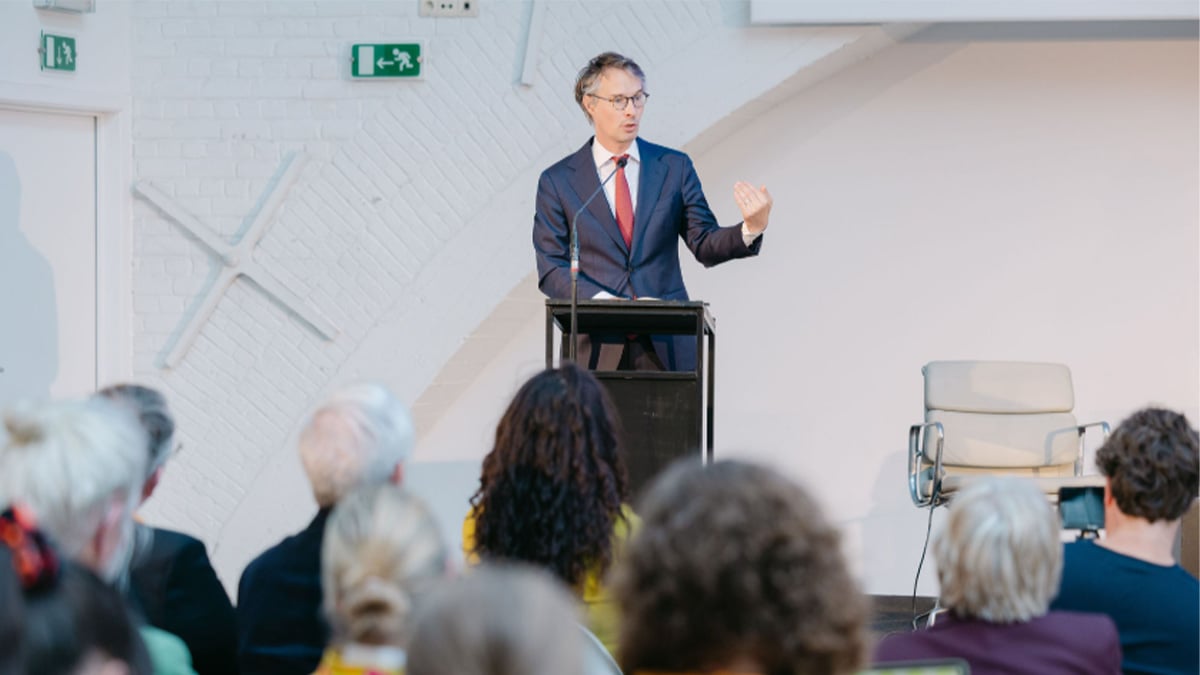
WindEurope has said it will now turn the commitment into action, focusing on three areas. First, it aims to bring real-world energy challenges into schools. WindEurope will support practical STEM learning, so that students understand how Europe’s energy system works and are encouraged to develop their own solutions. This may involve providing classroom materials, connecting schools with wind energy professionals, and creating projects that ask students to analyse data, weigh trade-offs and propose ideas. The second area of focus is building resilience to energy dis- and misinformation. WindEurope will help explain how misleading energy narratives spread. It will give learners practical examples to assess claims, interpret data and distinguish evidence from misinformation. This is not about promoting wind energy in a marketing sense; it is about helping citizens develop the critical skills to examine all claims, including those made by the industry itself. The third priority is building wider partnerships. WindEurope says it will work with schools, libraries, municipalities, regions, communities and other industries. The literacy challenge cannot be solved in classrooms alone; it requires cooperation across sectors and countries. Libraries and local communities are essential because they serve people of all ages and backgrounds. Municipalities and regions matter because they are often the arenas for local debates about wind farms. Other industries are important because the same literacy deficits that affect the energy sector also affect health, finance, technology and public administration. By working through the European Literacy Coalition, WindEurope hopes to amplify its efforts and avoid duplication. The specific projects are still to be developed, but the direction is clear. WindEurope’s Chief Policy Officer, Pierre Tardieu, underlined the stakes in a statement at the launch event: “Europe will only remain a great place to live if we preserve what binds us together: literacy. It allows us to understand one another and work together on the complex challenges of our time. It enables people to participate in democratic debate. And it makes our societies more resilient to dis- and misinformation. The wind industry is ready to play its part.” The quote echoes the coalition’s belief that literacy is a foundational capability, not a narrow academic outcome. For WindEurope, joining the coalition represents a bet that investing in literacy will pay off in many ways: a stronger workforce, a healthier public debate, more resilient democracies and an energy transition that proceeds on the basis of evidence rather than manipulation. The next challenge will be to move from endorsements and declarations to concrete programmes. WindEurope’s stated priority areas offer a practical roadmap. Whether they succeed will depend on the willingness of educators, policymakers and the private sector to treat literacy as a shared mission. With the European Literacy Coalition now formally established, the wind industry has placed itself at the centre of that mission.