


Rutgers to Lead New Jersey Social Media Research Center, Tackling Youth Mental Health Crisis in Digital Age
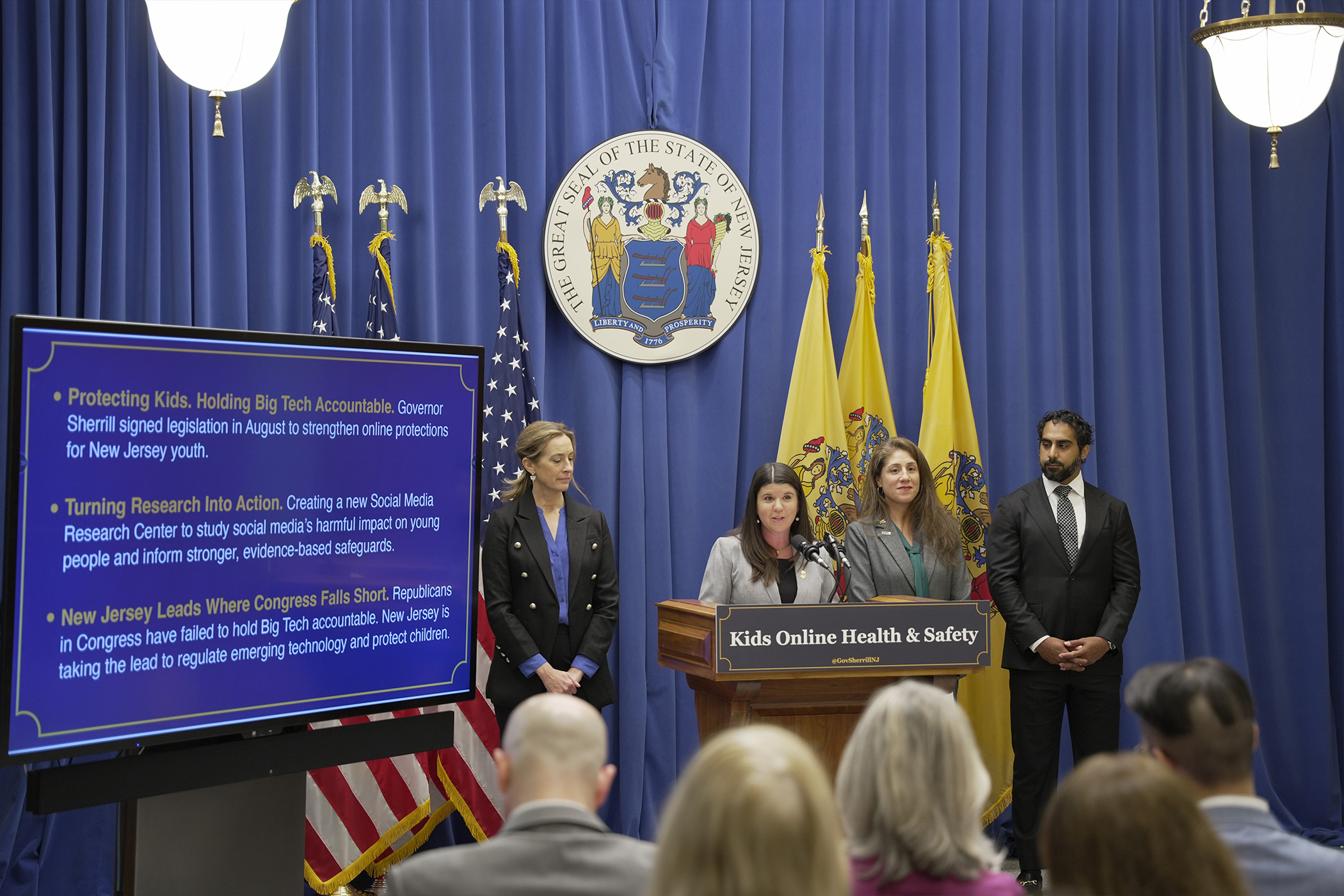
Rutgers University has been selected to establish the New Jersey Social Media Research Center, a new state-funded initiative dedicated to studying how social media affects the mental and physical health of young people, identifying effective strategies to reduce harmful use, and developing educational tools for families and schools. The center, announced as a central pillar of Governor Mikie Sherrill’s broader push to strengthen online protections for children, will be housed at Rutgers and supported by a $500,000 state grant. The New Jersey Office of the Secretary of Higher Education, in coordination with the New Jersey Department of Health, selected Rutgers to lead the effort, bringing together researchers from across the university system to collaborate with young people, state agencies, schools, and community organizations. The center’s work will examine the complex relationship between social media use and adolescent well-being, including impacts on sleep, mood, self-image, and mental health. By focusing on real-world experiences rather than screen time alone, researchers aim to answer urgent questions about how online environments influence vulnerable youth and which interventions can make a meaningful difference. The establishment of this center marks a major step in addressing what public health officials increasingly describe as a generational crisis in youth mental health, exacerbated by the pervasive influence of social media platforms.
“Social media is a major part of young people’s lives, but we still have important questions about how their online experiences affect their mental health and well-being,” said Jessica L. Hamilton, director of the center and an associate professor of psychology in the School of Arts and Sciences at Rutgers-New Brunswick. Hamilton stressed that researchers need to look beyond simplistic measures of screen time to understand the nuances of online engagement. “We need to look beyond screen time to understand what young people are experiencing online, why some are more vulnerable to harmful effects than others and which strategies can help reduce those risks,” she said. Her remarks underscore a growing consensus among researchers that social media’s effects are not uniform; rather, they depend on the content consumed, the context of use, and the individual vulnerabilities of each young person. The center will therefore prioritize qualitative and quantitative research that captures the diversity of adolescent digital experiences, including factors such as cyberbullying, social comparison, sleep disruption, and exposure to harmful content. This deeper understanding is expected to inform the design of interventions that are both practical and effective, moving beyond generic advice about limiting screen time and toward tailored strategies that address the specific risks facing different groups of young people. By centering the voices of young people themselves, the center hopes to ensure that its findings are grounded in the realities of their daily lives and that its solutions are acceptable and relevant to the populations they are meant to serve.
The creation of the center follows a wave of legislative action in New Jersey aimed at curbing the negative effects of social media on children and adolescents. In August, Governor Sherrill signed three bills designed to strengthen online protections for young people, including legislation that not only established the research center but also called for studies into whether warning labels and other disclaimers could reduce addictive social media behaviors. These measures reflect a growing movement at the state and federal levels to hold tech companies accountable for the design choices that keep young users engaged for long periods of time, often to the detriment of their mental health. Sherrill, who campaigned on a promise to confront the influence of Big Tech, framed the new center as a direct response to that mandate. “I promised in my campaign to take on Big Tech because it poses one of the greatest generational threats to our kids’ mental health and well-being. Today, we’re delivering on a major pillar of that promise in a new Social Media Research Center,” Sherrill said. “Research has linked social media to depression and anxiety, fatigue and trouble sleeping, poor body image and disordered eating. This new center will be an invaluable tool to help us better understand how technology is affecting our children, and more importantly, turn research into real solutions to protect our kids, support our families, and address the ongoing youth mental health crisis.” Her statement highlights the urgency behind the initiative and positions New Jersey as a potential model for other states seeking to translate research into actionable policy.
The center’s research agenda is organized around three primary pillars: assessment, intervention, and prevention. In the assessment phase, researchers will work to develop a comprehensive understanding of how social media affects young people’s mental and physical health, identifying which aspects of online engagement are most strongly associated with negative outcomes and how these effects vary across different demographic groups. This includes studying the relationships between social media use and outcomes such as depression, anxiety, fatigue, sleep disturbances, poor body image, and disordered eating, as well as investigating the mechanisms that underlie these associations. The intervention phase will focus on developing and evaluating strategies to reduce harmful and addictive use, with particular attention to vulnerable young people who may be at greater risk for adverse effects. This could involve testing digital literacy programs, clinical interventions, or platform-level design changes that mitigate some of the most harmful features of social media. The prevention phase will emphasize promoting healthy and responsible online habits before problems develop, equipping young people, families, schools, and communities with the knowledge and tools they need to navigate the digital world safely. Together, these three pillars form a comprehensive approach that recognizes social media’s risks without ignoring its benefits, and that seeks to empower young people to engage with technology in ways that support rather than undermine their well-being.
In addition to conducting original research, the Rutgers center will translate its findings into practical resources for the public. Researchers will develop online courses and training modules on safe social media use, which will be made available free of charge to New Jersey schools. These materials are designed to help educators integrate digital well-being into their classrooms, giving students the critical thinking skills they need to recognize manipulative algorithms, resist social comparison, and manage their online time in healthy ways. The center also plans to offer educational resources to families and community organizations through a central website, providing accessible information on topics such as setting boundaries around social media, recognizing warning signs of problematic use, and initiating conversations with children about their online experiences. In addition, workshops will be offered for parents, educators, and health professionals, creating opportunities for the broader community to engage directly with the latest research and to provide feedback that can shape future research questions. This emphasis on outreach and dissemination is intended to bridge the gap between academic research and everyday practice, ensuring that discoveries made in the lab are quickly translated into strategies that can be implemented in homes, schools, and clinical settings. By making its resources free and widely available, the center aims to reduce inequities in access to information and support, particularly for families who may not otherwise have the means to seek out expert guidance.
Looking ahead, the New Jersey Social Media Research Center is poised to become a hub for evidence-based policymaking and community engagement in the state and beyond. The involvement of Rutgers faculty from multiple disciplines, combined with the collaboration of state agencies such as the Office of the Secretary of Higher Education and the Department of Health, positions the center to influence both policy and practice at a moment when public concern about social media’s effects on young people has never been higher. The center’s work will also contribute to the broader national conversation about online safety, offering robust, locally grounded evidence that can inform legislative efforts in other states and at the federal level. As social media platforms continue to evolve, introducing new features and algorithms that shape young people’s experiences in as-yet-unknown ways, the need for ongoing research and adaptive strategies will only grow. By building a sustainable infrastructure for research, education, and collaboration, Rutgers and its partners are making a long-term commitment to protecting the health and well-being of New Jersey’s youth. Ultimately, the center aims not merely to document the harms of social media, but to chart a path forward that allows young people to reap the benefits of digital connection while guarding against the risks. With this new initiative, New Jersey is taking a bold and forward-thinking stance, treating youth mental health not just as a medical issue but as a societal priority that demands coordinated action across government, academia, and the community. The creation of the Social Media Research Center is a clear signal that the state is ready to confront the challenges of the digital age with science, compassion, and a commitment to the well-being of its youngest residents.