


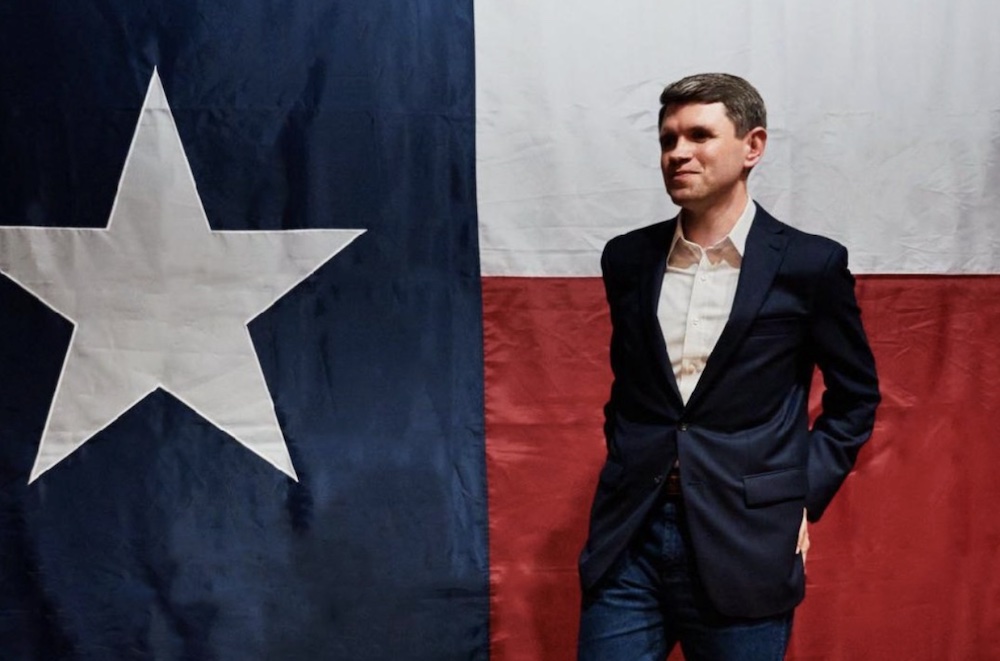
Russian hackers are once again attempting to interfere in U.S. elections, and this time the state of Texas has become a principal battleground, according to a report published by the New York Times. Intelligence officials, speaking with the Times on condition of anonymity because they were not authorized to discuss sensitive operations, said a notorious Russian influence operation is seeking to meddle in Texas’s U.S. Senate race by spreading deepfake videos that allege misconduct by Democrat James Talarico. The videos, which began circulating on social media, are false and unfounded, according to researchers who track Russian disinformation campaigns. The content has been traced to Storm-1516, a covert group that in 2024 peddled similar baseless allegations against Minnesota Governor Tim Walz, who was then the Democratic vice-presidential nominee. The report paints a troubling picture of how foreign adversaries have adapted to the increasingly polarized American media landscape, using artificial intelligence to manufacture political scandals that are difficult for voters and journalists to debunk quickly. The emergence of these deepfakes in a state as large as Texas, where the Senate race is drawing national attention and immense amounts of campaign money, signals that Russian operatives are not relying solely on traditional disinformation; they are using cutting-edge technology in a high-stakes effort to shape the outcome of an American election. Experts who track state-sponsored interference say the operation bears all the trademarks of a campaign designed to exploit the speed and visibility of social media, where a single viral video can reach millions of people before fact-checkers have had time to examine it. The report is a sober reminder that the war for control of the U.S. Senate is now being fought online as well as in living rooms and political rallies across the country. It also raises urgent questions about whether legal and regulatory frameworks, most of which were designed long before generative AI existed, are capable of confronting this new generation of threats.
According to the Times, the specific claim against Talarico first surfaced Tuesday morning in a video posted on X, formerly Twitter, by an account that was created just a month before. Initially, the post received little attention, and it might have faded into obscurity had it not been amplified roughly twelve hours later by three verified accounts with large followings. Cyber threat analysts told the Times that those larger accounts had been used by Storm-1516 in the past to amplify their messages, suggesting that the operation involved more than a single rogue user. The video was viewed more than 850,000 times within the first 24 hours of its release, an astonishing level of reach that illustrates how quickly disinformation can travel when it is boosted by established accounts and platform algorithms. The deepfake was designed to make it appear that Talarico engaged in misconduct, but analysts who examined the footage determined that it had been artificially generated and manipulated. The use of verified accounts is a particularly alarming development, because those accounts carry a blue checkmark that many users associate with credibility. By co-opting or coordinating with these accounts, Russian operators can create the appearance that a story is breaking organically across the platform, even when it is part of a coordinated foreign influence campaign. The speed and scale of the video’s spread point to a sophisticated understanding of X’s recommendation system and the psychological triggers that cause users to share content without pausing to verify its authenticity. Cybersecurity researchers have long warned that the combination of generative AI and social media amplification creates a perfect storm for disinformation; the Talarico video appears to be a prime example of that warning becoming reality. The fact that the account that first posted the video had existed for only a month did not stop it from being boosted by more prominent accounts, underscoring how platforms’ verification and recommendation systems can be exploited by those who understand the rules. The Times report did not identify the exact nature of the misconduct alleged in the video, but the intelligence officials and analysts who reviewed it were unanimous in saying that the allegations were fabricated.
The deepfake video was not the first attempt to damage Talarico with false information. Roughly a week earlier, conservative influencers had spread a debunked claim that Talarico had checked into a mental hospital in Ohio. That story was almost immediately called into question and eventually discredited, and some right-wing X users who had propagated the story even apologized for spreading the disinformation. Yet the speed with which a second, far more technically sophisticated attack emerged suggests that bad actors are watching the information ecosystem closely and are willing to try multiple approaches until something sticks. The repetition of attacks against the same candidate is by itself a form of psychological warfare, designed to keep the campaign on the defensive and to blur the line between truth and falsehood in the minds of voters. Talarico’s campaign responded publicly and forcefully to the Russian deepfake, with spokesman JT Ennis telling the Times: “The most powerful people in the world know they can’t beat James Talarico with the truth, so they’re slandering him with A.I. deepfakes, foreign bots and conspiracy theories to protect their broken, corrupt political system.” The statement reflects both anger at the outside interference and confidence that the campaign can withstand attacks it believes are rooted in foreign treachery. But even the most aggressive response cannot undo all of the damage caused by a video that has been seen by hundreds of thousands of voters before any correction is issued. The pattern of attacks also illustrates how different types of disinformation can be used in sequence: first an attempt to make Talarico seem unstable, then an attempt to make him seem corrupt or scandalous. Each narrative, even after being debunked, leaves a residue of doubt in the minds of casual observers who may see only the headlines and not the corrections. Campaign aides said they were particularly concerned that the deepfake video appeared at a critical moment in the election cycle, which meant that some people may have seen the false information before they had a chance to learn that it was manufactured.
The attack on Talarico comes at a moment when Moscow has dramatically increased its online influence operations. The Times reported that a flurry of Russian posts appeared on social media in recent weeks, indicating that the Kremlin is once again targeting an American election. All of the Russian influence posts identified in the report appear to be targeting Democrats, a partisan pattern that has held across multiple election cycles. In 2024, Storm-1516 was responsible for unfounded allegations against Governor Tim Walz, and now the same group is aiming its firepower at a new class of Democratic candidates in the current election cycle. U.S. intelligence agencies have long warned that Russia views election interference as a core element of its foreign policy, one that requires no army or missile to inflict damage on American democracy. Instead, Russian operatives seek to exploit existing divisions in American society, amplifying anger and distrust to such a degree that citizens no longer share a common set of facts. The use of artificial intelligence has made that project dramatically more dangerous, because fake videos are far more compelling than text-based propaganda. As the Times report makes clear, the recent activity is not an isolated event but part of a sustained campaign to manipulate the political process in the United States, with Texas serving as one of the front lines in that broader conflict. The coordination of these efforts with other influence campaigns against candidates around the country suggests a level of strategic planning that goes well beyond the kind of amateur meddling that was common in the early days of the internet. Russian operatives appear to have learned from previous elections, where their attempts to sow chaos were often discovered and exposed; now they are using more sophisticated tools and more careful methods to evade detection. The targeting of Democrats is also significant, because it indicates that Moscow is seeking to influence the balance of power in Washington not by promoting a particular message, but by trying to weaken one party’s chances across the board.
Talarico is far from alone as a target of this Russian influence drive. In addition to the Texas Senate race, the Times reported that other Democrats in competitive races have also been targeted by Storm-1516 and similar operations. Among those named are Senator Jon Ossoff of Georgia, who is facing re-election, as well as Sherrod Brown in Ohio, Roy Cooper in North Carolina, Troy Jackson in Maine, Chris Pappas in New Hampshire, Mary Peltola in Alaska, Abdul El-Sayed in Michigan and Joshua Turek in Iowa. This list encompasses many of the races that will determine whether Democrats can gain or hold control of the Senate in the current political environment. The geographic spread is striking, from the industrial Midwest to the South, from the Northeast to the Pacific. It suggests a coordinated strategy to shape the national balance of power rather than an attempt to influence only one high-profile campaign. Each of these candidates represents a potential obstacle to the expansion of Russian influence in American politics, and each is now facing a firehose of false narratives and manufactured scandals. The fact that so many campaigns are affected makes it impossible to treat the problem as a routine political attack. It is, in the view of the intelligence officials cited by the Times, a deliberate foreign effort to interfere with the outcome of an election by placing a thumb on the scale against Democratic candidates and in favor of their opponents. The list also reveals the sophistication of Russian targeting: rather than focusing solely on marquee races, the operation is hitting a broad array of states and districts, many of which could be decided by narrow margins. In such close contests, even a small number of deceived voters can be enough to change the result. That is why intelligence officials and cybersecurity researchers are watching the situation with such alarm. What is less clear is how many of these attacks have succeeded in shaping public opinion, and whether the platforms where they spread will be able to provide enough transparency for independent researchers to conduct full investigations.
The deeper significance of the Russian deepfake operation extends far beyond Talarico or any other individual candidate. It marks a turning point in the way elections are contested, as advances in generative artificial intelligence have made it possible to create convincing fake videos in minutes, at virtually no cost, and to distribute them to millions of voters through networks of bots and influencer accounts. The technology has advanced faster than the mechanisms designed to contain it. Social media platforms have implemented some restrictions on synthetic media, but enforcement remains inconsistent, and by the time a video is labeled false, it has often already been viewed hundreds of thousands of times. The 850,000 views received by the Talarico deepfake in its first 24 hours are a reminder of that mismatch. The report from the Times, based on anonymous intelligence officials and cyber threat analysts, underscores that election security is no longer only about protecting ballot boxes and voting machines. It is equally about defending the information space in which voters form their opinions. For Texas voters, the message is straightforward: seeing is no longer believing. A video that appears to show a candidate engaging in misconduct may be entirely manufactured by a foreign adversary. The only defense is skepticism, patience and a reliance on credible sources of information. As the election approaches, campaigns, journalists and civic organizations will need to step up their efforts to identify deepfakes and to correct the record quickly. But the ultimate responsibility lies with voters themselves, who must be willing to question what they see online and to resist the emotional manipulation that these operations are designed to trigger. If they do, then the efforts of groups like Storm-1516 will fail. If they do not, the United States will continue to face a threat far more dangerous than any individual candidate or party: the slow erosion of the public’s ability to know what is real. Democratic institutions depend on shared facts, and the purpose of Russian disinformation is to destroy the possibility of those shared facts. The outcome of the current election cycle, and of every election after that, may depend in part on how well Americans learn to navigate this new landscape. In the end, the Russian operatives who created the deepfake against Talarico are not only trying to affect one Senate seat; they are testing the resilience of American democracy itself, and every response to their tactics will determine whether that test is passed or failed.