


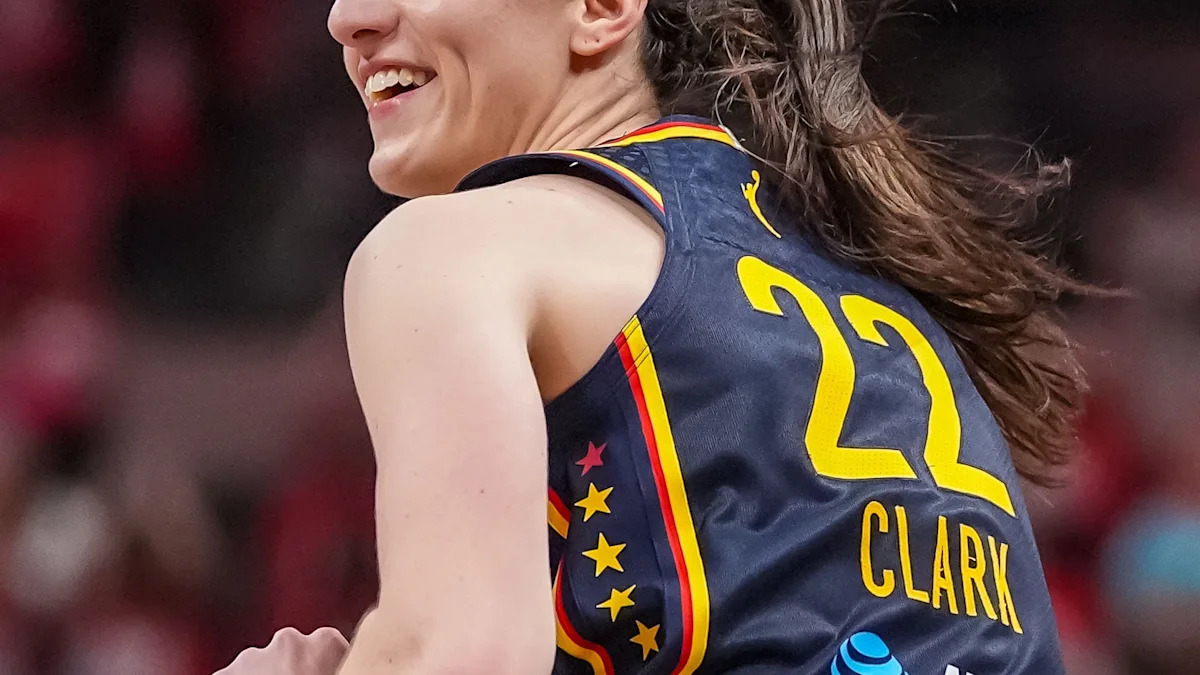
Paragraph 1: The Quantum Leap in WNBA Social Media
When Caitlin Clark and the rest of the 2024 WNBA rookie class burst onto the scene, they did not merely enter a league; they detonated a media revolution inside one. The class, which featured the already-viral Clark and her college rival-turned-professional opponent Angel Reese, arrived at a moment when the WNBA’s digital footprint was, at best, modest. In late 2023, the league recorded 373 million total official video views across all of its social media accounts. For context, the NBA boasted 32 billion views during its comparable season. That gap illustrated just how far the women’s game lagged in the attention economy. Then came 2024, a year that Dr. Ryan Brewer, associate professor of finance at Indiana University Columbus, describes as “the quantum leap.” The WNBA’s social media views exploded by 436 percent in a single season, a surge led by “real-time viral loops of the incoming rookie class and the highlight reels of Clark,” according to Brewer’s study, “The Structural Transformation of WNBA Media & Consumer Economics in the pre- and post-Caitlin Clark Era.” By the time Clark finished her rookie season with the Indiana Fever, the league’s social media views had jumped to nearly 2 billion—approximately 1.96 billion, to be precise. To Brewer, the number is not just impressive; it is culturally telling. “So, 1.96 billion views? That’s telling. People are fascinated by Clark,” he said. “It’s kind of what I would say is a Taylor Swift effect. Is Taylor Swift really that much better than Miley Cyrus or Dua Lipa?” The parallel is deliberate: just as Swift has achieved a singular cultural resonance that defies simple comparative analysis, Clark has captured something beyond her statistical output. There are many great players in the WNBA, Brewer acknowledges, yet something about Clark has captivated the broader public in a way that has fundamentally altered the league’s media trajectory.
Paragraph 2: Brewer’s 2024 Economic Impact Assessment of Clark
Brewer, a valuation expert who specializes in estimating worth, was asked by the IndyStar after Clark’s rookie season to put a financial price tag on the phenom’s impact on the WNBA, her city and the country. His findings were staggering. “The numbers are so staggering,” Brewer told IndyStar at the time. “They don’t even seem real.” According to his calculations, Clark was responsible for an extraordinary 26.5 percent of the WNBA’s leaguewide activity for the 2024 season, encompassing attendance, merchandise sales and television. One out of every six tickets sold at a WNBA arena could be attributed to her presence. Total television viewership attributable to Clark was up 300 percent, and a remarkable 45 percent of total broadcast value came from Fever games. League-wide merchandise sales catapulted 500 percent, with Clark ranking No. 1, followed by Reese. The Fever’s regular-season game attendance averaged more than 17,000 fans—the first time a WNBA team had drawn more than 300,000 fans in a season. Clark’s regular-season games were watched by an average of 1.2 million viewers, a figure that was 199 percent higher than non-Clark WNBA games. These numbers alone would have secured her legacy as a transformative figure. But as Clark finished her third season with the Fever—ultimately losing 94-83 to the Las Vegas Aces in Game 3 of the first round of the playoffs—IndyStar asked Brewer to take another look. He was, once again, astounded. The impact had not cooled; it had compounded. The early metrics from her rookie year were merely the opening act of a sustained economic and cultural restructuring of the league.
Paragraph 3: The 800 Percent Viral View Multiplier and Social Media Dominance
When asked what surprised him most in his latest research, Brewer pointed to a single number. During the 2026 season, Clark and the Fever generated more social media views than the rest of the WNBA combined. This is a staggering achievement for any individual athlete in any team sport. A Fever game featuring Clark saw between 20 million and 45 million viral views across TikTok, X and Instagram, driven primarily by rapid highlight clips of her logo three-pointers and elite playmaking. A WNBA game without Clark, by contrast, generated just 3 million to 5 million viral views. “Caitlin Clark generates 800 percent more viral views across all digital media modalities when her plays and highlights are featured,” Brewer said. “This is a worldwide number, and it stood out.” That multiplier is not merely a reflection of her individual brilliance; it is also a rising tide. Brewer is careful to note that this is not all about Clark. “If you look at the number of views for all of the teams, for all of the players, the rate of growth has increased substantially since Clark arrived. Basketball isn’t one person. Basketball is a team sport,” he said. “So, people are interested in her moves, her passes, the way she’s able to operate an offense, but people are noticing other players in the league as well.” Interestingly, Clark does not even top the list of WNBA social media influencers when it comes to Instagram followers. The Atlanta Dream’s Angel Reese is No. 1 with 5.2 million followers; Fever teammate Sophie Cunningham is second with 4.2 million; and Clark lands at No. 3 with 4.1 million. Yet in the currency of views, engagement and cultural pull, Clark remains the prime mover, generating an outsized share of the league’s digital life.
Paragraph 4: Merchandise Dominance and the Fever Attendance Boom
Nowhere is Clark’s commercial power more visible than in merchandise sales. According to Indianapolis-based BaMsports, which gathers data and research for sponsors, Clark’s jersey was the second most popular basketball item on Fanatics as of May, trailing only NBA superstar Steph Curry. The three top WNBA jerseys on Fanatics were Fever custom jerseys, Clark’s and Cunningham’s. On the Fever’s own online store, 11 of the top 24 items were Clark’s, two were Cunningham’s, and the other 11 items were varied. This merchandise supremacy extends to the arena. “With viral merchandise and viral views, so goes in-person attendance in the WNBA,” Brewer said. “Teams across the league have seen spikes in attendance since Clark arrived.” The Fever’s attendance transformation is perhaps the clearest illustration of her gravitational pull. In the years leading up to Clark’s arrival, the Fever drew less than the WNBA average attendance for six straight seasons, from 2017 to 2023. In 2022, the Fever ranked last in league attendance. Then came Clark. In 2024, the Fever averaged 17,035 fans at 20 home games. That figure was 16,560 in 2025 and 16,379 during the 2026 season. The Fever now rank third in WNBA average attendance. The arrival of the 2024 draft class featuring Clark and Reese, Brewer said, “structurally shifted the league’s economic floor, triggering an immediate 48.3 percent single-year surge in league-wide attendance.” That kind of league-wide bump demonstrates that Clark’s star power lifted arenas beyond Indianapolis, as fans across the country came to see the phenomenon whenever she visited.
Paragraph 5: Television Ratings, Broadcast Records, and Historic Viewership
Clark’s impact on television has been just as dramatic. “Traditional television networks have rewritten their legacy broadcast schedules to prioritize Indiana Fever matchups,” Brewer said. In 2026, the Fever achieved a historic media milestone: all 44 regular-season games were picked up for national broadcast distribution across major carriage networks. When Clark was playing, audiences scaled exponentially. Fever games regularly averaged between 2 million and 2.7 million viewers. On August 23, 2026, the Fever’s 113-90 victory over the Chicago Sky delivered a massive 3.31 million viewers, securing its position as the most-watched WNBA regular-season game on record since 1997. This game, pitting Clark against her rival Reese, represented the full convergence of the rookie class’s cultural gravity. The Fever also set single-network franchise viewership records across six distinct outlets in 2026: CBS, NBC, ESPN, Prime Video, USA Network and Ion. For a league that once struggled to secure consistent national broadcast slots, having one team’s entire season carried nationally—while shattering network records across platforms—is a structural turning point. Brewer’s research suggests that broadcast partners are now actively building schedules around Clark’s availability, a level of influence typically reserved for the NBA’s biggest stars or NFL marquee matchups. The economic implications extend far beyond ratings points; they affect advertising revenue, league sponsorship valuations, and long-term media rights negotiations. The WNBA’s next broadcast deal will undoubtedly be negotiated in the shadow of Clark’s numbers, with her presence serving as a baseline expectation rather than a bonus.
Paragraph 6: The Taylor Swift Effect and the Future of the WNBA
Clark’s third season ended with a playoff loss to the Aces, a reminder that even the most transformative athlete cannot win every game. But her influence on the league’s media economy is now beyond dispute. Brewer’s repeated emphasis on the “Taylor Swift effect” captures the essence of Clark’s appeal: there is something about her that transcends objective comparison. She is not simply better than her peers in a measurable way; she has occupied a unique cultural space that connects with audiences on a level that defies easy explanation. “So, 1.96 billion views? That’s telling. People are fascinated by Clark,” Brewer said. “It’s kind of what I would say is a Taylor Swift effect. Is Taylor Swift really that much better than Miley Cyrus or Dua Lipa?” The question is rhetorical, and the answer is irrelevant. What matters is that Clark has become a category-of-one phenomenon, driving 800 percent more viral views than other WNBA games and generating more social media attention than the entire rest of the league combined. Her rookie season produced attendance and merchandise spikes that reshaped the Fever’s franchise, and her presence has continued to lift league-wide metrics for three consecutive seasons. While the 2024 rookie class, including Reese and others, deserves credit for the broader surge, Clark remains the central animating force. As the WNBA enters a new era of media rights and national visibility, it does so on the foundation of a player whose influence has been compared to one of the most famous entertainers in the world. Whether she is taking logo threes, dishing assists, or simply drawing thousands of fans to arenas in every city, Caitlin Clark has changed the WNBA not by osmosis, but by sheer gravitational force—and the numbers have only begun to tell her story.