


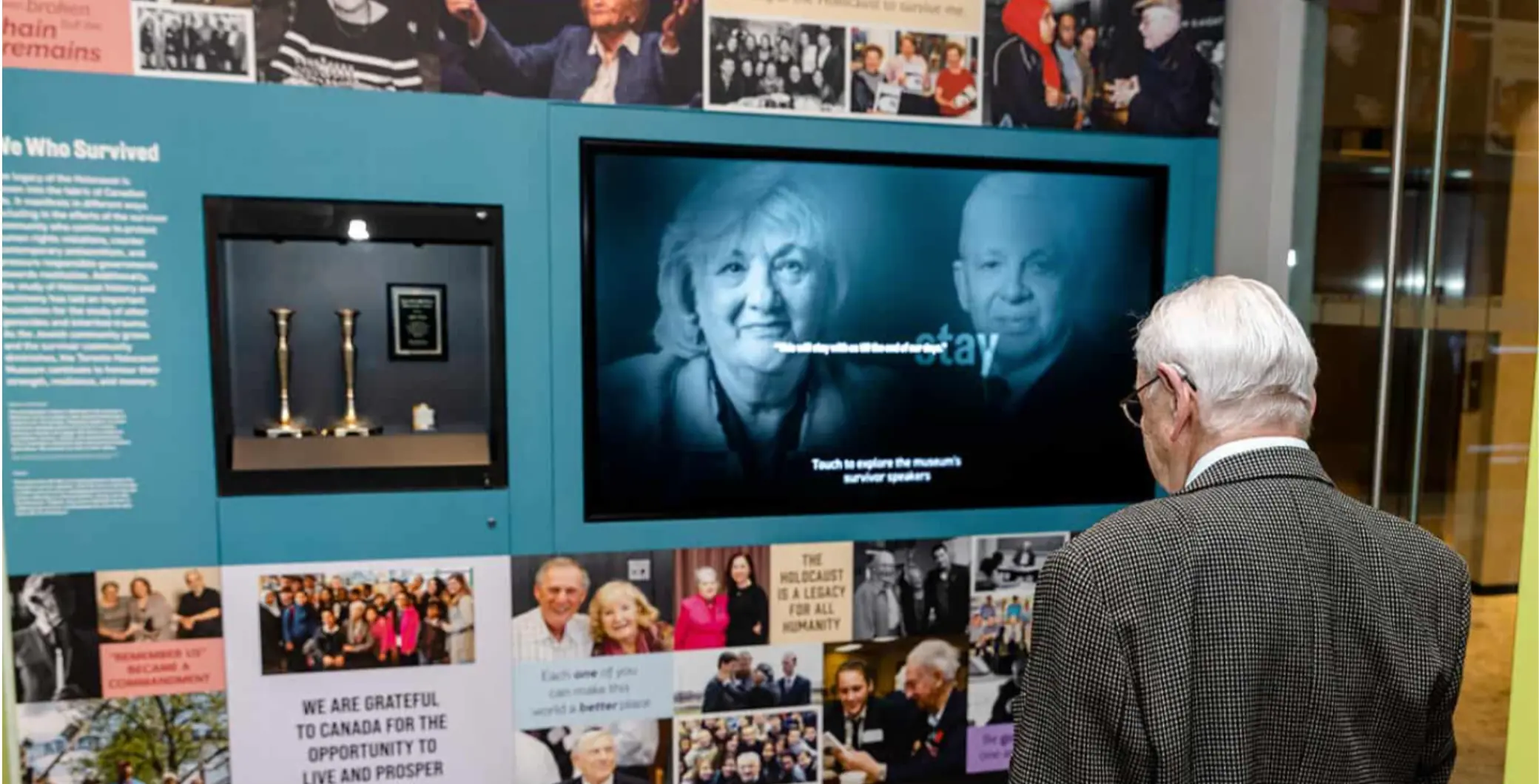
Toronto Holocaust Museum Launches Campaign to Combat Online Misinformation and Antisemitism on Holocaust Remembrance Day
The Toronto Holocaust Museum marked Holocaust Remembrance Day, a day commemorating the six million Jewish victims of the Nazi regime, by launching a crucial campaign titled "It’s Critical to Think Critically." This initiative aims to empower young Canadians with the tools to identify and combat the spread of misinformation and online hate, particularly antisemitism, which has seen a disturbing resurgence in recent years. The campaign’s launch coincides with the 80th anniversary of the liberation of Auschwitz-Birkenau, a stark reminder of the horrors of the Holocaust and the importance of vigilance against prejudice and intolerance. The museum emphasizes the urgent need to address the unchecked proliferation of false and misleading information, especially among younger generations who are increasingly reliant on online platforms for news and information.
The museum’s concern is underscored by a rise in antisemitic hate crimes in Toronto. Since October 7, the city has experienced a 69% increase in such crimes, with a police report indicating that antisemitic attacks constituted nearly 45% of all reported hate crimes in 2023. This alarming trend corresponds with the increasing reliance on social media for news consumption, with 61% of Torontonians and 80% of Gen Z relying on these platforms. Worryingly, a significant portion of these individuals, 82%, admit to not always verifying the information they encounter online. The museum highlights the direct link between the spread of antisemitism on social media and the rise in real-world hate crimes, a reality acknowledged by 76% of Torontonians.
The museum’s campaign directly addresses the phenomenon of "Holocaust Inversion," a dangerous form of online rhetoric that draws false parallels between Israel’s treatment of Palestinians and the Nazi persecution of Jews. This distorted comparison not only trivializes the unique horrors of the Holocaust, but also fuels confusion and misunderstanding, particularly among those unfamiliar with the complexities of the Israeli-Palestinian conflict. The spread of such misinformation online, coupled with the rapid dissemination of unverified content, has contributed to a climate of increasing antisemitism and hostility towards the Jewish community.
The museum’s campaign underscores the critical distinction between misinformation, the unintentional sharing of false information, and disinformation, the deliberate propagation of known falsehoods. University of Toronto professor Jeffrey Dvorkin, an expert on misinformation and disinformation, argues that the digital landscape, often perceived as inherently democratic, fosters the unchecked sharing of both true and false information, creating a breeding ground for unverified claims and a disregard for expertise. This lack of accountability is further exacerbated by the absence of robust mechanisms, both governmental and non-governmental, to regulate the flow of information online. Dvorkin advocates for a multi-pronged approach involving legal, governmental, media, and educational pressure to address this critical issue.
The “It’s Critical to Think Critically” campaign aims to equip individuals with the necessary skills to navigate the complexities of the online world and discern accurate information from misinformation and disinformation. This includes promoting digital literacy, encouraging critical thinking, and fostering a healthy skepticism towards online content. The museum advises individuals to verify information by consulting reputable sources such as libraries, archives, museums, scholarly articles, and academic institutions. It also emphasizes the importance of questioning the intent behind online content and utilizing fact-checking tools. This proactive approach is essential in combating the rapid spread of misinformation, which often outpaces individuals’ capacity and desire to verify its authenticity.
The campaign’s emphasis on critical thinking and source verification is crucial in an era where technology has arguably diminished our capacity for critical engagement with information. Dvorkin warns that we have become "intellectually orphaned by the internet," highlighting the need for proactive measures to empower individuals with the skills and strategies to consume online information responsibly and wisely. The museum’s initiative directly addresses this challenge, providing a practical guide for navigating the digital world and combating the insidious spread of misinformation and hate, particularly in the context of rising antisemitism. The campaign serves as a vital reminder of the importance of critical thinking, media literacy, and responsible online engagement in safeguarding against the dangers of misinformation and promoting a more informed and tolerant society.