


The Misinformation Threat: Dispelling Doubts and Underscoring its Impact
The digital age has ushered in an era of unprecedented information access, but it has also amplified the spread of misinformation, posing a significant threat to informed public discourse and societal well-being. While some commentators have attempted to downplay the dangers of misinformation, a robust body of evidence demonstrates its tangible and far-reaching consequences. Dismissing these effects not only jeopardizes fact-based public dialogue but also risks inadvertently shielding those who perpetuate misinformation.
The impact of misinformation isn’t always straightforward; it can manifest both directly and indirectly. Direct effects are evident in instances like the 2024 UK riots, sparked by a false narrative circulating on social media. Indirectly, misinformation can shape public opinion and create a climate of susceptibility to further falsehoods, as witnessed in the spread of anti-immigrant sentiments fueled by fabricated stories. The Rwandan genocide provides a chilling example of how propaganda, a potent form of misinformation, can directly incite violence and indirectly amplify its impact through social networks. Furthermore, misinformation acts as a "meta-risk," distorting public perception of other threats like climate change, hindering effective responses and eroding public trust in institutions.
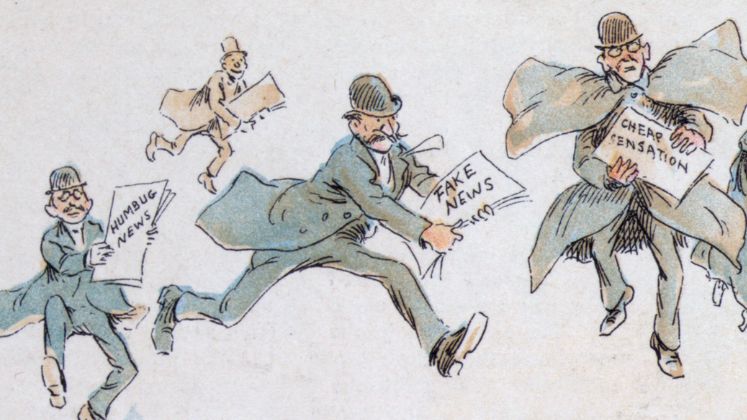
Claims that minimize the prevalence of misinformation often rely on narrow definitions, such as equating it solely with "fake news," and selectively cite studies based on limited data. This approach overlooks the broader spectrum of misinformation, which encompasses not only outright falsehoods but also misleading information, manipulative tactics, and biased presentations. While "fake news" websites may attract a relatively small portion of overall web traffic, their reach can still be significant, as evidenced by the substantial number of Americans exposed to such sites during the 2016 US presidential election. More importantly, the pervasive nature of misleading information, often intertwined with half-truths and manipulative framing, amplifies the problem considerably.
Quantifying misinformation exposure remains a challenge, as averages can obscure the wide variation in individual experiences. Some individuals may encounter limited misinformation, while others are bombarded with it on their social media feeds. Studies have shown that even information not flagged by fact-checkers can be highly misleading and reach a significant portion of the population, often exceeding the impact of debunked "fake news" in shaping public opinion, as demonstrated by studies on COVID-19 vaccine hesitancy.
The real-world consequences of misinformation on human behavior are undeniable and tragic. From mob violence to dangerous health practices, the impact is evident. While it may be argued that establishing direct causality in such complex events is difficult, demanding unrealistic standards of proof akin to the tactics employed by the tobacco and fossil fuel industries to sow doubt is ethically questionable. Controlled lab experiments, computer simulations, and real-world observational studies provide compelling evidence linking misinformation exposure to changes in behavior. Studies have demonstrated how misinformation influences vaccination intentions, political activism, and even unconscious actions.
The argument that misinformation lacks identifiable characteristics ignores a growing body of research demonstrating distinct psychological and linguistic markers. Mathematical modeling reveals the inherent implausibility of many popular conspiracy theories, while philosophical arguments justify a priori skepticism towards them. Independent fact-checks consistently demonstrate high levels of agreement, aligning with the wisdom of diverse crowds and challenging the notion that truth determination is inherently subjective. Studies have identified common manipulation techniques and logical fallacies employed in misinformation, and research has revealed psycholinguistic cues that distinguish misinformation from credible information.
Interventions that educate individuals about these manipulative tactics have proven effective in enhancing their ability to discern between misinformation and credible sources. Machine learning models can achieve high accuracy in classifying misinformation based on psychological markers. Large-scale field experiments demonstrating the effectiveness of training programs in reducing the spread of misinformation further solidify the identifiable nature of these deceptive tactics. These findings demonstrate that misinformation possesses clear fingerprints that can be taught and recognized.
While the risk of false positives exists, particularly in environments saturated with truthful information, research suggests that these interventions primarily improve discernment without increasing misidentification. Both jurisprudence and science have developed imperfect yet vital methods for establishing truth in uncertain conditions. Dismissing the feasibility of identifying misinformation effectively challenges the very foundations of scientific inquiry and the pursuit of justice. The evidence overwhelmingly points to the tangible and significant threat of misinformation, demanding that we acknowledge its impact and actively combat its spread to protect the integrity of public discourse and safeguard societal well-being.