


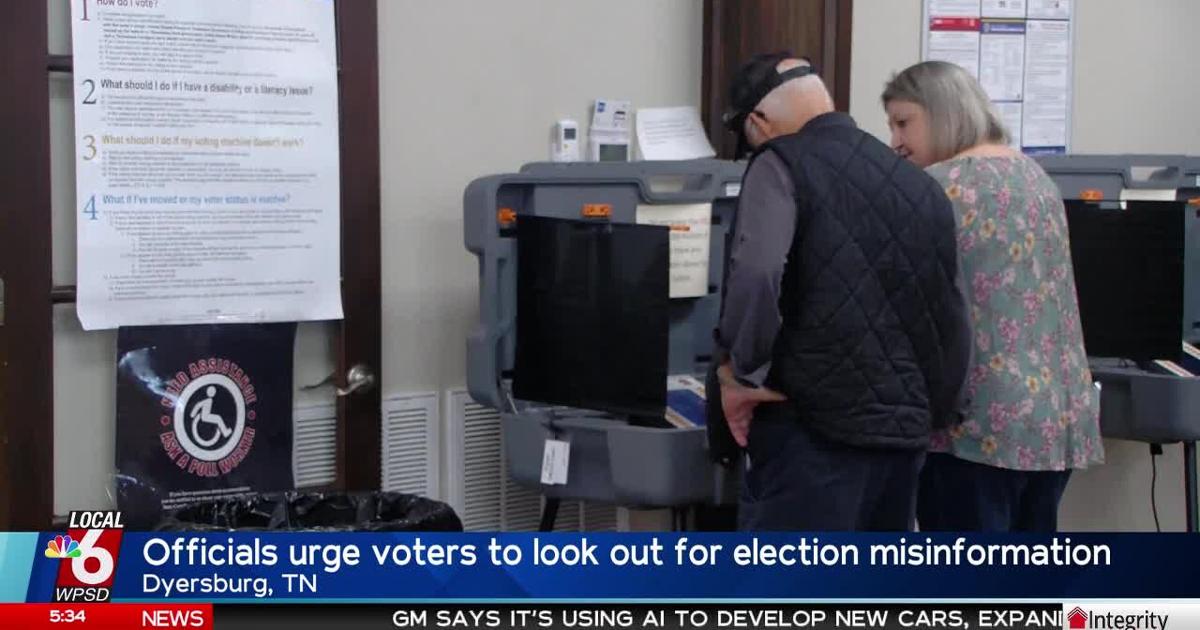
PADUCAH, Ky. (WPSD Local 6) – With Election Day drawing closer, officials across Kentucky and the nation are issuing an urgent plea to voters: be on high alert for election misinformation. From fake social media posts about changed polling locations to doctored videos of candidates and fabricated claims about voting machines, the information environment surrounding this year’s election has become increasingly polluted. Local election clerks, secretaries of state, and nonpartisan civic organizations are stepping up their efforts to combat false narratives, urging voters to verify every piece of election-related information before acting on it. The warnings come as millions of Americans prepare to cast ballots early or by mail, and as online platforms struggle to keep pace with the volume of misleading content. Officials stress that misinformation is not just a nuisance—it can undermine confidence in democratic institutions, suppress voter turnout, and create chaos at the polls. “We want every eligible voter to have accurate information so they can participate with confidence,” said a representative from the Kentucky Secretary of State’s office in a recent briefing. That sentiment was echoed by county clerks throughout the Local 6 viewing area, who are seeing an uptick in voters calling to ask whether alarming social media posts they saw are true. The answer, in many cases, is no.
The most common forms of election misinformation circulating this cycle, officials say, include false announcements about polling place closures, inaccurate voting hours, bogus requirements for voter ID, and misleading instructions about absentee ballots. In recent weeks, social media users have shared screenshots claiming that voters can cast ballots via text message or through third-party apps—claims that are completely false. Others have circulated fabricated images of long lines at non-existent precincts, while some posts have falsely alleged that mail-in ballots will not be counted unless voters write specific phrases on the envelope. More insidious are AI-generated videos and voice-cloned phone calls designed to impersonate election officials or political candidates. One widely debunked video showed a local election administrator announcing that voting days had been extended, which was entirely fabricated. Officials also warned about “voter suppression disinformation” aimed at specific communities, such as false claims that certain neighborhoods have been purged from the rolls or that voters with outstanding fines are prohibited from casting ballots. These tactics are not new, but technology has made them easier to produce and distribute. “Misinformation is evolving faster than our ability to counter it,” said one cybersecurity expert working with election authorities. “What was once a flyer dropped in a parking lot is now a viral video seen by millions within minutes.” Local election officials are particularly concerned about last-minute misinformation, which leaves little time for correction before polls open. They urge voters to remember that official election procedures are public, transparent, and set by law—not by random social media posts.
To help voters navigate the fog of falsehoods, officials are pointing to a short list of trusted sources. In Kentucky, that includes the Secretary of State’s website, the State Board of Elections, and the official website of each county clerk. Nationally, voters can use CanIVote.org, operated by the U.S. Election Assistance Commission, which provides state-specific information about registration deadlines, polling places, and voting methods. Local election offices have also ramped up their own outreach, publishing plain-language guides on social media and holding town hall sessions to answer questions directly. Many counties have launched “election truth hotlines” where voters can call or text to ask whether a specific piece of information is accurate before they share it. The Federal Communications Commission has also stepped in, fining robocallers responsible for AI-generated fake calls and working with state attorneys general to track down the sources of disinformation campaigns. Meanwhile, social media companies have announced new labeling requirements for election-related content, though officials caution that these measures are far from perfect. A viral post can still reach thousands of people before it is flagged, and many false claims are designed to evade detection by using coded language or altered images. That is why, officials say, the ultimate responsibility lies with individual voters. They encourage everyone to adopt a simple habit: when you see election news, pause before sharing. Ask yourself whether the source is a legitimate government website or a recognized news outlet. If the claim seems outlandish or designed to make you angry, it likely is false. Check the URL for typos, look for verified accounts, and search the claim on multiple trusted news sites to see if it has been debunked.
The push for voter vigilance is not happening in a vacuum. Intelligence officials have repeatedly warned that foreign adversaries, including Russia and Iran, are working to spread discord around U.S. elections. These efforts often involve amplifying false narratives about election integrity, stoking racial tensions, and promoting distrust in voting systems. Domestic actors, including political operatives and internet trolls, have also been caught spreading misleading information to influence turnout. In Kentucky, election officials have implemented a range of safeguards to protect the integrity of the vote, including paper ballot trails, post-election audits, and strict chain-of-custody procedures for voting machines. These measures have been tested in both Republican and Democratic administrations, and officials insist that the results are accurate and verifiable. Still, they acknowledge that the perception of fraud can be as damaging as actual fraud. That is why they are encouraging voters to become informed about the official process—not through partisan memes, but through direct observation. Many counties are recruiting poll watchers, election judges, and other volunteers who can witness the counting process firsthand. Officials say that seeing the process up close is the best antidote to misinformation. “When people see the checks and balances, when they see that ballots are counted in public and results are certified by bipartisan boards, they understand that the system works,” one county clerk explained. “The people who spread misinformation rely on you never actually checking for yourself.” Voters can also sign up for election alerts from official sources, ensuring they receive accurate reminders about deadlines and polling changes directly from election authorities rather than from forwarded messages.
As Election Day approaches, officials are bracing for a surge of last-minute misinformation, especially on November 5 itself. They warn that false posts about “long lines at the polling place, go home” or “the power is out at your precinct” could circulate in real time, designed to depress turnout. In response, many local election offices will have dedicated staff monitoring social media during voting hours, ready to correct false claims within minutes. Poll workers are being trained to handle disruptive misinformation, including voters who show up with printed posts claiming they have the right to vote at the wrong location. Officials are also asking voters to be patient and to report suspicious activity to election judges or law enforcement rather than confronting people themselves. The message is clear: democracy depends on participation, and participation depends on trust. Every vote matters, but only if it is cast based on accurate information. Misinformation is designed to confuse, delay, and discourage. It exploits fear, outrage, and uncertainty. The best defense, officials say, is a well-informed voter who knows where to look, what to trust, and how to verify. They encourage voters to make a plan now: check your registration status, confirm your polling location, decide whether you will vote early or on Election Day, and save the phone number of your county clerk’s office in your contacts. If something seems off, call that number. It is better to ask a quick question than to miss your chance to vote—or to share a lie that might cause someone else to miss theirs.
In the end, officials say, the fight against election misinformation is not just about technology or policy; it is about community. Neighbors talking to neighbors, friends checking on friends, and families verifying information together can create a web of truth that is far stronger than any viral falsehood. Local 6 News has compiled a list of official resources for voters in our viewing area, including county clerk phone numbers, state election hotlines, and links to verified voter guides. We encourage everyone to bookmark these resources and to double-check any election information they receive through social media, email, or messaging apps. If you see something that seems false, do not share it. Instead, report it to the platform, forward it to your county clerk, and alert your friends and family that it is not true. The officials who run our elections are dedicated public servants—many of them work overtime during election season, attending training sessions, testing machines, and preparing ballots so that your vote counts. They deserve your trust, and they are working every day to earn it. The greatest threat to that trust is not foreign interference or faulty machines; it is complacency. When voters assume that someone else will sort out the truth, misinformation wins. But when voters take an active role in verifying information, participating in the process, and encouraging others to do the same, the foundation of our democracy grows stronger. Election Day is not the end of the process—it is the beginning of the next chapter. The counting, the certification, and the peaceful transfer of power all depend on voters having confidence in the outcome. That confidence starts now, in the days before the election, with each individual choice to seek out accurate information and reject the lies. Officials are doing their part. It is up to all of us to do ours.