


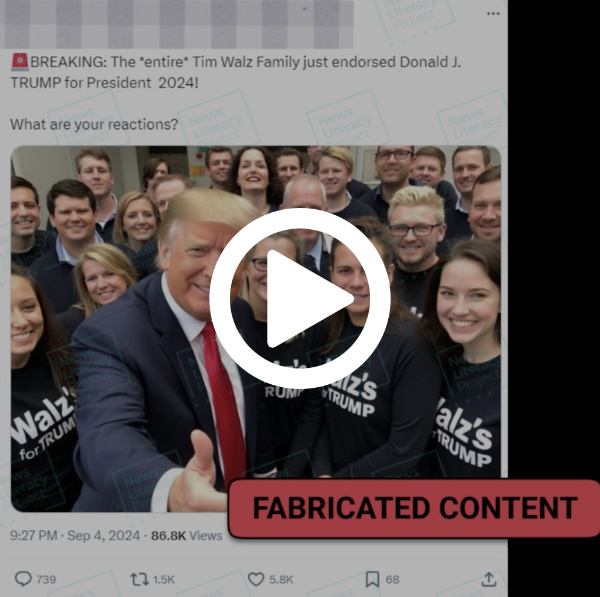
The Rise of "Breaking News" Misinformation in the 2024 Election
The 2024 election cycle is already awash in a torrent of misinformation, and a troubling trend has emerged: the exploitation of "breaking news" alerts to spread falsehoods. Just hours before a hypothetical presidential debate between former President Donald Trump and President Joe Biden, a fabricated story claiming CNN would implement a broadcast delay to edit footage went viral on X (formerly Twitter), accumulating over 2 million views. This incident highlights how malicious actors weaponize the immediacy associated with "breaking news" to disseminate fabricated stories, often before legitimate news outlets can even begin to report.
The News Literacy Project’s (NLP) Misinformation Dashboard: Election 2024 is tracking these trends, revealing that "sheer assertions," or claims made without any supporting evidence, constitute approximately 15% of all misinformation identified. These assertions frequently leverage the "breaking news" label, creating a false sense of urgency and exploiting the public’s desire for up-to-the-minute information. This tactic contrasts sharply with journalistic practices, where breaking news is reported only after rigorous fact-checking and verification through multiple sources.
The speed at which misinformation spreads on social media, particularly with the "breaking news" tag, poses a significant challenge. While journalists diligently work to confirm facts and verify sources, purveyors of misinformation exploit the inherent lag in credible reporting, flooding the online space with fabricated narratives. These bad actors, often masquerading as "citizen journalists," hijack journalistic terminology to lend an air of legitimacy to their baseless claims. They understand that in the fast-paced world of social media, a lie can gain significant traction before the truth has a chance to catch up.
The NLP Misinformation Dashboard identifies several other tactics employed in conjunction with the "breaking news" strategy. These include attributing sensational claims to anonymous sources, using generic or irrelevant images, and falsely accusing legitimate news organizations of suppressing information. These tactics are designed to sow confusion, erode trust in established institutions, and promote specific narratives, often targeting particular candidates or the integrity of the election process itself.
The relative ease with which false information can be generated and disseminated online makes combating misinformation an uphill battle. While traditional journalism requires meticulous fact-checking and verification, fabricating a story requires minimal effort. This asymmetry creates an environment where misinformation can proliferate, especially during critical moments like breaking news events.
Recognizing the tactics employed by misinformation spreaders is crucial for navigating the information landscape. The "breaking news" label should not be taken at face value. Instead, it should trigger a heightened sense of scrutiny. Users should investigate the source of the information, looking for established news organizations or journalists with a track record of accuracy. The absence of verifiable sources, supporting evidence, and corroboration from multiple outlets should raise red flags.
Furthermore, it is important to be aware of the other tactics used in conjunction with the "breaking news" ploy. Claims attributed to unnamed sources, the use of generic visuals, and accusations of media blackouts are all common indicators of potential misinformation. By understanding these tactics, individuals can become more discerning consumers of information, filtering out the noise and focusing on credible sources.
In the age of rapid information dissemination, slowing down and verifying information is more crucial than ever. The allure of "breaking news" can be powerful, but it is essential to resist the urge to immediately share or react to information without proper vetting. Taking the time to verify sources, seek corroboration, and consult fact-checking websites can help prevent the spread of misinformation and ensure a more informed electorate.
The NLP Misinformation Dashboard serves as a valuable resource for understanding the evolving tactics employed by misinformation spreaders. By analyzing trends and patterns, the dashboard helps equip individuals with the tools they need to critically evaluate information and differentiate between credible reporting and fabricated narratives. As the 2024 election progresses, the importance of news literacy and media awareness will only continue to grow.
The public’s ability to distinguish between factual reporting and misinformation is vital for the health of a democracy. By remaining vigilant, questioning sources, and seeking evidence, individuals can contribute to a more informed electorate and mitigate the impact of misinformation campaigns. The fight against misinformation requires a collective effort, and each individual’s commitment to news literacy plays a crucial role.
The rise of "breaking news" misinformation highlights the challenges posed by the rapid pace of online information dissemination. However, by adopting a critical mindset, understanding the tactics employed by misinformation actors, and utilizing resources like the NLP Misinformation Dashboard, individuals can navigate this complex landscape and make informed decisions based on facts, not falsehoods. The 2024 election will undoubtedly be a target for misinformation campaigns, but an informed and engaged citizenry is the best defense against the erosion of truth and trust.