


The Misinformation Maelstrom: How False Claims About Immigrants Dominate the 2024 Election
The 2024 presidential election has brought the issue of immigration back into the spotlight, but the conversation is often riddled with misinformation. A recent Kaiser Family Foundation (KFF) poll reveals that a majority of Americans have been exposed to false claims about immigrants, often propagated by political candidates and elected officials. These claims, ranging from immigrants causing a surge in violent crime to stealing jobs from native-born Americans, have seeped into the public consciousness, creating confusion and distorting the reality of immigrants’ contributions to society. While a significant portion of the public remains uncertain about the veracity of these claims, stark partisan divisions exist, with Republicans more likely to believe negative stereotypes about immigrants.
The Muddled Middle: Uncertainty and Partisan Divides in Beliefs About Immigrants
The KFF poll highlights a large “muddled middle” – individuals who are unsure about the truthfulness of statements regarding immigrants. Confronted with claims about immigrants and crime or unemployment, many Americans respond with “probably true” or “probably false,” indicating a lack of clear understanding or access to accurate information. This uncertainty creates fertile ground for misinformation to take root. However, strong partisan divides also emerge. Republicans exhibit a greater tendency to believe false claims about immigrants’ involvement in crime and job displacement, while Democrats are more inclined to accept truthful statements about immigrants filling labor shortages and contributing to the economy. This polarization underscores the challenge of establishing a shared understanding of immigration based on facts rather than partisan rhetoric.
Immigrants’ Voices Lost in the Din: Confusion and Fear Surrounding Government Benefits
The political discourse surrounding immigration frequently overlooks the experiences of immigrants themselves. The KFF poll, which includes a survey of immigrants, reveals widespread confusion and fear about accessing government benefits. A significant portion of both the general public and immigrants mistakenly believe that undocumented immigrants are eligible for federal health insurance programs. Furthermore, many are unsure or incorrect about the waiting periods lawfully present immigrants must fulfill before qualifying for benefits like Medicaid. This confusion, exacerbated by false claims from political figures, creates anxiety and discourages immigrants from accessing necessary services. The poll underscores the need for clear and accessible information about immigrants’ eligibility for government programs to dispel misconceptions and ensure equitable access to resources.
The Trump Effect: Negative Impact of Rhetoric on Immigrant Communities
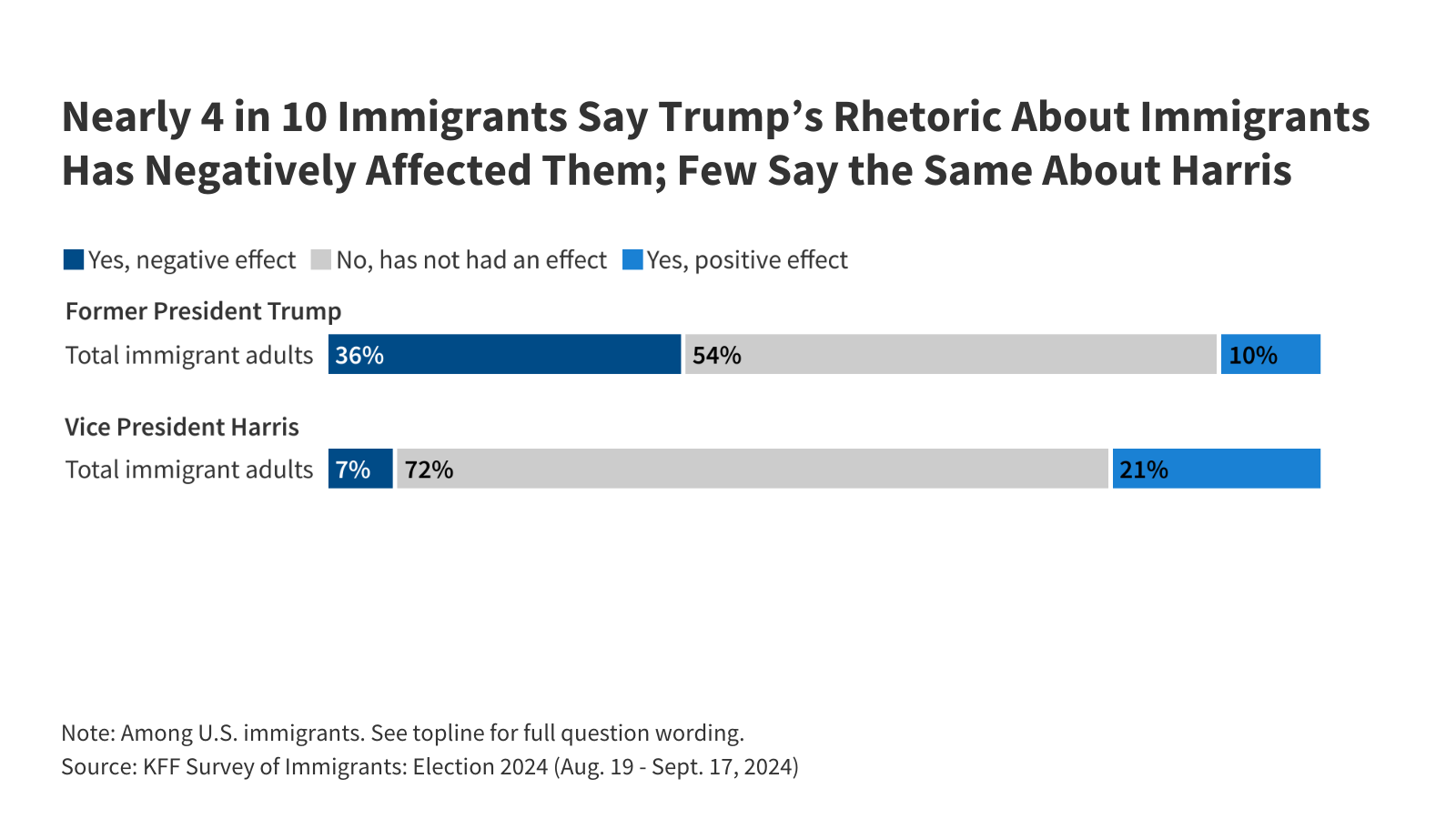
The KFF poll reveals the tangible consequences of political rhetoric on immigrant communities. A significant number of immigrant adults report that former President Trump’s campaign statements have negatively affected how they are treated in the U.S. This negative impact is particularly pronounced among Asian immigrants. Respondents who reported negative experiences cited instances of increased suspicion, discrimination, and even outright hostility, highlighting how inflammatory language can translate into real-world harm. Conversely, Vice President Harris’s statements about immigrants were generally perceived as neutral or positive, with a notable positive impact reported by Asian immigrants. These findings underscore the power of political rhetoric to shape public perceptions and experiences, emphasizing the responsibility of political leaders to avoid language that could incite prejudice or discrimination.
Immigrants’ Perspectives on the Election: Priorities and Hopes for the Future
Despite the challenges and anxieties they face, immigrants remain engaged in the democratic process. Immigrant voters, similar to the general public, prioritize issues like the economy, inflation, and threats to democracy. However, they also express strong opinions about the potential impact of the election on their communities. A majority of immigrant adults believe they would be better off under a Harris presidency than a Trump presidency, although a substantial minority believe the outcome will make no difference. This divergence of opinion likely reflects the varied experiences and backgrounds of immigrants, as well as the complexities of immigration policy.
Navigating the Misinformation Landscape: The Need for Accurate Information and Inclusive Dialogue
The KFF poll paints a clear picture of a political landscape saturated with misinformation about immigrants. This misinformation fuels harmful stereotypes, creates anxieties within immigrant communities, and hinders productive policy discussions. Combating this misinformation requires a multi-pronged approach. Fact-checking and media literacy initiatives are crucial to help the public discern accurate information from falsehoods. Furthermore, fostering open and inclusive dialogue that centers the voices and experiences of immigrants themselves is essential to building a more accurate and empathetic understanding of immigration. Ultimately, the responsibility lies with political leaders, media outlets, and the public alike to promote a more informed and nuanced conversation about immigration, grounded in facts and respect for human dignity.