


The Role of Science Communication in the Age of Algorithms
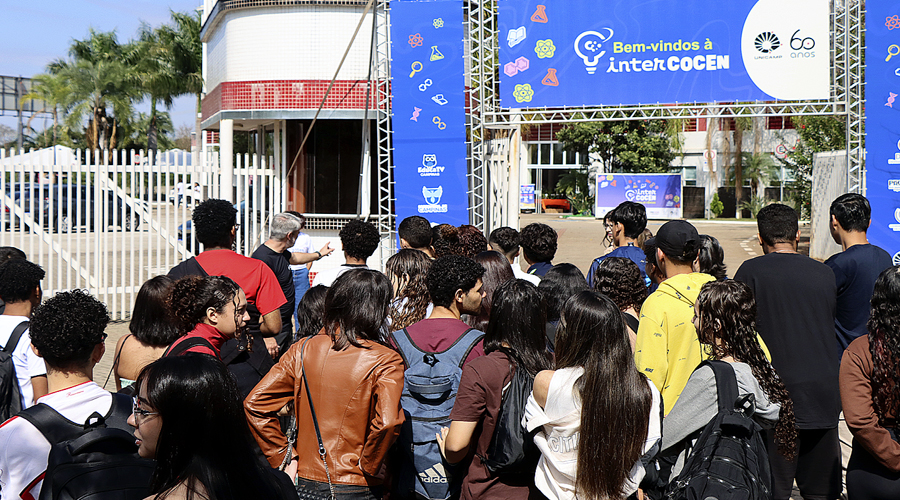
In an era defined by the rapid spread of digital information and the pervasive influence of social media algorithms, the role of science communication has become more critical than ever. Universities, as bastions of knowledge and research, are increasingly called upon to serve as trusted beacons of truth in a landscape riddled with misinformation and denialist discourses. This pressing need was the central theme of the second edition of the InterCOCEN Fair, held by Unicamp (State University of Campinas) on September 19th and 20th at the Events Center of the Municipal Education Secretariat of Campinas. The event underscored the university’s commitment to strengthening its interface with society, positioning itself as a primary reference on topics of public interest and fostering a deeper scientific culture among the general public.
The fair was conceived as a dynamic platform to bridge the gap between the university and the community, allowing for direct and meaningful interaction between researchers and the public. Raluca Savu, coordinator of the Coordination of Interdisciplinary Research Centers and Nuclei at Unicamp (Cocen), emphasized the transformative power of such direct engagement. “When children, young people, and adults who don’t have a daily experience of university life can talk directly with researchers, ask questions, and experiment, science begins to spark more interest. This is the kind of interaction we want to strengthen with InterCOCEN,” she declared. The event was designed not just as a showcase of research, but as a two-way street, where the curiosity of the public could be ignited by hands-on experiences and personal conversations, thereby planting the seeds for future researchers and fostering a society that values and supports scientific inquiry.
Throughout the two days of programming, the event proved to be a resounding success, drawing hundreds of visitors, from spontaneous attendees to organized school excursions from 35 cities across the region. The diverse audience, which included families, children, the elderly, and students from elementary to high school, engaged with a wide array of projects from the institution’s interdisciplinary centers and departments. Topics ranging from climate change and nanotechnology to nutrition and biodiversity were presented through playful workshops, interactive demonstrations, artistic performances, and direct conversations with experts. This multifaceted approach ensured that complex scientific concepts were made accessible and engaging for all ages, effectively democratizing knowledge and making science tangible. For Raluca Savu, the ultimate goal was clear: “Besides planting seeds for future researchers, our ultimate goal is to increasingly foster a scientific culture and strengthen society’s support for the university.”
This goal of securing social support takes on a particularly challenging dimension in the current media landscape, where denialist narratives proliferate, especially through social media channels. To address this, the fair invited Átila Iamarino, a renowned biologist and one of Brazil’s most prominent science communicators. Iamarino, who commands a vast digital following, delivered a keynote lecture on how to stay informed in times of misinformation, which became one of the highlights of the event. His presence was a strategic move by the organizers to engage with a younger audience that predominantly consumes information through digital platforms. “The idea of inviting Átila, who has one of the largest digital channels for science communication in the country, to talk about misinformation, was precisely in this context of opening new avenues for conversation, especially with a younger audience,” Savu explained. Iamarino’s participation signaled the university’s recognition of the need to meet audiences where they are, using modern communication tools to counter false narratives and promote evidence-based reasoning.
The fair also served to highlight the distinct yet complementary nature of its purpose compared to other university outreach events, such as the Unicamp Open Doors (UPA). While UPA offers a broad, comprehensive view of the university, its courses, and campus life, the InterCOCEN Fair provides a more specific perspective, focusing on how interdisciplinary research impacts daily life by solving concrete problems. This was powerfully illustrated by projects like Peles-em-Chip, a collaborative effort involving three of Cocen’s research centers: the Center for Biomedical Engineering (CEB), the Center for Semiconductor Components and Nanotechnologies (CCSNano), and the Center for Afro-Brazilian Studies (NEAB), in partnership with the Institute of Biology (IB). This ambitious project aims to develop three-dimensional skin models with different pigmentations to make melanoma studies more representative of Brazil’s genetically diverse population. The research team showcased their work, including bioprinters in action and organ-on-a-chip devices, allowing visitors to grasp the complexity and real-world relevance of their work.
For researchers like Bruna de Melo, a coordinator of Peles-em-Chip, the fair was an invaluable opportunity to connect the lab with the community and inspire future scientists. “The audience was very diverse, with families, children, the elderly, and elementary and high school students. We were happy with the interest: people asked many questions, participated in our games, and had the opportunity to see the bioprinters in operation and the organ-on-a-chip devices, technologies that we use to build our platform,” she reported. By presenting not only the “what” but also the “how” of research, the fair demystified the scientific process and offered a glimpse into the daily reality of a researcher. Before his lecture, Átila Iamarino toured the fair’s booths, describing himself as a “chronically curious person.” He was impressed by how different areas of knowledge connected, noting that “although they are distinct areas, in each space it is possible to raise issues that interact with each other, because, in some way, the subjects overlap.”
Ultimately, Iamarino echoed the organizers’ sentiments on the vital importance of such events, arguing that bringing the university and society closer is what sustains the university itself. He highlighted Unicamp’s significant role in the Campinas region and stressed that this relationship is especially crucial when institutional support is under scrutiny. “This type of fair is what keeps the university going, not the other way around,” he stated, inverting the common perception of the university’s relationship with society. Noting the youthful demographic of the audience, Iamarino pointed to research showing high levels of interest in science among children and young people, but cautioned that the challenge lies in preserving this innate curiosity through their education. He emphasized the importance of play, family participation, and intergenerational dialogue in maintaining this enthusiasm. By fostering these connections, the InterCOCEN Fair demonstrates its role not just as an educational outreach event, but as a fundamental pillar in the continuous effort to build a scientifically literate society capable of navigating the complexities of the modern world.