


Andy Burnham’s Anti-Disinformation Centre: A Necessary Move or a Recipe for Censorship?
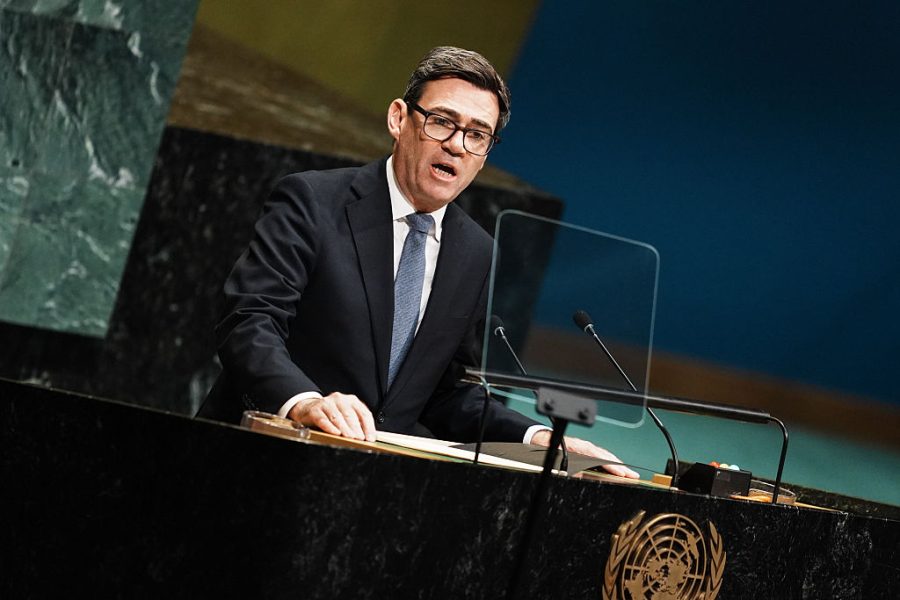
In a fiery address to the United Nations General Assembly, UK Prime Minister Andy Burnham condemned Russia’s “poisonous tide” of disinformation and pledged to establish a National Centre for Information Defence. The announcement has been met with cautious optimism from security experts, but a deeper look at the track record of similar initiatives across Europe suggests that such centres, while well-intentioned, often struggle to distinguish between genuine foreign manipulation and legitimate dissenting opinions. The Prime Minister’s speech painted a stark picture of a Kremlin wielding bots, fake websites, and forged media brands to sow division within Western societies. Yet, as the dust settles, questions arise over the efficacy of state-led countermeasures, the risk of conflating propaganda with journalism, and the dangerous tendency to dismiss uncomfortable viewpoints as foreign interference.
The Prime Minister’s speech focused heavily on the scale of the Russian threat, citing an annual £1.3 billion Kremlin budget for “manipulating information.” This figure, reportedly drawn from Russia’s federal media allocations, includes funding for domestic television, international outlets like RT (banned in the UK), and various news agencies. While the amount is substantial, experts caution that equating all Russian media output with disinformation is a gross oversimplification. For those who consume Russian state media daily, the landscape is a mixed bag: alongside toxic and deliberate falsehoods, there exists serious investigative journalism and entirely benign entertainment. The Kremlin’s propaganda machine is powerful, but it is not omnipotent. As one analyst put it, Russia possesses no “Jedi mind tricks” to create dissent from nothing. It can only amplify existing divisions—and Western societies already provide ample material.
Indeed, the moral high ground claimed by the West is shaky. While Burnham rightly called out Russia’s use of forged BBC branding and fake university logos, Western media ecosystems are not immune to partisan manipulation. Commentators across the UK and Europe often engage in aggressive “information warfare,” and governments routinely employ strategic communications that shade into propaganda. As one observer wryly noted, the difference between “strategic communication” and “information warfare” often depends on whose side you are on. This double standard undermines the credibility of state-backed debunking initiatives. When governments label uncomfortable narratives as “disinformation” merely because they challenge official policy, they risk alienating the very publics they aim to protect, turning conspiracy theories into forbidden fruit.
The ineffectiveness of top-down debunking is not merely theoretical; it has been demonstrated in practice. In 2017, the Czech Republic established a Centre Against Terrorism and Hybrid Threats, which monitored and countered fake news. Yet, as anecdotal evidence from Prague reveals, ordinary citizens who adhered to conspiracy theories did not change their minds when confronted by a “man from the ministry.” Instead, they doubled down, convinced that the government’s insistence on suppression proved the truth of their beliefs. More fundamentally, much of what is labelled disinformation is simply a different opinion. For instance, calling COVID-19 a hoax is factually false, but questioning whether governments used the pandemic to expand surveillance powers is a legitimate perspective. When official bodies like the EU’s East StratCom Task Force engage in debunking, they often slide into rival narrative warfare rather than objective fact-checking.
The proposed National Centre for Information Defence remains vague in its scope and structure. It could become a research hub, akin to the European Centre of Excellence for Countering Hybrid Threats in Helsinki, focusing on resilience and media literacy. Alternatively, it might mimic the Czech model, which quickly devolved into a reactive debunking machine. Bureaucracies naturally gravitate toward measurable outputs—such as “debunked narratives” counts—rather than the messy, long-term work of building public trust. The danger is that such a centre will become a tool to deplatform unwelcome views rather than engage with them. The rise of the AfD in Germany and Nigel Farage’s political fortunes in the UK illustrate that refusing to engage with mainstream-offensive opinions does not make them disappear; it often strengthens them. The best defence against disinformation is not censorship but open debate, addressing the root causes of discontent, and fostering resilience through education and critical thinking.
Ultimately, Burnham’s initiative is a welcome recognition that information warfare is a real and present danger. Russia’s efforts to twist perceptions of national identity, stir social discord, and promote despair are well-documented. But the response must be calibrated carefully. If the centre becomes a partisan weapon to silence dissent under the guise of countering foreign influence, it will do more harm than good. It is essential to push back against disinformation from any source—whether Moscow, Brussels, or Washington—without falling into the trap of dismissing every unwelcome viewpoint as a product of cognitive warfare. The Kremlin cannot generate division where none exists; only by healing real societal fractures and engaging in honest, robust public discourse can the West build an immunity to manipulation. Burnham’s announcement is a first step, but the path ahead is fraught with pitfalls that demand humility, transparency, and respect for free speech.