


Spin and Silence: How Tarique Rahman’s UN Visit Became a Case Study in Bangladesh’s Disinformation Culture
Bangladesh has long been a nation of rumour-mongers. In the social media age, a whole host of people—from enthusiastic individuals to social groups to government functionaries—have taken on the task of doctoring reality to present a distorted image or view. In recent days, especially with headline-catching events such as Prime Minister Tarique Rahman’s visit to the United Nations, sycophantic spinning has reached a fever pitch. Rumours, whether deliberately spread or shared and amplified by gullible masses, have always existed in society. There was a time, perhaps four or five decades ago, when rumours could only spread through word of mouth, and the “gullible masses” played the key part. Nobody knew where a rumour originated or who planted it, but people nevertheless shared it with others to spread it far and wide. Why? Possibly because they actually believed it in the first place and, driven by that bias, did not see any reason to question its veracity. Or they felt that, by sharing it, they would come across as “important,” appearing to be someone “in the know.” Things have changed a great deal since then, but the basic principles have not. Rumours are now called “disinformation” or, with somewhat less gravitas, “misinformation.” The underlying characters are the same: disinformation, like rumours, can be outright lies or a twisting of truth to present a fact in a distorted light, conveying a meaning that is even diametrically opposed to the actual event. The goal, whether a single false story or a coordinated campaign, is to present a distorted picture of reality, or to build an image of a government, a party or a leader that appears appealing but may not be the case in reality. The recent coverage of Tarique’s trip is a vivid illustration of this process.
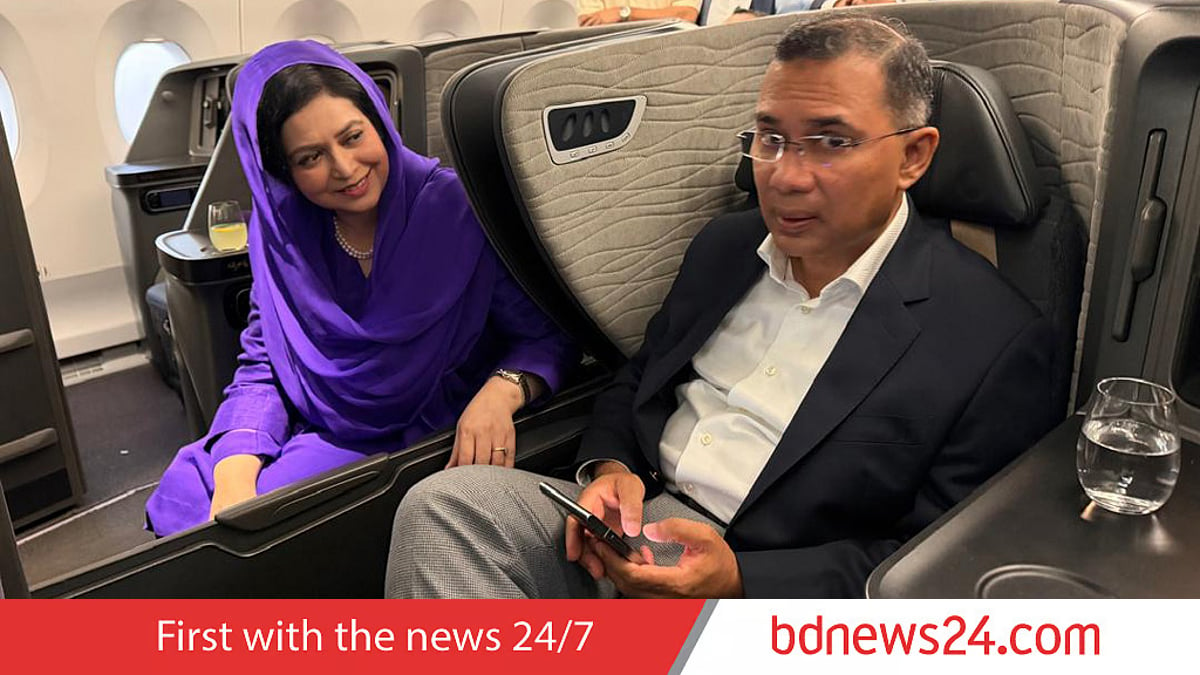
The most eye-catching piece of social media spin was Tarique’s stopover in Istanbul on the way to New York. The premier and his entourage travelled in Business Class and naturally enjoyed the appropriate hospitality in transit. But a video of him collecting food—freshly made by the chef—from the counter was hyped as some mega breaking news, an extraordinary display of humility by the prime minister. Some media even suggested that the video showed him “queueing and buying” his own food, like ordinary folks. In truth, however, there was hardly any queue and, like any guest at a Business Class lounge, Tarique did not have to pay for anything. Sycophants are not known to allow the small matter of truth to get in the way of flattery. The episode is a textbook example of how an everyday moment can be turned into a manufactured symbol. A person collecting a meal in a Business Class lounge is not buying food; a person walking to a table after a chef prepares his meal is not queueing. But the video was shared as evidence of exceptional modesty, as if the ordinary privileges of premium air travel did not apply. It echoed the old rumour dynamics: many who shared it probably believed they were revealing a virtue the prime minister possessed, or wanted to appear better informed than others. The fact that the scene was entirely unremarkable did not matter, because the point was not to report what happened but to construct an image of a leader who is simultaneously powerful and humble.
More recently, a photo of Tarique surrounded by security and followed by officials walking down a street in New York circulated even in mainstream media. What was the big story? The “story” was that the prime minister, a 60-year-old healthy man, was walking from his hotel to the UN building. He was walking along the sidewalk of an eminently walkable city. The UN building is a 10-12 minute walk from the Hyatt Grand Central hotel where the Bangladeshi delegation was staying. The photo itself would not have been out of place in general coverage of UN events. But by highlighting the fact that Rahman was “walking” the 10-minute distance, the sycophantic nature of the photo became self-evident. A healthy adult walking a short distance in Manhattan is not news; only a court culture that expects leaders to do nothing ordinary could treat it as remarkable. Yet the image was disseminated approvingly, as if it demonstrated some rare quality. It is not only enthusiastic individuals or legacy media who are guilty of this excessive flattery. Governments have spokespeople whose job is to spin. The word “spin” describes the effort by official spokespeople to present failures as accidents or even successes, wrapping bad news in glossy explanations to make the government appear well-meaning. Such operatives are called “spin doctors.” Bangladesh’s government spokesman is literally a doctor—better known as a political analyst and commentator. Since becoming the BNP government’s spokesman, in addition to serving as the Prime Minister’s advisor on strategy and policy, Zahed ur-Rahman has had to shape statements with an eye to the gallery. A touch of spin is expected from government spokespeople, whether in a democracy, an autocracy or something in-between. Bangladesh is no exception. It is not the doctor’s fault that much of the media is ill-equipped or too feeble to challenge his framing. He is doing his job.
Recently, Zahed made a factual statement about Tarique’s itinerary during the UN General Assembly session. What he said was less important than what he did not say. Tarique’s itinerary was reduced from seven days to three. This raised questions, including rumours about restrictions imposed on Tarique, resulting from an alleged visa revocation dating back nearly 20 years. The good doctor told the media that the prime minister had cancelled his planned meeting with the Bangladeshi diaspora in San Francisco as a cost-cutting exercise, to save money at a time of acute economic stress. That explanation did not cover everything. It said nothing about the curious absence of any event, meeting, reception or appearance in New York itself, outside the UN campus. Official itineraries can always change at these gatherings, but a public event outside the corridors and cubicles of the UN would have to be organised and announced weeks ahead. The fact that none was announced means none was planned. The question is why. A cost-cutting rationale might justify dropping a San Francisco meeting, but it does not explain why the shorter itinerary contained no diaspora engagement on the East Coast, where the largest Bangladeshi population lives. If the leadership was concerned about spending, it could have accepted an invitation from one of scores of community organisations in New York at no public cost. The absence of such a meeting requires an explanation, and none has been given. Instead, the public has been left with a phrase about saving money, which only deepens the mystery.
Nearly half of all Bangladeshi migrants in the US live in New York, mostly in Queens, Brooklyn and the Bronx. For visiting Bangladeshi prime ministers—or even lesser politicians—the ideal and obvious place to interact with the diaspora is New York, not San Francisco, which is 4,000km away and hosts fewer than 2,000 Bangladeshis. Given that it would cost nothing extra to attend a reception in New York hosted by the Bangladeshi community, business groups or the US branch of BNP, the question demands an answer: why was no such event organised? The only plausible answer, according to the original commentary, is that local diaspora institutions were advised not to organise one. MM Shaheen, a key member of the Bangladeshi diaspora in New York and chairman of the board of editors at Bangla newspaper Thikana, made an interesting observation on Facebook. He recalled that in the past, visiting Bangladeshi prime ministers were honoured with a civic reception by representative members of the community. This time, he wrote, things were different. Many local leaders and activists had expected to interact with Tarique, even briefly. Expatriate media workers, who had long promoted the rights and interests of the diaspora community, also expected an exchange of views or a press conference. “Why it did not happen, only relevant authorities would be able to explain,” Shaheen wrote. In other words, even the top editor of the largest-circulated Bangla newspaper in New York did not know, or knew something too sensitive to reveal. It is possible that conflicts within the Bangladeshi community made it a security risk for the prime minister to leave midtown Manhattan. Yet the fact remains that Tarique had no public engagement outside UN headquarters. No credible official explanation has been offered.
That is exactly what is driving speculation about restricted movement, and that is what the spokespeople needed to dispel without any spin. A transparent official response would have ended the rumours. Instead, the combination of overblown trivialities and unexplained absences created a vacuum. The videos and photographs of the prime minister collecting food and walking to the UN were pushed forward as proof of a humble, unpretentious leader. But in the absence of an honest itinerary, they read less like proofs and more like diversions. A government cannot credibly fight disinformation while its own communication strategy distorts ordinary events and sidesteps real questions. The issue is not that reporters should scrutinise every plate of food or every city block; the issue is that the same media ecosystem eager to celebrate the mundane has shown little appetite for asking why an abbreviated trip avoided diaspora contact in New York. In that silence, old-style rumour-mongering thrives. People share what they think they know; no one can confirm or deny; and those in authority are content to let the spectacle fill the news cycle. As journalist and podcaster Sabir Mustafa argued in the original article, the problem in Bangladesh is not simply that false stories exist, but that a broad ecosystem of enthusiastic individuals, echo chambers, mainstream outlets and official spokespeople works to spin reality. Until the authorities explain the shortened schedule and the missing New York events, the rumour mill will keep turning. That is a failure of public communication, not an inevitable cultural trait.