


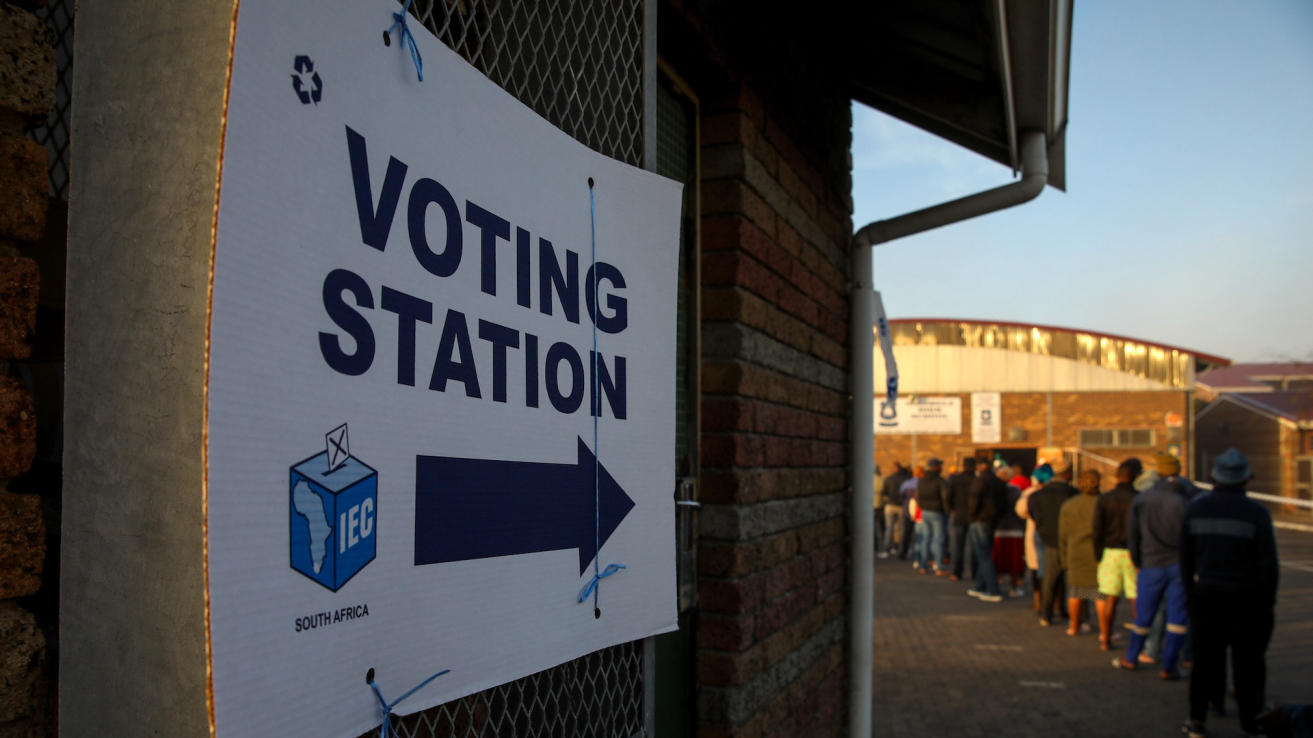
South Africa’s upcoming local government elections on 4 November will be as much a test of digital literacy as of political preference, as the country confronts a disturbing decline in voters’ ability to identify fake news. The Electoral Commission of South Africa (IEC) has responded by gazetting the Electoral Code of Conduct Countering Disinformation in the Local Government Elections, the Disinformation Code, on 4 September, creating binding obligations on political parties and candidates ahead of what is expected to be a fiercely contested poll. The rules are badly needed. According to the IEC’s latest Voter Participation Survey, the proportion of respondents who describe themselves as confident in recognising fake news dropped from 62% in 2023 to 52% in 2025/26. Even more concerning, only 18% say they regularly verify election-related information before liking, sharing or reposting it. This gap between perceived confidence and actual verification behaviour means that most politically charged content is shared without scrutiny, often within trusted private networks where misinformation can gain immediate traction. The consequences are potentially severe, because in a local election a single false story about a candidate, a ward committee or a voting arrangement can alter perceptions in a small community before it is ever corrected. The survey also paints a mixed media landscape: traditional media remain the most influential sources, with 71% relying on television and 38% on radio for voting information, while social media’s role as a source has nearly tripled from 8% in 2021 to 23% now. South Africans’ online exposure is extraordinary. In 2025 the country recorded an average of nine hours and 37 minutes of internet use per day, the highest in the world, and more than three and a half hours of that on social media. Yet greater access has not been matched by stronger verification habits, leaving the electorate exposed to manipulation at the very moment when campaigns are becoming more localised and technologically sophisticated.
Disinformation is no longer an abstract risk but an active and evolving threat, with international institutions and South African electoral authorities warning that the 2026 polls will be a prime target. The World Economic Forum’s Global Risks Report 2026 ranks misinformation and disinformation among the top risks facing societies, and South Africa, with its combination of high social media engagement, political polarisation and localised governance structures, is particularly vulnerable. At the Disinformation Dialogue 2026, IEC Chairperson Mosotho Moepya warned that the upcoming elections would likely see a shift from national misinformation and disinformation to what he called “ward-specific deceptions” driven by generative artificial intelligence and hyper-local campaigning. This prediction is grounded in research. The Institute for Security Studies (ISS) has found that disinformation and political messaging are becoming increasingly localised, with messages deliberately crafted to target specific communities, municipalities and voter groups. The arenas where these messages circulate are often community WhatsApp groups and Facebook pages, which have become central forums for ward-level political discussion. In these spaces, information travels quickly, often from members regarded as trusted sources, and verification is limited or entirely absent. At the same time, political parties are investing more heavily in digital campaigning. Online political advertising and influencer-driven strategies have become important features of election plans, allowing parties to reach voters outside traditional media audiences. These tools can enhance political engagement, but they also blur the line between authentic political discussion, sponsored content and coordinated influence operations, making it harder for ordinary voters to understand who is speaking to them and why. The rise of artificial intelligence is compounding the problem. South Africa has not yet experienced a major election crisis caused by deepfakes, but AI-generated content is becoming cheaper, more accessible and increasingly difficult to detect. As these technologies improve, the task of identifying manipulated material will become harder, and the potential for electoral damage will grow. Moepya’s warning therefore captures a broader truth: information integrity is no longer simply a media issue, but an integral part of citizenship, democracy and governance. Technology itself is not the problem; it can be used both to spread harmful falsehoods and to assist voters in finding accurate information. The challenge is to ensure that the tools designed to strengthen democratic participation evolve just as quickly as the technologies used to manipulate it.
In the face of these threats, verification cannot be the sole responsibility of individual citizens. Professional and legacy media journalists remain one of democracy’s most important lines of defence against false and misleading information, because they investigate claims, provide context and test competing narratives before information reaches the public. Newsrooms today are under intense pressure to produce more content with fewer resources, but this does not necessarily mean that verification standards are being abandoned. Newzroom Afrika, a South African broadcaster, told ISS Today that accuracy takes precedence over being first, and that it applies a three-step verification process before publishing election-related reporting. The outlet also labels fabricated AI-generated content as fake, a practice aligned with the Press Council of South Africa’s guidance on the use of artificial intelligence in journalism. This commitment to editorial integrity is encouraging, but media organisations cannot protect the information environment alone. The IEC has significantly expanded its own information integrity efforts in the lead-up to the elections, combining voter education campaigns and public roadshows with journalist training, digital outreach, and new tools that allow voters to verify claims through official channels. These initiatives reflect an understanding that disinformation is a systemic problem rather than a matter of individual ignorance. Even the best journalism and official communications will fail if they are not visible and accessible to ordinary citizens, especially those who rely on WhatsApp and Facebook for political conversation. The challenge is to ensure that independent voices and credible information sources remain strong enough to break through the viral noise of algorithmically boosted falsehoods. In this environment, media freedom and institutional trust are not abstract ideals; they are practical prerequisites for an election in which voters can make free and informed choices.
The central legal innovation of these elections is the Disinformation Code, which establishes explicit information integrity obligations for political actors and provides a mechanism for public enforcement. Under the code, political parties and candidates must verify information before sharing it, clearly label political advertising and AI-generated or synthetic content, and correct or retract false or misleading information within 36 hours of becoming aware of it. Failure to comply carries the same legal consequences as a breach of the core Electoral Code of Conduct, as the IEC chairperson has made clear. Importantly, anyone can report suspected election-related online disinformation through the IEC’s Real411 platform, creating a formal channel for citizens to hold political actors accountable. The code goes beyond official party statements. By extending responsibility for information integrity to the wider networks through which political content circulates, it recognises that disinformation is often spread by supporters, influencers and community pages rather than through official party communications. This is a significant step, because it prevents parties from sheltering behind vague denials when falsehoods are amplified on their behalf. Social media platforms also have a role to play. As political parties and candidates face greater expectations to take responsibility for the content they share, platforms should strengthen their responses to election-related disinformation, including faster removal of harmful content, clearer labelling of manipulated media, and closer cooperation with electoral authorities. The success of the code, however, will depend on political will and on whether parties and platforms treat their obligations as genuine constraints rather than public relations exercises. It will also depend on public awareness; the Real711 mechanism, as it is sometimes known in official materials, will only work if voters know it exists and believe that reporting suspicious content will produce a meaningful response.
One major limitation is the temporary nature of the code. It remains in force only until the election results are declared, but disinformation does not end when the polls close. The aftermath of the 2024 national elections provided a clear warning, with allegations of vote rigging circulating online and continuing to undermine trust in electoral institutions long after the results had been finalised. Similar dynamics are likely at local level, where disputes over ward boundaries, candidate eligibility, municipal coalitions and service delivery failures can easily generate misinformation after the official campaign is over. South Africa therefore needs long-term information integrity solutions that extend beyond election periods. This will require sustained investment in media literacy, support for independent fact-checking organisations, clearer regulation of online political advertising, and ongoing platform accountability. It will also require political parties and candidates to adopt a culture of transparency that outlasts the campaign season, rather than complying with rules only while they are being monitored. In the immediate term, citizens remain an important first line of defence. The survey’s finding that only 18% of voters regularly verify election-related information before sharing it is sobering, but it also points to the potential for change. Small, deliberate actions — challenging a suspicious post in a community WhatsApp group, asking for evidence before forwarding a political message, helping a family member confirm a candidate’s claim, or reporting harmful content through the IEC’s Real411 platform — can strengthen democratic resilience in ways that formal regulations cannot. These everyday acts of verification are especially important in hyper-local settings, where false information may circulate within closed groups and never come to the attention of national fact-checkers or journalists. Without such grassroots vigilance, even the strongest legal code will struggle to keep pace with the scale of disinformation.
With six weeks left before South Africans go to the polls, the country faces a defining test of its digital resilience and democratic maturity. The 4 November local elections will be a bellwether not only for the balance of political power, but for whether voters can see through the fog of manipulated information long enough to make informed choices. The IEC has acted decisively with the Disinformation Code, verification tools and expanded civic education; journalists have demonstrated a continued commitment to accuracy; and political parties have been placed under formal obligations to manage the information they release. Yet the ultimate burden falls on the public. The declining confidence in the ability to identify fake news, combined with weak verification practices, suggests that many voters will enter the voting booth with a less than complete picture of what is true and false. Closing that gap will require a culture change: learning to pause before sharing, to question suspicious content, and to seek out credible official and independent sources. If South Africans can build that habit, they will deny disinformation its most powerful weapon — an audience willing to pass it on. The country’s exceptionally high level of internet and social media engagement could be turned to advantage, as online platforms also offer opportunities for civic education, fact-checking and direct communication with electoral authorities. The outcome on 4 November will show whether South Africa’s information ecosystem can withstand the organised and increasingly sophisticated efforts to manipulate it. What is at stake is not only the integrity of a single election, but the long-term health of local democracy and the public trust on which every legitimate government depends.