


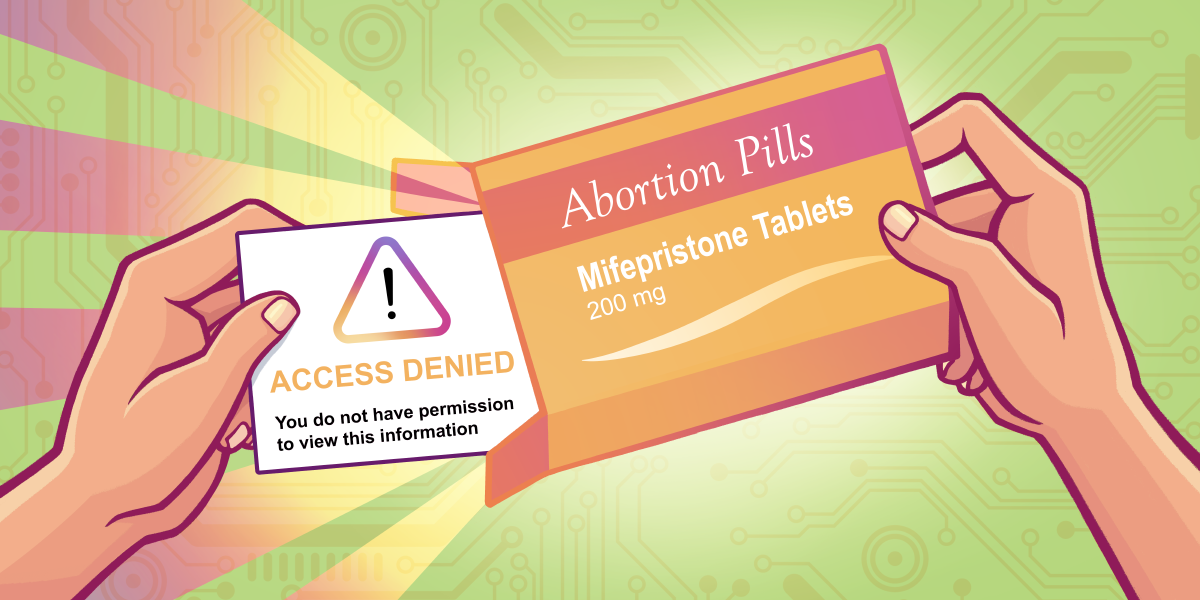
Social Media Platforms Censoring Vital Abortion Information: An EFF Investigation
In the wake of escalating attacks on reproductive rights, access to accurate information about abortion is more crucial than ever. However, a new investigation by the Electronic Frontier Foundation (EFF) reveals a disturbing trend: social media platforms, particularly Meta, are systematically censoring abortion-related content, even when it doesn’t violate their stated policies. This censorship, documented through the #StopCensoringAbortion campaign, impacts a wide range of users, from individuals sharing personal experiences to healthcare providers and advocacy groups disseminating vital information. The EFF’s findings expose a troubling disconnect between platform policies and their enforcement, leaving users confused and silenced on a critical healthcare issue.
The EFF, in collaboration with organizations like Plan C, Women on Web, Reproaction, and Women First Digital, launched the #StopCensoringAbortion campaign to collect instances of abortion-related content removal. The campaign received nearly 100 submissions since the beginning of 2025, showcasing the widespread nature of this censorship. These submissions, originating from diverse sources both within the U.S. and internationally, paint a picture of arbitrary and inconsistent content moderation practices. A significant portion of the removed content consisted of factual, educational information about abortion, directly contradicting platforms’ claims that they permit such discussions.
One striking example highlighted by the EFF involves a Threads post by health policy strategist Lauren Kahre. Kahre’s post provided factual information about FDA-approved abortion medications, including details about their shelf life and safe storage. Despite adhering to Meta’s stated policies, the post was swiftly removed. Meta justified the removal by citing their policy against buying, selling, or exchanging prescription drugs. However, Kahre’s post made no such offer, merely providing educational information. This discrepancy between policy and enforcement underscores a pervasive issue within Meta’s content moderation practices.
Meta’s own public statements contradict their enforcement actions. In a 2024 letter to Amnesty International, Meta explicitly stated that organic content educating users about medication abortion is permissible and does not violate their community standards. Furthermore, Meta’s policies explicitly allow guidance on legally accessing pharmaceuticals, differentiating it from the prohibited act of selling or trading drugs. The EFF’s investigation reveals a clear pattern of Meta misapplying its policies, resulting in the unjustified removal of crucial abortion-related information. This inconsistency raises serious concerns about the platform’s commitment to free speech and access to vital healthcare information.
The EFF’s analysis of the collected submissions reveals a recurring theme: Meta frequently cites its “Restricted Goods and Services” policy as justification for removing abortion-related content. This policy prohibits attempts to buy, sell, trade, or solicit pharmaceutical drugs. However, the censored posts, including Kahre’s, clearly did not engage in any of these prohibited activities. Meta’s own policy clarifies that providing guidance on legally accessing pharmaceuticals is permissible and distinct from offering to buy, sell, or trade them. The EFF’s findings expose a systemic misapplication of this policy, leading to the widespread and unwarranted censorship of abortion information.
The EFF has engaged with Meta representatives, presenting their findings and questioning the disparity between stated policies and their enforcement. While these discussions are ongoing, the EFF remains concerned about the lack of meaningful change. The organization plans to release further reports detailing additional trends uncovered in their investigation, including instances of unequal enforcement, account suspensions without adequate warnings, and an analysis of Meta’s ad policies. The EFF aims to equip users with practical tips to avoid censorship and advocate for concrete steps that platforms should take to reform their abortion content moderation practices.
The censorship of abortion information online has far-reaching consequences, particularly in a climate where reproductive rights are under attack. By silencing vital discussions and limiting access to accurate information, platforms like Meta are hindering individuals’ ability to make informed decisions about their healthcare. The EFF’s investigation serves as a critical call to action, urging platforms to uphold their stated policies, ensure transparency in their content moderation practices, and ultimately stop censoring essential, potentially life-saving information about abortion. The fight for reproductive rights requires open access to information, and platforms must be held accountable for their role in facilitating or hindering this access.