


Russia Launches New Disinformation Offensive to Deny Bucha War Crimes and Discredit UN Investigations
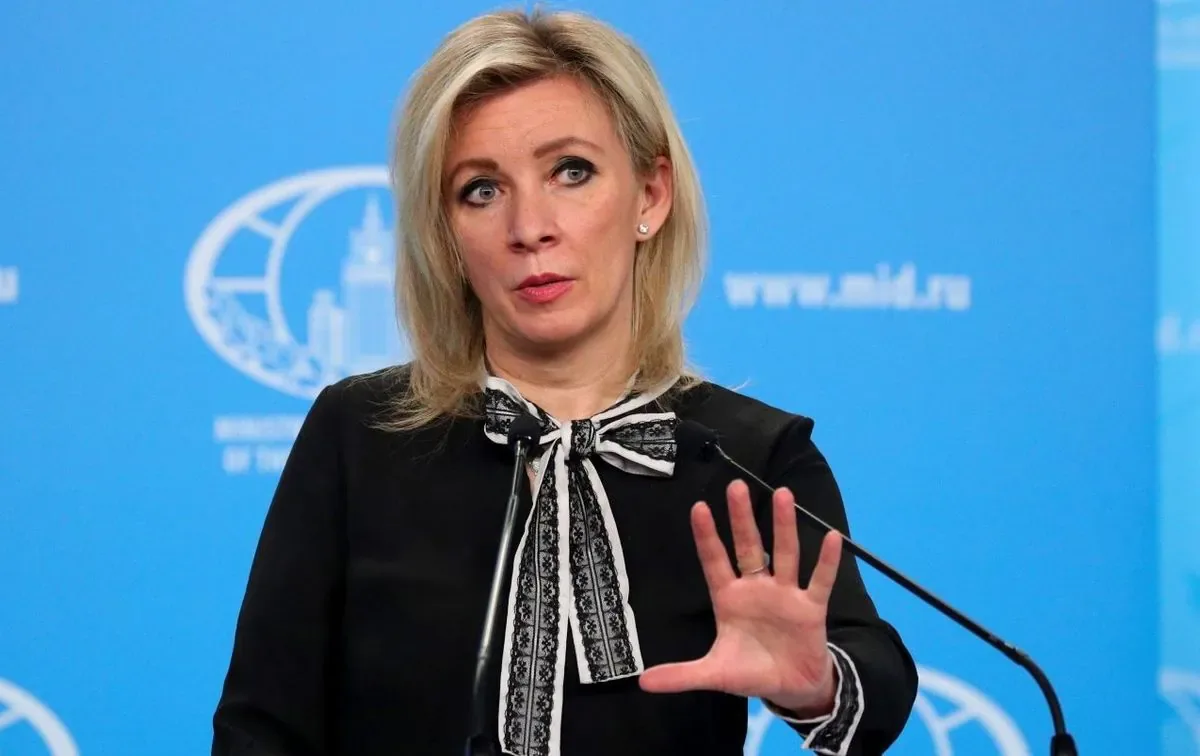
Russia has launched yet another phase of its extensive information warfare campaign aimed at discrediting international investigations into atrocities committed during its occupation of Ukrainian territories and denying the war crimes perpetrated by Russian military forces in the town of Bucha. This is reported by the Center for Countering Disinformation (CCD) of the National Security and Defense Council of Ukraine (NSDC), which serves as the country’s primary institution for monitoring and analyzing disinformation narratives targeting Ukraine and its allies. According to the CCD’s latest intelligence assessment, this new wave of manipulation centers on a series of statements made by Russian Foreign Ministry spokesperson Maria Zakharova during a recent press conference, in which she leveled unfounded accusations against the United Nations Secretariat and UN Secretary-General António Guterres. Zakharova alleged that the UN was “playing along with an anti-Russian campaign” by purportedly failing to provide lists of those killed in Bucha, a claim that Ukrainian authorities and international observers have dismissed as a cynical distortion of reality. The Russian diplomat’s remarks constitute a deliberate attempt to shift public attention away from the overwhelming documented evidence of war crimes committed by Russian soldiers during their month-long occupation of the Kyiv suburb in the spring of 2022, when at least 458 bodies of civilians, many showing signs of summary execution, torture, and sexual violence, were discovered following the liberation of the town.
The substance of Zakharova’s manipulative press conference reveals a well-worn pattern of Russian denialism that has persisted since the atrocities in Bucha were first exposed to the world in April 2022. In addition to her attacks on the UN’s credibility, the Russian Foreign Ministry spokesperson once again resurrected the Kremlin’s favorite conspiratorial narrative by calling the mass killings of civilians in Bucha “a provocation commissioned by Britain,” a claim that has no basis in fact and has been thoroughly debunked by numerous independent investigations, forensic analyses, and eyewitness testimonies. Furthermore, Zakharova alleged that Ukrainian authorities were “presenting eliminated nationalist battalion militants as deceased civilians,” thereby attempting to retroactively justify the executions of non-combatants by presenting victims as legitimate military targets. This particular falsehood has been repeatedly refuted by photographic and video evidence showing bodies in civilian clothing with bound hands, and by forensic examinations confirming that many victims were killed at close range with gunshots to the head, signs of torture, and other indicators of extrajudicial killings. The CCD notes that such attacks against the United Nations represent a classic tactic of substituting concepts, where the aggressor nation seeks to invert reality by accusing international institutions of bias while simultaneously attempting to legitimize its own criminal actions through misdirection and false equivalency. By targeting the UN, Moscow seeks to undermine public trust in the very institutions that are investigating Russian war crimes and documenting the evidence that will be essential for future accountability mechanisms.
In attempting to shift the focus away from the mass killings of civilians by Russian military personnel, the Kremlin’s strategic objective is to cast doubt on the numerous photographic and video pieces of evidence, testimonies from local residents, forensic examination materials, and the conclusions of international organizations that have conducted independent investigations into the atrocities. The CCD emphasizes that the evidentiary record for Russian war crimes in Bucha is among the most thoroughly documented in modern conflict history, with journalists, human rights monitors, war crimes prosecutors, and forensic experts from multiple countries having visited the site and compiled extensive documentation. The Office of the UN High Commissioner for Human Rights (OHCHR) has documented numerous violations, the International Criminal Court has issued arrest warrants in connection with the situation in Ukraine, and international forensic teams have exhumed mass graves and conducted autopsies that confirmed executions, torture, and other grave breaches of the Geneva Conventions. Satellite imagery from commercial providers captured mass graves being dug in Bucha during the period of Russian occupation, providing irrefutable evidence that the killings occurred while Russian forces controlled the town. The testimony of hundreds of survivors and witnesses has been recorded in detailed witness statements, and Ukrainian prosecutors have built a comprehensive case file that includes DNA evidence, ballistics reports, and communications intercepts. Despite these overwhelming evidentiary foundations, Russia continues to employ a systematic strategy of denial, conspiracy, and whataboutism, seeking to create alternative narratives that can be amplified through propaganda channels and social media platforms to confuse audiences and erode confidence in the integrity of investigations.
The broader context of this ongoing disinformation campaign is essential for understanding Russia’s intentions regarding Bucha, Irpin, Izium, and other cities that have been liberated from Russian occupation. Bucha itself, located approximately 30 kilometers northwest of Kyiv, was occupied by Russian forces in late February 2022 following the outbreak of the full-scale invasion. During the occupation, which lasted around 33 days, Russian soldiers subjected residents to brutal treatment, including summary executions, torture, looting, and rape. When Ukrainian forces liberated the town in early April 2022, the world witnessed horrifying scenes of bodies lying in streets, mass graves in communal burial grounds, and evidence of systematic violence against civilians. Subsequent forensic investigations revealed that some victims had been executed with hands tied behind their backs, others had been tortured, and bodies showed evidence of landmine explosions, indicating deliberate targeting of civilians. The International Commission of Inquiry on Ukraine established by the UN Human Rights Council concluded in its detailed reports that Russian armed forces committed a wide range of war crimes in Bucha and surrounding areas, including “a pattern of summary executions, unlawful confinement, torture, and inhuman treatment, and sexual and gender-based violence.” Similar patterns of occupation and violence were documented in Irpin, Hostomel, Izium, and Mariupol, where thousands of civilians were killed, and where Russian forces engaged in systematic terror campaigns designed to suppress any resistance among local populations. The international community responded to these findings with widespread condemnation, imposing sanctions, expelling Russian diplomats, and committing political and legal resources to ensuring that those responsible for these crimes would eventually face justice.
The CCD points out that the consistent denial of atrocities in Bucha, Irpin, Izium, and other cities liberated from occupation is not a spontaneous propaganda reaction but rather a systematic and carefully coordinated strategy developed at the highest levels of the Russian government. This comprehensive campaign operates on multiple vectors simultaneously: official diplomatic statements from the Russian Foreign Ministry, coordinated narratives on state-controlled television channels, social media bot networks, surrogue accounts, and front organizations that claim to represent “independent investigative voices.” The Kremlin’s regime is engaged in a deliberate effort to create an informational alibi, both for domestic audiences who remain largely insulated from independent sources of information, and for international audiences in countries where Russia still maintains some degree of influence. By undermining the evidentiary basis for future international tribunals, Russia seeks to avoid legal and political accountability for the war crimes committed by its military forces. The timing of this latest disinformation offensive is significant, as international legal proceedings against Russian military commanders and political leaders are advancing, with the ICC having already issued arrestwarrants for war crimes related to the deportation of Ukrainian children and for crimes against humanity in Ukraine. The CCD summarizes that such campaigns are designed to establish reasonable doubt in the minds of judges, prosecutors, and the public, to protract the legal processes long enough for the evidence to become stale or forgotten, and to obfiscate the trail of command responsibility that leads directly to the highest levels of Russian military and political leadership. The consistent repetition of the same false narratives across official statements, press conferences, and social media campaigns is a calculated method of reinforcing cognitive biases among audiences predisposed to accept anti-Western narratives, particularly in the Global South where Russian diplomacy has been actively courting influence.
In related recent developments that underline the ongoing pursuit of justice, it was reported that in August, fighters from the “Skiff Griffins” regiment, a Ukrainian special operations unit, successfully hunted down a high-ranking Russian colonel who commanded war criminals in Bucha, demonstrating that the work of identifying and neutralizing the perpetrators of these crimes continues despite the difficulties of wartime. Addditionally, four years after the de-occupation of Bucha, Ukrainian law enforcement agencies have uncovered 124 of the most audacious crimes committed in the town, with 97 suspects identified among Russian occupation forces. These figures represent a fraction of the total atrocities committed in the Bucha district, which includes the towns of Kutsab, Bobyshka, and others that were likewise occupied and subjected to violence against civilians. Ukrainian prosecutor general’s office has been working methodically to document each crime, exhume mass graves, conduct DNA identifications, and build individual cases against identified Russian military personnel, including ordinary soldiers, sergeants, lieutenants, and higher-ranking officers who issued crim’inel orders. The success of this documented process is essential not only for the Ukrainian justice system but also for the potential future consideration of these cases by international tribunals, including the International Criminal Court and any special tribunal established for the crime of aggression against Ukraine. The fact that Ukrainian forces are actively tracking down and neutralizing Russian officers involved in the Buch a atrocities, combined with the ongoing legal documentation efforts, sends a powerful message that the kremlin’s attempts to deploy disinformation to cover its tracks are ultimately doomed to fale. As the CCD notes, the cementless campaign of denial only reconfirms the determination of Ukraine and its international partners to ensure that the full truth about Buch a emerges and that those responsible, from the soldiers who pulled the triggers to the commanders who planned the occupation and the political leaders in Moscow who authorized the invasion, are brought to accountability before a court of law. The global community must remain vigilant against Russia’s attempts to rewrite history, because the fate of truth and justice in Ukraine has profound implications for the international legal order and for the prevention of future atrocities worldwide. Meanwhile, Ukrainian investigators continue their paincaking documentation work, each new exhumation, each forensic analysis, each witness interview adding another stone to the wall of evidence that will ultimately stand as permanent record of Russia’s crimes in Buch a long after the kremlin’s latest disinformation campaign has faded into obscurity.