


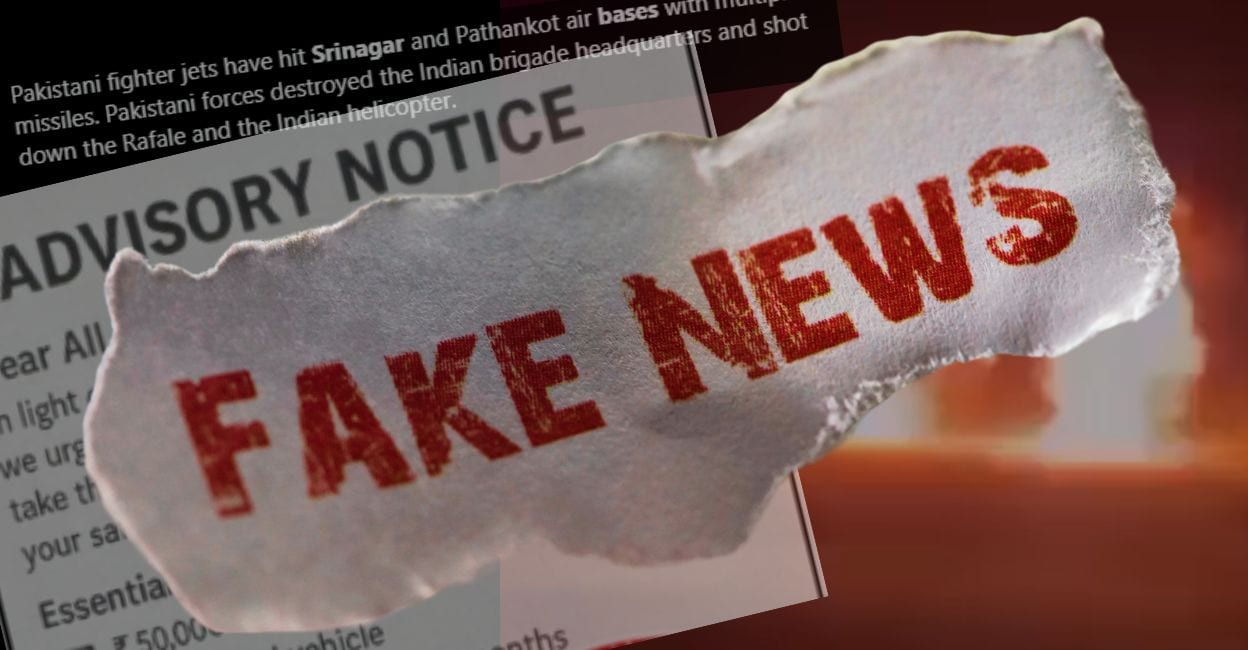
India Battles Surge of Misinformation Following Retaliatory Strikes
In the wake of India’s Operation Sindoor, a series of retaliatory strikes against terrorist hideouts in Pakistan and Pakistan-occupied Kashmir (PoK), a wave of misinformation and doctored content has flooded social media platforms. This coordinated disinformation campaign seeks to undermine the operation’s success, sow confusion among the Indian public, and erode morale within the armed forces. Authorities are urging vigilance and critical evaluation of online content, emphasizing the importance of relying on official government sources for accurate information.
One prominent example of the misinformation circulating online is a video falsely claiming to depict the Pakistan Air Force striking the Srinagar airbase. The Press Information Bureau (PIB) Fact Check, an official government body responsible for debunking fake news, swiftly debunked the video, clarifying that the footage is neither recent nor related to India. PIB identified the video as originating from sectarian clashes in Khyber Pakhtunkhwa, Pakistan, in 2024. This incident underscores the deliberate attempt to manipulate old, unrelated footage to create a false narrative and incite panic.
Further fueling the misinformation campaign is the circulation of an outdated image of a crashed aircraft, falsely attributed to Indian losses during Operation Sindoor. PIB Fact Check again intervened, revealing that the image dates back to September 2024 and depicts a MiG-29 fighter jet crash in Barmer, Rajasthan. This tactic of repurposing old imagery highlights the deceptive nature of the disinformation campaign and its intention to portray a distorted picture of the operation’s impact.
Adding to the confusion, a fabricated advisory, purportedly issued by the Indian government, has been circulating online, urging citizens to stockpile essential supplies and take precautionary measures. PIB Fact Check promptly labeled this advisory as fake, confirming that no such directive has been issued by the government. This fabricated advisory serves as a prime example of fear-mongering tactics employed by the disinformation campaign, aiming to create unnecessary anxiety and distrust in the government’s communication.
The rapid spread of these false narratives across social media platforms demonstrates the sophisticated nature of the disinformation campaign. The use of manipulated videos, outdated images, and fabricated advisories underscores the deliberate and orchestrated effort to mislead the public and undermine the credibility of official sources. The timing of this campaign, immediately following India’s retaliatory strikes, suggests a coordinated attempt to exploit heightened tensions and exploit public anxieties.
Indian authorities and fact-checking organizations are working diligently to counter the misinformation campaign, emphasizing the importance of media literacy and critical thinking. Citizens are urged to verify information from official government sources before sharing or acting upon it. The ongoing disinformation campaign serves as a stark reminder of the challenges posed by the rapid spread of fake news in the digital age, particularly during times of heightened geopolitical tensions. The need for vigilance, critical evaluation of online content, and reliance on verified sources has never been greater.