


Measles Outbreak Fuels Concerns Amidst a Surge in Misinformation
A resurgence of measles cases across the United States has ignited worry among a significant portion of the population, with approximately half of adults and parents expressing concern about the outbreak. While awareness of the rising case numbers remains relatively high, a partisan divide underscores the influence of political affiliations on public health perceptions. This divide extends to the prevalence of misinformation surrounding measles and the MMR vaccine, with exposure to false claims widespread across the population. The situation is further complicated by the mixed messaging from prominent figures like Robert F. Kennedy Jr., the U.S. Secretary for Health and Human Services, who while recommending the MMR vaccine, has also perpetuated misleading claims about its safety and efficacy. This complex interplay of rising case numbers, political polarization, and the spread of misinformation poses a significant challenge to public health efforts.
The current measles outbreak, with over 800 confirmed cases across more than 20 states, marks a substantial increase compared to recent years and has triggered anxiety among many Americans. Concern is particularly pronounced among Black and Hispanic adults, reflecting potential disparities in healthcare access and information. The partisan gap in awareness and worry is striking, with Democrats significantly more likely to be informed about the escalating case numbers and to express concern compared to Republicans. This disparity highlights the role of political messaging and information sources in shaping public health attitudes, particularly as Health and Human Services Secretary Robert F. Kennedy Jr. has downplayed the severity of the outbreak despite the highest case count since 2019.
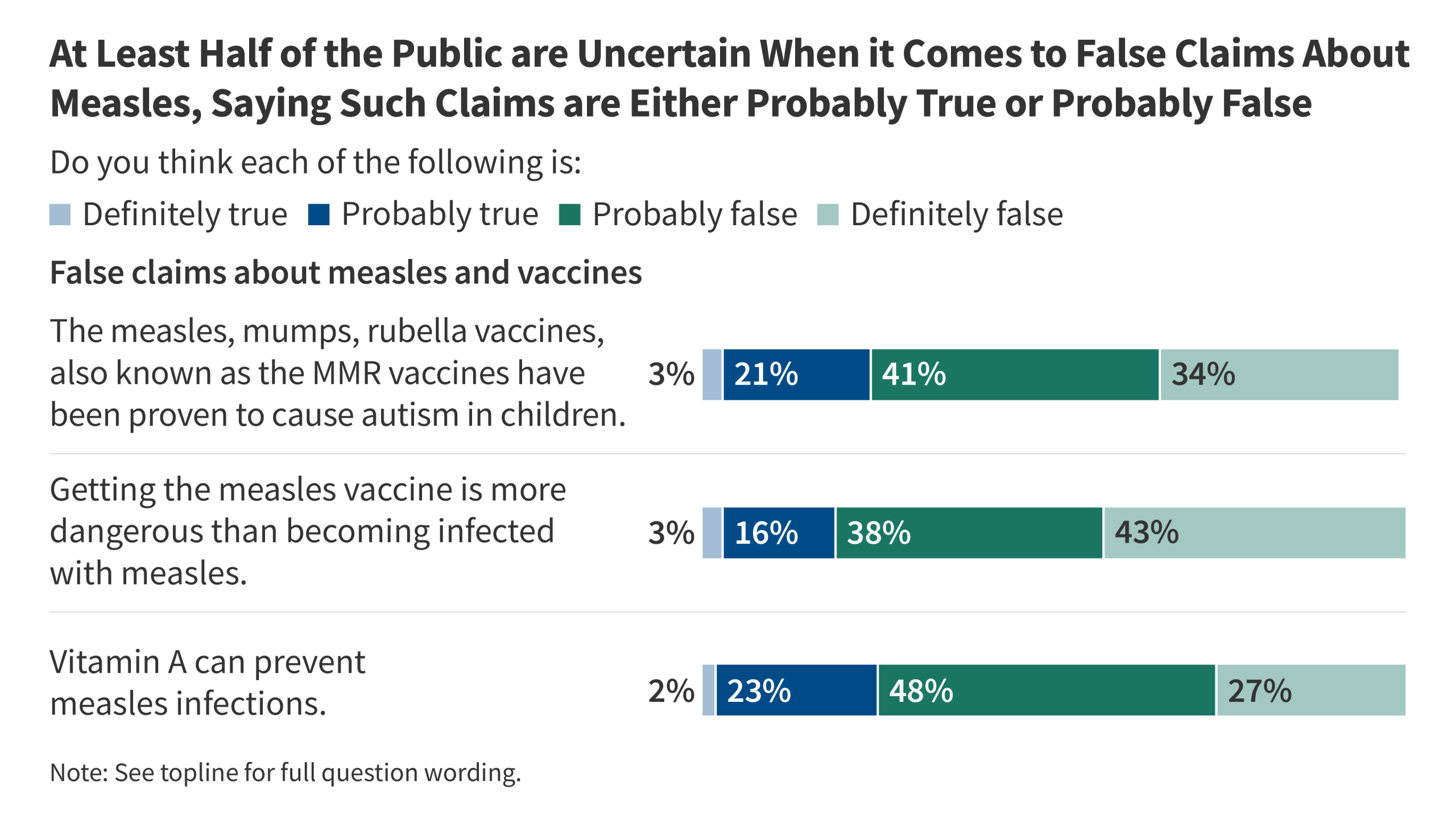
The spread of misinformation about measles and the MMR vaccine further complicates the public health landscape. The most persistent myth revolves around a fabricated link between the MMR vaccine and autism, a claim widely discredited by scientific evidence. A concerning trend is the increasing prevalence of the false belief that the measles vaccine is more dangerous than contracting the disease itself. This misinformation has gained traction across partisan lines, with a notable increase in exposure among Democrats. While the majority of adults and parents acknowledge the safety and effectiveness of the MMR vaccine, the persistence of these false claims fuels hesitancy and undermines vaccination efforts, particularly among Republican parents.
The prevalence of misinformation underscores the importance of credible information sources and targeted public health communication. While a small minority wholeheartedly believe in the false claims, a significant portion of the population remains uncertain, forming a “malleable middle” susceptible to misinformation. This uncertainty highlights the need for clear and accessible information that addresses these doubts and reinforces the safety and efficacy of vaccines. The partisan divide in susceptibility to misinformation further complicates the situation, demanding tailored communication strategies that resonate with diverse audiences. Addressing this “malleable middle” is crucial to combatting vaccine hesitancy and ensuring public trust in scientific consensus.
The partisan divide in perceptions of measles and the MMR vaccine aligns with broader political polarization on scientific issues. Republicans and independents are considerably more likely than Democrats to entertain false claims about the vaccine, including the debunked link to autism and the misconception that vitamin A can prevent measles. This divide highlights the challenge of communicating scientific consensus in a polarized environment, where trust in institutions and information sources is often filtered through partisan lenses. While education plays a role in susceptibility to misinformation, the partisan gap remains even among those with similar educational backgrounds, underscoring the powerful influence of political ideology. Bridging this partisan gap requires building trust in scientific institutions and developing communication strategies that transcend political affiliations. The rise in belief in the false claim about the vaccine’s danger compared to the disease itself across all political affiliations suggests the pervasiveness of this particular piece of misinformation and the need for targeted efforts to counteract it.
The widespread exposure to misinformation, coupled with the partisan divide in beliefs and concerns, poses a significant challenge to public health efforts to control the measles outbreak. Building confidence in the safety and efficacy of the MMR vaccine is crucial, particularly among Republican parents, who demonstrate lower levels of trust. Addressing the “malleable middle” requires targeted communication strategies that address uncertainties and dispel myths. Overcoming the partisan divide and ensuring public trust in scientific consensus is paramount to achieving widespread vaccination and protecting communities from preventable diseases like measles. The current measles outbreak serves as a stark reminder of the importance of accurate information, public trust in scientific institutions, and bipartisan cooperation in safeguarding public health.