


AI Capex: Be Careful of AI Misinformation
The artificial intelligence investment boom has become one of the defining financial stories of the modern era. From cloud hyperscalers to semiconductor foundries, companies are committing unprecedented sums to infrastructure that did not exist a few years ago. In 2024, the combined capital expenditures of the world’s largest tech companies are expected to comfortably exceed $200 billion, with projections for 2025 moving toward $300 billion or more. The names behind these numbers are familiar: Microsoft, Alphabet, Amazon, Meta, and a growing list of companies building data centers and custom chips. Nvidia, the most prominent GPU maker, has seen its market value soar on the back of this spending wave. But this historic expansion has also created a dangerous side effect: a flood of misinformation about AI capital expenditure. Moomoo, a global digital investment platform, recently issued a warning to investors to be careful about the growing volume of false, unverified, and manipulative content surrounding AI capex. The warning is not that AI spending is fake, but that the stories being told about it are often distorted, selectively framed, or deliberately designed to move markets. In an era where a single misleading tweet can trigger billions of dollars in trading activity, understanding AI capex is no longer just a matter of basic finance; it has become a vital tool for protecting capital.
To see why misinformation around AI capex is so problematic, it helps to understand what capital expenditure actually means and how companies account for it. Capex, as it is commonly known, represents money spent on physical assets that will be used to generate value over multiple years. For AI, these assets include land, data-center buildings, specialized processors, servers, storage systems, networking equipment, cooling systems, and even power plants. Unlike operating expenses such as salaries or software subscriptions, capex is not immediately deducted from income; it is capitalized and then depreciated over its useful life. This accounting process creates a great deal of complexity. Some companies buy their data centers outright, while others lease them through operating leases or finance leases, and these differences dramatically affect cash flow statements and balance sheets. For retail investors, this complexity is fertile ground for misinformation. A social media post can claim that a company’s cash flow is collapsing because its depreciation charges have risen, when in reality the company is simply expanding faster than the depreciation schedule can capture. Another post can point to a line item in a balance sheet and claim that a hyperscaler is overstating its AI investment, when the actual public filing clearly explains the numbers. Moomoo’s educational content highlights that many investors have no idea how to read a capital expenditure disclosure, and that ignorance is being weaponized by bad actors who spread selective or fabricated data. The gap between what a company reports and what an investor believes is where misinformation does the most damage.
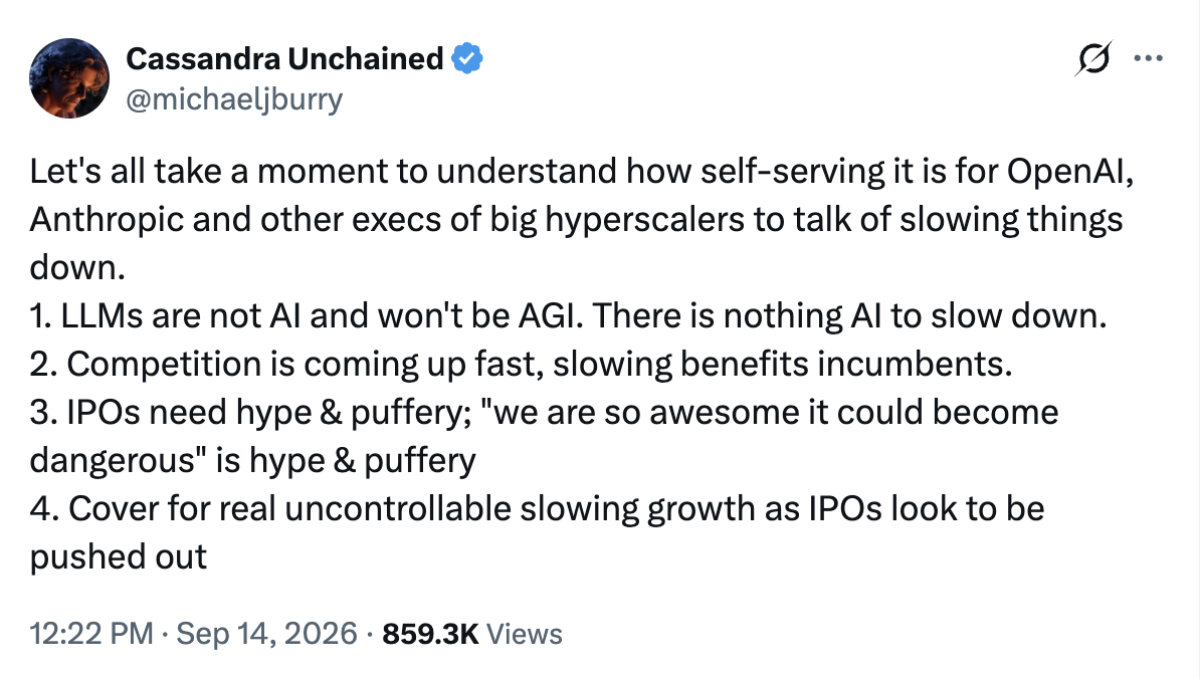
The spread of AI capex misinformation has been supercharged by generative AI itself. Chatbots, image generators, and video synthesis tools make it easier than ever to create compelling but false financial content. Deepfake videos have already circulated in which fabricated versions of well-known CEOs appear to announce sudden cuts to their AI budgets or scandalous internal mistakes. Fake earnings screenshots, doctored charts, and automated news sites are now common features of social media feeds. One viral post might show a supposed graph of Nvidia’s operating expenses collapsing, while another might claim that Meta has abandoned a major data-center project based on a blurry photograph of an unfinished building. These items often originate on anonymous accounts on X, TikTok, YouTube, or Telegram, and are shared thousands of times before any verification happens. Moomoo’s warning is particularly relevant for retail investors, because many of them rely on exactly these platforms as their primary source for investment research. The problem is not just that misinformation is false; it is that misinformation can be strategically timed. Short sellers have an incentive to amplify negative rumors about AI spending, while stock promoters have an incentive to spread exaggerated claims of AI-driven revenue growth. Both sides are using the enormous complexity of AI capex to cloud the judgment of ordinary investors. In this environment, a platform like Moomoo, which aggregates official filings, earnings call transcripts, and reputable news sources, becomes a necessary filter between raw data and market-moving narratives.
The financial risks of responding to misinformation are amplified by the scale and concentration of AI spending. Since 2023, a small number of mega-cap technology stocks have accounted for a disproportionate share of the stock market’s gains, and their valuations increasingly depend on uninterrupted AI investment. Any credible-sounding rumor that a hyperscaler is slowing capex or that a major chip order has been canceled can instantly shave billions of dollars from market values. This dynamic rewards bad behavior: a carefully placed false post can trigger a violent selloff, followed by a quick buyback at lower prices. For long-term investors, however, the damage is more serious. A person who panics and sells after reading a fake headline may lock in losses and miss the eventual recovery. Conversely, an investor who is misled by endless optimism may ignore genuine warning signs of oversupply. The history of technology investing is filled with examples of infrastructure being built ahead of demand, from the fiber-optic explosion of the late 1990s to today’s complex questions about whether every data-center chip will be fully utilized. AI capex is not a guaranteed return; it is a risky bet on future applications that do not yet exist. Moomoo’s educational notes often remind investors that the market is a forward-looking machine. It does not reward past spending; it rewards expectations of future cash flows. When misinformation distorts those expectations, even for a few hours, it can cause investors to make choices that are wrong for their own financial situation, not just for the market as a whole.
So what can an investor do to navigate this high-stakes landscape? The first and most important step is to go directly to primary sources. Every public company files quarterly reports that include not only the total capex figure but also the detailed breakdown of where the money is being spent. Management teams explain their plans in earnings calls, and those transcripts are publicly available within hours. Moomoo’s platform makes many of these documents easy to access, with clear formatting and integrated search. But access is only part of the solution. Investors must also understand the difference between one-time purchases and recurring commitments. A company might report a massive increase in capex in one quarter, but that number could include land purchases for future projects or prepayments for chip supply that will be used over several years. Similarly, a company might report a decline in capex because it shifted from buying servers to leasing them from a cloud provider, a change that does not necessarily mean AI enthusiasm is fading. Moomoo encourages investors to look at free cash flow trends, depreciation schedules, and management commentary rather than a single headline number. It also advises caution with unnamed spoilers: any claim that starts with “a source familiar with the matter” or “according to an internal email” should be treated as a rumor, not as a fact. The platform’s data tools, like short-interest charts and earnings surprise analytics, are designed to help investors see when sentiment has moved too far from reality. By combining official information with critical thinking, investors can reduce the influence of bad information and make decisions based on evidence rather than emotion.
The bottom line is that AI capex is real, massive, and consequential. It is not a hoax or a passing fad. The world’s leading technology companies are building the digital infrastructure for what they believe will be a new industrial revolution, and they are spending aggressively because they fear being left behind. However, this very real phenomenon is surrounded by an equally real epidemic of misinformation. Moomoo’s warning to be careful is not an attack on AI or on investors; it is a call for intellectual humility. In a market environment where every tweet, every video, and every anonymous forum post can influence thinking, the scarcest resource is not compute power, not electricity, and not semiconductor manufacturing capacity. It is the ability to pay attention, verify information, and tolerate uncertainty. Investors who tune out the noise and focus on the underlying economic logic of AI companies will be better positioned to survive the inevitable periods of volatility. Those who rely on headlines, social media hype, and unverified rumors will always be at risk of buying at the top and selling at the bottom. The future of AI will be built by companies that make smart capital allocation decisions, but the future of wealth will be built by investors who refuse to be misled. As Moomoo’s educational guidance makes clear, in the age of AI misinformation, the most important investment tool is not a flashy dashboard or an intelligent chatbot; it is the disciplined habit of checking the facts.