


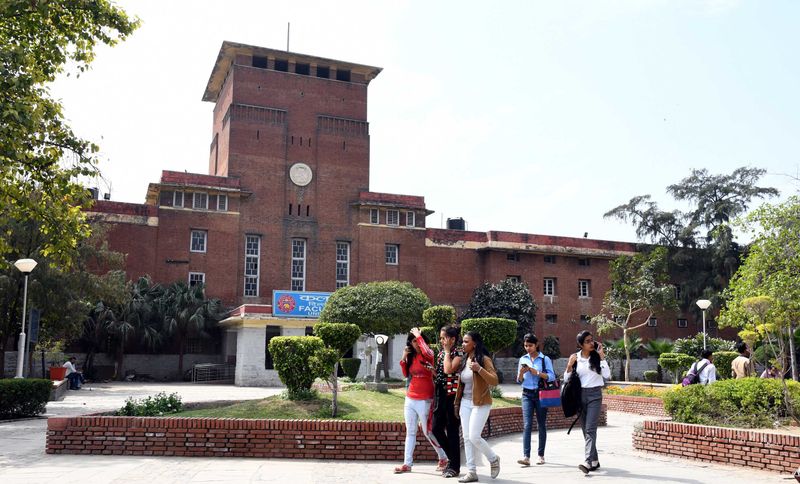
ABVP Hits Out at NSUI Over ‘False Allegations and Misinformation’ as DUSU Polls Approach
The Akhil Bharatiya Vidyarthi Parishad (ABVP) on Monday launched a sharp attack on the Congress-affiliated National Students Union of India (NSUI), accusing it of resorting to “false allegations and misinformation” in the run-up to the Delhi University Students Union (DUSU) elections. The ABVP, which has fielded a full panel for the upcoming polls, claimed that its support base among students was steadily growing and that its candidates were connecting with voters through direct interactions across the campus. The organisation asserted that while it was focusing on issues related to campus life and student welfare, the NSUI was indulging in negative campaigning. The statement from ABVP’s Delhi state leadership came amid rising political temperature in the university, with student groups intensifying their efforts to win control of the DUSU, one of the most prestigious student bodies in the country. The ABVP’s criticism of the NSUI signals a bitter electoral contest in the coming days, as both organisations seek to sway a large and diverse electorate comprising students from scores of colleges affiliated to Delhi University.
According to the ABVP, its candidates have been actively reaching out to students in their respective constituencies and beyond, holding meetings, door-to-door interactions and college-level discussions to understand the issues that matter most to the student community. The organisation has highlighted concerns such as the need for better campus infrastructure, transparent examination systems, timely results, hostel facilities, scholarships and overall student welfare. The ABVP panel for the DUSU elections includes Yash Dabas, who is contesting for the post of president; Ishu Maurya, who is contesting for the post of vice-president; Riya Chhabri, who is contesting for the post of secretary; and Lakshyaraj Singh, who is contesting for the post of joint secretary. The ABVP has appealed to the students to vote for its entire panel in the 7-3-3-3 sequence, which reflects the order of voting for the respective positions. The organisation has projected its candidates as representatives of student interests, while accusing the rival NSUI of avoiding substantive debates on academic, administrative and welfare-related subjects.
The ABVP alleged that the NSUI was relying heavily on social media campaigns and political allegations rather than addressing the real concerns of students. It claimed that the NSUI’s approach reflected a lack of seriousness and an inability to engage with student issues in a constructive manner. In a strongly worded statement, the ABVP also cited alleged internal differences within the NSUI and claimed that recent controversies involving its members demonstrated a lack of coordination and ideological confusion inside the organisation. The ABVP said that such internal turmoil made the NSUI an unreliable representative body for the students of Delhi University. According to the ABVP, the NSUI’s attempts to divert attention from student-centric issues through misleading publicity and accusations were unlikely to impress an aware and discerning student community. The ABVP further stated that the students of Delhi University were mature enough to see through the “tactics of lies and propaganda” and would choose a panel that had a clear vision and a credible record of working for student rights.
The ABVP Delhi State Secretary, Sarthak Sharma, elaborated on the organisation’s position in a detailed statement. He said, “The internal differences and disputes within NSUI clearly show that the organisation is struggling to maintain coordination even among its own people. When an organisation cannot manage its own internal affairs, how can it effectively represent the concerns and aspirations of thousands of Delhi University students? Instead of addressing student issues, NSUI is choosing the easier path of allegations, misinformation and social media propaganda.” Sharma further asserted that the ABVP was not only raising issues but also presenting a roadmap for their resolution. He claimed that the ABVP’s campaign was based on ground-level engagement, bringing the organisation closer to the students and enabling a clearer understanding of the challenges they faced. The ABVP leader said that the growing support for the panel was a natural outcome of the organisation’s consistent work in student welfare, having led numerous agitations and campus interventions in the past. He urged students to reject divisive and false narratives and to vote for the ABVP panel in the upcoming DUSU elections.
The DUSU elections are considered one of the most significant student elections in India, with a large number of students casting their votes to elect office-bearers who will represent them before the university administration. The elections usually witness intense competition among student organisations, including the ABVP, NSUI, AISA, and others, all vying for influence over the student body. Winning the DUSU is seen as a matter of prestige for political parties and student organisations, as it provides a platform to shape student politics in this premier institution. In recent years, the elections have increasingly been fought on issues related to fee hikes, hostel accommodation, syllabus reforms, campus safety, and the overall quality of student life. The ABVP, which has a strong presence in Delhi University, has consistently attempted to position itself as an organisation that prioritises student interests while maintaining a nationalist and cultural outlook. On the other hand, the NSUI, as the student wing of the Indian National Congress, has sought to portray itself as a champion of student rights and social justice. In this context, the ABVP’s latest attack on the NSUI is being seen as an attempt to consolidate its voter base by highlighting the weaknesses of its principal rival.
As the DUSU elections draw nearer, the pace of campaigning is expected to intensify, with student leaders holding rallies, street plays, debates, and informal meetings to win over voters. The ABVP has indicated that it will continue its direct engagement with students across the numerous colleges of Delhi University and will not deviate from its core focus on student problems. The organisation has reiterated its call for students to support the full ABVP panel by voting in the 7-3-3-3 sequence, arguing that a united approach is necessary to bring meaningful change to the student experience at the university. The NSUI, meanwhile, is yet to match the ABVP’s ground-level campaign, having allegedly focused more on digital outreach and political messaging. With allegations and counter-allegations already dominating the early phase of the election campaign, the contest for the DUSU is shaping up to be a keenly fought battle between the two major student organisations. While both sides continue to claim support from the student community, the final verdict will ultimately rest with the thousands of students who will exercise their franchise in the upcoming elections. For now, the ABVP has sought to put the NSUI on the defensive by challenging its credibility and questioning its ability to represent the student body, setting the stage for a high-stakes electoral contest at Delhi University.