


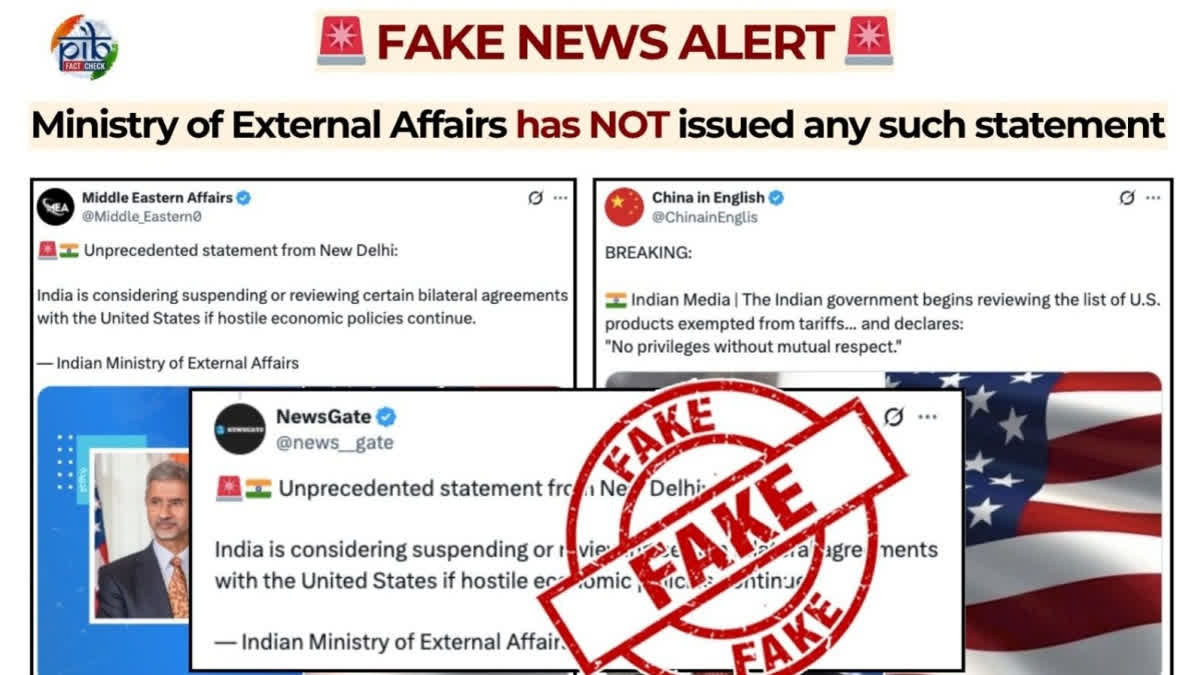
India Dismisses Rumors of Suspending Bilateral Agreements with the US Amidst Trade Tensions
New Delhi – The Indian government has categorically denied social media rumors suggesting a potential suspension of bilateral agreements with the United States, following US President Donald Trump’s announcement of increased tariffs on Indian goods. The Press Information Bureau (PIB), the government’s official communication channel, labeled these claims as “fake news,” emphasizing that the Ministry of External Affairs has made no such statement. This clarification comes amidst heightened trade tensions between the two nations, sparked by Trump’s proposed 25% tariff hike and additional import tax on Indian products, citing India’s continued purchase of Russian oil.
The PIB’s Fact Check unit actively debunked the circulating social media posts, which falsely asserted that the External Affairs Ministry was considering suspending or reviewing bilateral agreements with the US due to perceived hostile economic policies. The unit urged the public to remain vigilant against misinformation and to rely on official sources for accurate information. Screenshots of the misleading posts were shared by the PIB to highlight the spread of false narratives.
This episode underscores the growing importance of combating misinformation, particularly in the context of sensitive geopolitical developments. The speed at which false information can proliferate on social media platforms necessitates proactive measures by government agencies and media organizations to identify and counter such narratives. The Indian government’s swift response in this case demonstrates its commitment to maintaining transparency and accuracy in public discourse.
The underlying trade dispute between India and the US stems from India’s ongoing purchase of Russian oil, a move that has drawn criticism from the Trump administration. While the US has imposed sanctions on Russia, India has maintained its long-standing energy relationship with Moscow. The Ministry of External Affairs reiterated India’s stance last week, describing the relationship with Russia as “steady and time-tested,” emphasizing that it should not be viewed through the lens of any third country. This position reflects India’s commitment to pursuing its national interests independent of external pressures.
The current trade tensions highlight the complexities of the India-US relationship. Despite being strategic partners with shared interests in various areas, including defense and technology, the two countries have also experienced disagreements on trade and economic policies. India’s decision to continue purchasing Russian oil, driven by its energy security needs, has become a point of contention with the US. The proposed tariffs by the Trump administration further complicate the bilateral relationship and raise concerns about potential retaliatory measures from India.
The Indian government’s firm denial of suspending bilateral agreements suggests a desire to de-escalate the situation and maintain open communication channels with the US. While the immediate impact of the proposed tariffs remains to be seen, the episode underscores the need for both countries to engage in constructive dialogue to address their trade concerns and prevent further escalation of tensions. The future trajectory of the India-US relationship will depend on the ability of both sides to find common ground and navigate their differences in a mutually respectful manner.