


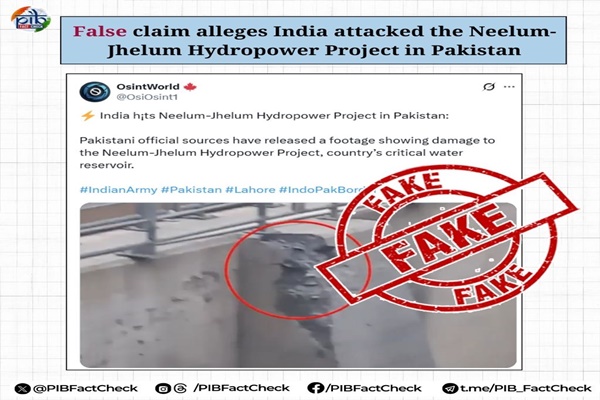
Pakistan Resorts to Digital Deception Amidst Heightened Tensions with India
In the wake of India’s retaliatory strikes against terrorist camps within Pakistan, Islamabad has embarked on a campaign of disinformation and fabricated narratives, desperately attempting to project an image of military prowess and control amidst palpable nervousness. This digital charade, characterized by the dissemination of manipulated images, videos, and outright falsehoods, underscores Pakistan’s intent to mislead both domestic and international audiences, thereby distorting the global narrative surrounding the escalating tensions.
Pakistan’s propaganda machinery has gone into overdrive, churning out a series of easily debunked claims. One such instance involves the circulation of an image depicting a fire at a military site in Moscow, falsely presented as evidence of a Pakistani missile strike against India’s air defense system. This blatant misrepresentation, utilizing an incident from 2023, highlights the desperation with which Pakistan is attempting to create a semblance of military success. Furthermore, an old video from Indonesia has been resurrected and disseminated with the fabricated claim that it depicts an attack on an Indian military colony. This recycling of unrelated footage serves as another testament to Pakistan’s reliance on manipulated visuals to bolster its false narrative. Similarly, an image from the ongoing Ukraine-Russia conflict has been misappropriated and presented as evidence of the Pakistan Army intercepting an Indian UAV drone. These instances of digital manipulation collectively paint a picture of a nation resorting to deceptive tactics in a desperate attempt to control the narrative.
The motivation behind Pakistan’s digital subterfuge is multifaceted. Firstly, it aims to project an image of strength and resilience to its domestic audience, bolstering morale and deflecting criticism of its inability to effectively counter India’s military actions. Secondly, by disseminating fabricated stories of military victories, Pakistan seeks to garner international support and sympathy, portraying itself as a victim of Indian aggression rather than a sponsor of terrorism. This carefully crafted narrative aims to shift the focus away from Pakistan’s long-standing support for terrorist groups operating within its borders and its failure to take decisive action against them.
The proliferation of fake news and misinformation emanating from Pakistan underscores the critical need for media literacy and responsible information consumption. In the digital age, where information spreads rapidly and unchecked, it is imperative to scrutinize every piece of information carefully, particularly when it pertains to sensitive geopolitical issues. Verifying the source of information, cross-checking facts with reputable news outlets, and consulting fact-checking websites are essential steps in combating the spread of misinformation.
The Indian government, through the Press Information Bureau (PIB) Fact Check, has taken proactive steps to counter the spread of Pakistani propaganda. The PIB Fact Check initiative plays a crucial role in debunking false narratives and providing accurate information to the public. Citizens are encouraged to report suspicious content, especially regarding the Indian Armed Forces and the ongoing situation, to the PIB Fact Check team via WhatsApp or email. This collaborative approach, involving both government agencies and informed citizens, is vital in ensuring that accurate information prevails amidst the deluge of misinformation.
The ongoing digital duel between India and Pakistan highlights the evolving nature of information warfare in the 21st century. As nations increasingly leverage digital platforms to shape public perception and advance their geopolitical agendas, the battle for narrative control intensifies. In this context, media literacy, critical thinking, and responsible information sharing become essential tools for navigating the complex and often deceptive landscape of online information. The responsibility of discerning truth from falsehood lies not only with government agencies and media organizations but also with every individual who consumes and shares information online. By exercising caution, verifying information, and reporting suspicious content, citizens can play a crucial role in combating the spread of disinformation and ensuring that truth prevails. The stakes are high, and the consequences of misinformation can be far-reaching, affecting not only public opinion but also potentially escalating tensions and fueling conflict.