


The Naija Collective Trains Lagos Youth to Combat Misinformation, Disinformation and Propaganda Ahead of Critical Election Cycle
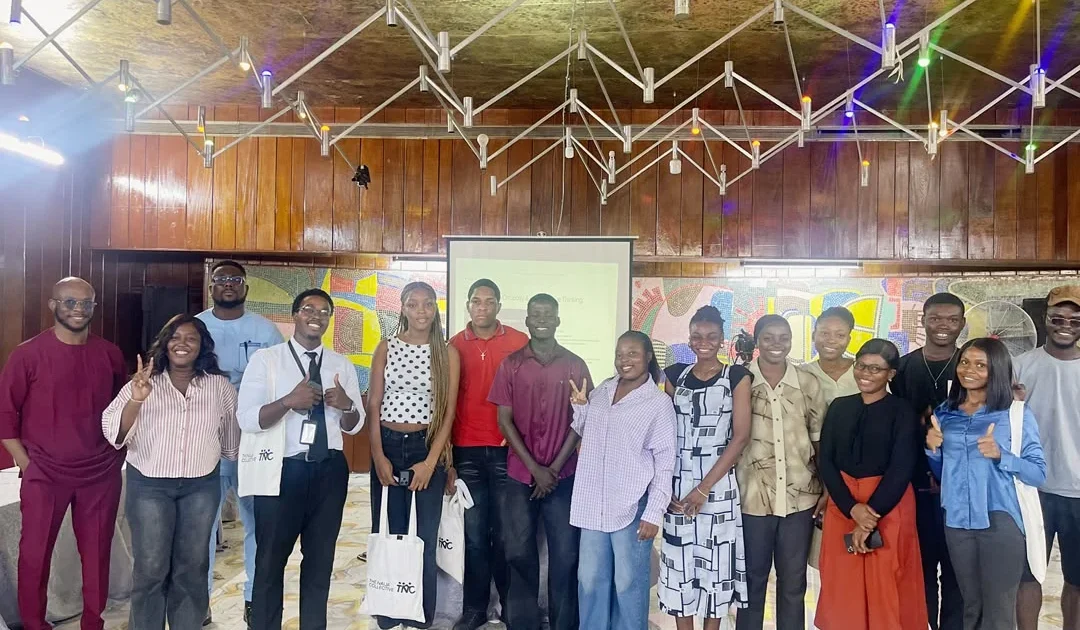
In a decisive move to fortify Nigeria’s digital landscape against the rising tide of falsehoods, a Nigerian civic group, The Naija Collective, has concluded a three-day intensive training workshop in Lagos aimed at empowering young people to identify, counter and build resilience against misinformation, disinformation and propaganda. The workshop, which commenced on Tuesday at the Conference Hall of the Guest House, University of Lagos, was officially themed around Digital, Media and Information Literacy and wrapped up on Thursday, bringing together a diverse cohort of university students, media enthusiasts and practicing journalists. As Nigeria grapples with a rapidly evolving information ecosystem where social media platforms have become the primary news source for millions, the urgency of such an initiative cannot be overstated. The country has repeatedly faced waves of false narratives, ranging from health-related scams during disease outbreaks to politically charged rumors that have, in the past, incited communal tensions. By targeting the youth demographic—who are statistically the most active online—the training sought to create a vanguard of digitally conscious citizens capable of discerning fact from fiction, while also equipping them with the tools to stem the flow of manipulated content that often goes viral within seconds.
The first day of the training was dedicated to deconstructing the anatomy of how misinformation and disinformation spread, setting the stage for a robust exploration of the manipulative techniques used to influence audiences online. Abdulkarimu Oare, a prominent media communications trainer and the lead facilitator, stressed that the training was of paramount importance because young people are not merely passive consumers, but active participants in the digital information environment. He painted a stark picture of a world where information travels at unprecedented speed, allowing individuals to consume vast quantities of content daily. However, this convenience comes with a caveat: the information shared by any individual or group could be driven by ulterior motives, hidden agendas or manipulations designed to deceive. Oare noted that the core purpose of the training was to help young people recognize that not all information presented to them is straightforward, and to critically evaluate the role the content they consume is designed to play. He emphasized that the initial session had been highly productive, with participants showing remarkable engagement and curiosity. Looking ahead, he promised that subsequent days would delve into other frameworks and practical strategies for navigating the complex digital media terrain, moving beyond theory into actionable intelligence-gathering techniques and verification protocols.
Delving deeper into the mechanics of manipulation, Oare introduced participants to the subtle art of propaganda, explaining how it is often used to make specific viewpoints appear significantly more widespread, popular or legitimate than they actually are. He illustrated how coordinated messaging campaigns, often deployed through a network of affiliated social media accounts, can fabricate a false sense of consensus or momentum around a particular narrative. This phenomenon, he argued, is designed to exploit the psychological tendency of individuals to conform to what they perceive to be majority opinion. By artificially inflating the visibility of a fringe idea, propagandists can trick the public into believing it represents mainstream sentiment. He also traced the often-circuitous journey of information, highlighting how dubious claims originating from unreliable or unknown sources can steadily climb the ladder of credibility, being picked up by larger platforms and eventually receiving mainstream media attention. This process, frequently referred to as “information laundering,” makes it incredibly difficult for the average audience to trace the origin of a story, thereby lending it an unearned sense of authority and credibility.
A crucial conceptual distinction was drawn by Oare during the session, urging participants to separate the act of identifying possible manipulation from their own personal agreement or disagreement with the political position being promoted. He stressed that a consumer of media must be able to recognize whether a message is being targeted at them regardless of their personal ideological leanings. “The key principle that you want to keep in mind in all of these, recognising propaganda is not the same as agree or disagree with the political position. You just need to be recognising the agenda,” he stated. The facilitator posited that identifying a manipulative tactic is merely the initial step; the information must still be independently verified through reliable sources. He encouraged a culture of skepticism, not cynicism, where individuals take it upon themselves to check the veracity of claims before accepting them as truth. To cement this concept, the workshop featured an interactive simulation designed to demonstrate, in real-time, how effectively false information can proliferate across networks, and how specific user decisions—such as the decision to share without clicking, or to amplify a sensational headline—can drastically alter the reach and impact of a fraudulent claim.
The timing of the training was identified as particularly strategic by the program’s coordinator, Nosike Nwigene, who serves as a strategic communications expert. He underscored that the initiative was especially critical as Nigeria approaches another election cycle, a period historically marred by online manipulation and the weaponization of false information to influence public discourse and heat up the polity. Nwigene expressed great confidence in the energy and enthusiasm of the participants, noting that their engagement was a testament to their genuine desire to learn. He explained that the program was designed not just as a one-off academic exercise but as a practical toolkit for civic engagement, helping ordinary citizens understand what to look out for during elections, including the various types of misinformation and disinformation campaigns that often surface. He highlighted that a significant number of people lack the skills to respond appropriately to online manipulations designed to sow discord, and emphasized that building resilience towards these threats is a fundamental civic duty. He advised the attendees to adopt a more deliberate approach to information consumption: taking a step back to think before believing or sharing information, asking critical questions such as why a source is missing or why a particular message is eliciting a strong emotional reaction, and engaging in thorough double-checking and fact-checking.
The interactive nature of the workshop allowed participants to share personal anecdotes and real-life encounters with the phenomenon of fake news. Many recounted instances where unverified claims were circulated with alarming speed by friends, family members and acquaintances within their private WhatsApp groups and other social media platforms. Oluwafemi Morakinyo, a Creative Arts student at the University of Lagos and a visual artist, shared that the training had reinforced the importance of verification before sharing information. He reflected on how easy it is to forward a striking piece of content without pausing to consider its authenticity, and how this training had armed him with a new sense of digital responsibility. Similarly, Ayobami Atanda, a student of Oduduwa University, noted that the training had profoundly helped him understand some of the psychological and sociological factors that influence people’s willingness to believe and share information without cross-checking. He observed that the session provided valuable insights into the mechanisms of trust and virality, which he plans to apply to his own social media usage. A final-year Sociology student at the University of Lagos, Olajumoke, said she attended the training to improve her understanding of media literacy due to the frequency with which friends and family approached her for clarity on ambiguous information they encountered online. She expressed that the training had not only validated her role as a pseudo-information verifier but had also reinforced the necessity of rigorously verifying sources before disseminating information to her community.
Ultimately, the training organized by The Naija Collective represents a significant intervention in the fight against the erosion of truth in the public sphere. By focusing on the nation’s youth, the program aims to generate a multiplier effect, where each trained participant acts as a node in a growing network of informed citizens capable of debunking falsehoods and promoting media literacy within their own circles. In a country with a robust and vibrant media landscape yet facing substantial challenges of trust and verification, programs like these are vital for ensuring that the democratic process is not unduly influenced by malicious actors seeking to subvert the will of the people. The emphasis on practical skills, from tracing the origins of claims to understanding the mechanics of coordinated inauthentic behavior, signals a shift from passive consumption to active, critical engagement with media. As Nigeria moves toward its next elections, the skills imparted in this workshop will be crucial not just for the participants, but for the health of the nation’s democracy. The initiative stands as a powerful reminder that while technology has democratized the spread of information, the onus remains on every individual to guard their own mind against manipulation, ensuring that the truth remains the ultimate currency in the digital age.