


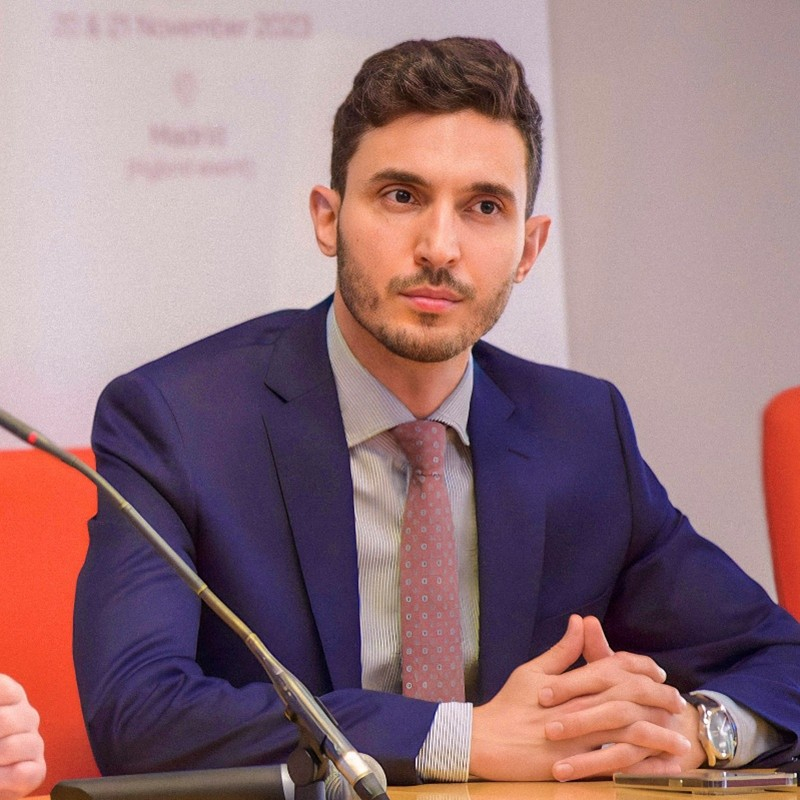
Russian Disinformation Campaigns Target Latin America: An Interview with Matteo Pugliese
The ongoing conflict in Ukraine has highlighted the pervasive use of disinformation as a tool of geopolitical influence. While the focus often remains on Europe and North America, Russian disinformation campaigns are increasingly targeting Latin America, exploiting historical grievances and political divisions to undermine Western partnerships and bolster its own presence in the region. Matteo Pugliese, a disinformation analyst at Debunk, recently returned from a training trip to Latin America, where he worked with journalists and civil society groups to identify and counter these campaigns. In an interview with the Kyiv Post, Pugliese shared his insights into the evolving landscape of Russian disinformation in the region.
Pugliese’s work at Debunk focuses on identifying coordinated inauthentic behavior, particularly on social media platforms, where fake accounts and manipulated content are used to amplify specific narratives. Leveraging artificial intelligence and digital tools like Junkipedia, Meltwater, and OpenCTI, Debunk tracks these campaigns, analyzing not just the content but the behavior behind them. This approach is crucial for understanding the sophisticated tactics employed by state-sponsored actors like Russia. Debunk’s work is often supported by EU-funded projects, reflecting the growing concern about foreign information manipulation and interference (FIMI). Pugliese’s training missions, spanning continents from Africa to Europe and Latin America, underscore the global reach of these disinformation campaigns.
Pugliese’s entry into this field stemmed from his experience reporting on the war in Ukraine for an Italian newspaper. Witnessing the influx of Russian propaganda figures on Italian television prompted him to conduct research on the phenomenon, eventually leading him to join Debunk. His recent training in Colombia and Mexico, at the invitation of the EU External Action Service, centered on educating local journalists and civil society organizations about FIMI and providing them with tools to analyze these operations. Interestingly, he encountered some pre-existing biases among participants related to historical European colonialism and US intervention in the region, highlighting the complex political landscape in which these disinformation campaigns operate.
One of the key observations from Pugliese’s work is the resurgence of Soviet-era tactics in the current Russian disinformation playbook for Latin America. The core narrative revolves around anti-US rhetoric and anti-imperialism, echoing Cold War themes. Russia seeks to exploit existing tensions, such as migration issues and strained relations with the US, to widen the divide and weaken Western alliances. For instance, Colombia’s withdrawal from the NATO Global Partners program presents a symbolic victory for Russia, which is likely to amplify this anti-NATO sentiment through its media networks like RT en Español and with support from Venezuela’s Telesur.
The strategies employed by Russia differ based on the target region. While Latin American campaigns focus on anti-US sentiments, African campaigns often center on anti-colonial narratives, particularly targeting France in the Sahel region. In Europe and North America, the goal is to exacerbate internal political divisions to weaken the collective response to Russia’s actions in Ukraine. This “cognitive warfare” seeks to undermine democratic institutions and promote a so-called “multipolar world order,” which essentially translates to empowering authoritarian regimes.
Russia’s objectives in Latin America extend beyond mere propaganda. The Kremlin aims to gain political and economic influence, securing access to resources, infrastructure projects, and favorable trade agreements. The large number of Russian diplomats in Mexico City, many suspected of being intelligence officers, underscores the extent of Russia’s investment in the region. By cultivating public opinion and fostering relationships with leftist governments, Russia seeks to build a bloc of support against Western influence, often collaborating with Chinese propaganda networks on social media.
To counter these efforts, Pugliese emphasizes the need for enhanced digital literacy programs and awareness campaigns in Latin America. Civil society organizations need to develop expertise in open-source intelligence (OSINT) to effectively track and expose disinformation campaigns. Collaboration with journalists and fact-checkers is important, but developing in-house analytical capabilities is crucial for addressing the sophisticated nature of these operations.
The future of disinformation campaigns in Latin America appears fraught with challenges. President Petro’s plans to join China’s Belt and Road Initiative could complicate efforts to address Chinese propaganda, particularly on platforms like TikTok. Strained relations with the former US administration under President Trump provide fertile ground for Russian narratives to exploit existing vulnerabilities and deepen divisions. While the scale of disinformation operations in Latin America has not yet reached the levels seen in Europe or the US, Pugliese warns that this could change rapidly. Therefore, it is essential for civil society and media organizations to be prepared and equipped to counter these evolving threats. The fight against disinformation is a global one, requiring constant vigilance and international cooperation to safeguard democratic values and institutions.