


Paragraph 1
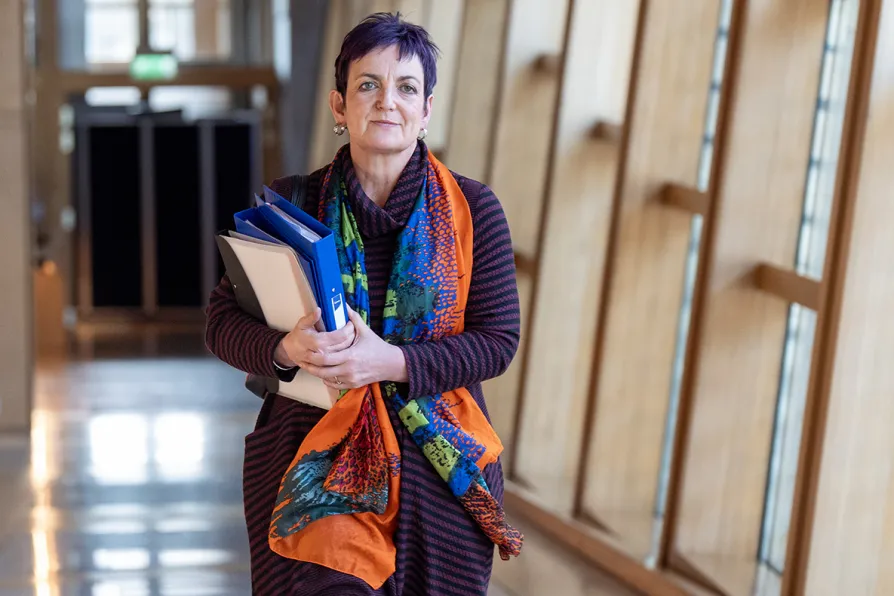
Scottish Health Secretary Angela Constance has issued a stark warning to MSPs about an “unprecedented increase” in the speed and scale of public health misinformation in the age of artificial intelligence. Speaking ahead of a Holyrood debate on the issue, she called on representatives of all parties to recognise the real-world risks to health posed by the online circulation of misleading information, particularly on subjects such as vaccinations. Her comments reflect a growing concern among public health officials that advances in AI are not only making it easier to create convincing false content, but also allowing that content to spread across social media platforms at lightning speed. The warning comes at a time when trust in health institutions is already under strain, and when ordinary citizens are increasingly finding it difficult to distinguish between evidence-based guidance and sophisticated disinformation. Ms Constance stressed that no one is immune from the effects of health misinformation, and that the consequences can be severe, ranging from unnecessary fear and confusion to decisions that put individuals and their families at risk. She underlined that public bodies such as the NHS, Public Health Scotland and academic institutions have an essential role to play in providing reliable, science-based information. The Health Secretary’s remarks were made as part of a parliamentary debate aimed at addressing the growing threat, and they signal a determination on the part of the Scottish Government to treat misinformation as a serious public health challenge rather than a peripheral online nuisance. With AI-generated text, manipulated images and automated accounts all capable of producing highly persuasive false narratives, the need for a coordinated response has never been more urgent. Ms Constance’s statement to MSPs was clear: the pace and reach of misinformation in the digital age are unlike anything seen before, and governments must adapt quickly to protect the health of the public.
Paragraph 2
Ms Constance argued that the public should be able to access the care they need without the risk of harmful misinformation causing unnecessary concern or fear. “For all of us, knowing what information to trust about our health is vital, as false or misleading information can lead us to make choices that can harm us or our loved ones,” she said. She went on to emphasise that institutions like the NHS, Public Health Scotland and academia play an essential role in providing trustworthy information to the public on health that is factual and based on science. This is not merely a matter of public relations; it is about ensuring that people have the tools they need to make informed decisions about their own wellbeing. When false claims about vaccine safety, treatments or preventive measures circulate widely, they can undermine decades of public health progress. Parents may delay or refuse vaccinations for their children, patients may abandon effective treatments in favour of unproven remedies, and people may ignore urgent symptoms because of misleading advice online. The Health Secretary’s remarks highlight a fundamental shift in the information environment: where once people relied on doctors, nurses and official health campaigns, they are now just as likely to encounter health advice from social media influencers, anonymous forum users or AI-generated content that mimics authoritative sources. In such an environment, the role of trusted institutions becomes even more critical. Ms Constance’s call for people to seek information from reliable sources is part of a broader effort to ensure that the public has a clear, dependable alternative to the noise and confusion of the digital world. She stressed that the NHS and its partner organisations must remain visible, accessible and proactive in countering false narratives, and that the public must be encouraged to turn to these sources first when they have questions about their health.
Paragraph 3
The debate at Holyrood came almost a year after the Scottish Government published what is thought to be the world’s first Health Information Integrity Strategy, a pioneering initiative designed to help the NHS and its partners counter the spread of misinformation. Ms Constance used the debate to urge MSPs to “note with concern” the increasing risks posed by false and misleading health information, and to recognise that accessible and trustworthy health information is essential to maintaining confidence in public health and supporting people to make informed decisions. The strategy represents a significant step forward in acknowledging that misinformation is not simply a by-product of modern communication, but a serious threat that requires institutional responses. By putting in place systems to monitor, identify and respond to harmful health claims, the Scottish Government is seeking to create a more resilient information environment. The debate provided an opportunity for parliamentarians to consider the scale of the challenge and to reflect on the measures needed to protect the public. Ms Constance’s motion was not simply a statement of concern; it was a call to action for the entire political establishment to take ownership of the problem. She argued that maintaining public confidence in health services depends on the availability of reliable information, and that every MSP has a role to play in promoting accurate messages and challenging false ones. The fact that Scotland has taken a global lead in this area is significant, but it also brings responsibility. Other countries will be watching to see how the strategy works in practice, and whether it can serve as a model for addressing misinformation in an age of artificial intelligence. For now, the message from the Scottish Government is clear: misinformation is a public health emergency in its own right, and it must be treated with the same seriousness as any disease outbreak.
Paragraph 4
In her address to parliament, Ms Constance called on all parties to collaborate to tackle the rise of harmful online misinformation. She said: “For any health questions, I urge for people to go to Scotland’s national health information service NHS Inform in the first instance, for evidence-based and accurate health information.” This simple piece of advice lies at the heart of the Scottish Government’s approach. Rather than trying to censor or suppress online content, which would be both difficult and controversial, the focus is on providing a trusted alternative that people can rely on. NHS Inform is designed to offer clear, up-to-date and scientifically accurate information on a wide range of health topics, and it is increasingly being promoted as the first port of call for anyone seeking guidance. The Health Secretary’s call for collaboration is important because misinformation does not respect party political boundaries; it affects constituents in every constituency, from every background and age group. She appealed to MSPs to work together, not only to debate the issue but to actively support efforts to improve health literacy and digital resilience among their constituents. This includes engaging with schools, community groups and online platforms to promote critical thinking and to help people understand how to evaluate health claims. It also involves supporting measures to hold social media companies accountable for the content that spreads on their platforms. Ms Constance’s remarks suggest that the fight against misinformation cannot be won by government alone. It requires a whole-of-society response, involving healthcare professionals, educators, journalists, technology companies and the public themselves. The debate was an opportunity for MSPs to demonstrate their commitment to that shared responsibility, and to send a message that Scotland will not stand by while false information endangers public health.
Paragraph 5
The warnings from Ms Constance come against a backdrop of growing international concern about the impact of misinformation on public health. During the COVID-19 pandemic, the World Health Organization described an “infodemic” of false information that spread as rapidly as the virus itself, undermining efforts to contain the disease and leading to deaths that could have been prevented. Since then, the rise of artificial intelligence has dramatically intensified the problem. AI tools can generate highly realistic fake videos, audio recordings and articles in a matter of seconds, and they can be used to create thousands of variations of the same false claim, each slightly different in wording, making it harder for fact-checkers to keep up. Automated bots can amplify these messages across social media networks, creating the illusion of widespread consensus and drowning out official guidance. For health officials, the challenge is immense. Traditional methods of public communication, such as press releases and official websites, are no longer sufficient. People are increasingly getting their news from social media platforms, messaging apps and video-sharing sites, where sensational and emotionally charged content tends to perform better than sober, scientific explanations. This is particularly concerning when it comes to vaccines, where misinformation has been linked to lower immunisation rates and outbreaks of preventable diseases. The Health Secretary’s reference to “unprecedented increase” reflects a recognition that the information ecosystem has changed fundamentally, and that public health institutions must change with it. This means not only publishing accurate information, but also actively monitoring the information environment, responding quickly to false claims, and building partnerships with trusted community voices who can help spread reliable messages. It also means investing in digital literacy, so that people have the skills to question what they see online and to recognise the signs of manipulation. Scotland’s Health Information Integrity Strategy is an attempt to do all of these things, but the scale of the challenge is enormous and growing.
Paragraph 6
As the debate concluded, the central message from Scotland’s Health Secretary was one of vigilance, responsibility and hope. Vigilance, because the threat of misinformation will not disappear; it will only become more sophisticated as AI technology advances. Responsibility, because all of us have a role to play in choosing what to share, what to believe and what to challenge. And hope, because by working together, it is possible to protect the public from the worst effects of false information. Ms Constance’s call for cross-party collaboration is a reminder that this is not a partisan issue. It is a matter of public safety. The Scottish Government has taken a pioneering step by publishing the world’s first Health Information Integrity Strategy, and the debate at Holyrood marked another important milestone in the fight against misinformation. By urging people to use NHS Inform as their first source of health information, the Health Secretary is encouraging a simple but powerful habit: before acting on health advice seen online, stop and check the official guidance. In an age of artificial intelligence, where the line between reality and fabrication is becoming increasingly blurred, that habit could save lives. The challenge ahead is immense, but so is the determination of those committed to addressing it. Scotland’s approach may not be perfect, and there will undoubtedly be difficult battles ahead, but the country has placed itself at the forefront of the global effort to ensure that the digital revolution does not come at the expense of public health. For now, the message from Angela Constance is clear: misinformation is a danger that must be taken seriously, and everyone has a part to play in stopping its spread.