


Social Media’s Influence on Dental Choices in Vojvodina, Serbia: A Comprehensive Analysis
Oral health remains a significant public health concern in Serbia, with high prevalence rates of dental caries, periodontal disease, and edentulism, compounded by limited access to dental care, especially in rural areas. While approximately 600 private dental practices operate in Vojvodina, their concentration in urban centers leaves many underserved. This study investigated the role of social media in shaping dental choices among Vojvodina residents, exploring preferred content, perceived advantages and disadvantages, and the overall impact of online platforms on dental care decisions.
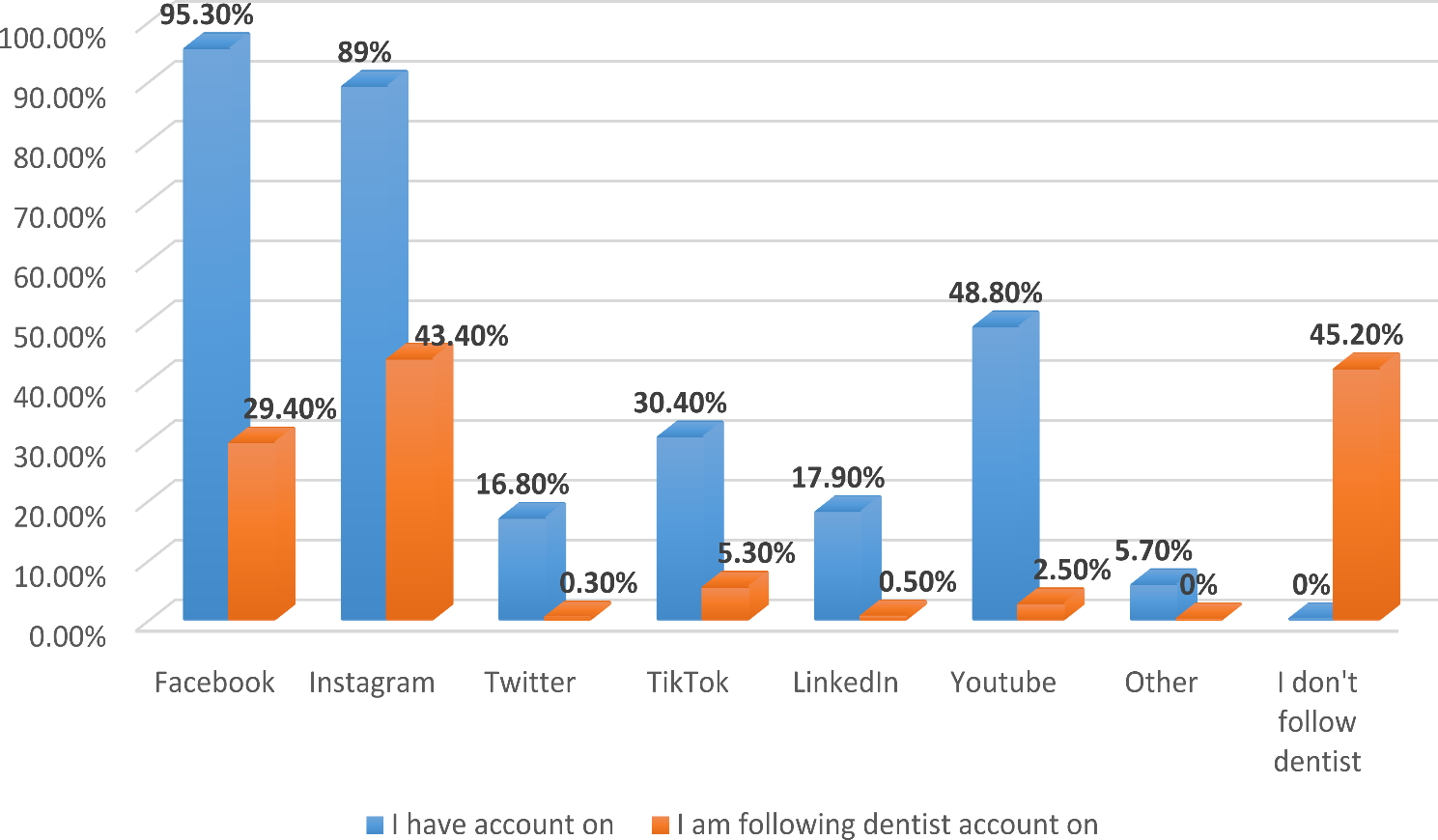
The study revealed high social media penetration among participants, with Facebook (95.3%) and Instagram (89.3%) dominating, aligning with national and global trends. Over half of the participants spent 1-3 hours daily on these platforms, with younger demographics exhibiting the highest usage. Notably, over 50% followed dentist or clinic accounts, exceeding figures reported in similar studies. This engagement was more pronounced among women, potentially reflecting gendered preferences for social interaction and health-related content, particularly within aesthetically-driven platforms like Instagram. The 26-35 age group also showed strong engagement, highlighting their comfort with digital technologies and their increasing reliance on social media for information.
Instagram emerged as the preferred platform for following dental professionals (43.4%), surpassing Facebook (29.4%) and contrasting with trends observed in other regions, such as India, where YouTube is prominent. This preference likely stems from Instagram’s visual focus and user-friendly interface, facilitating easy access to dental content. While 67.2% of respondents appreciated the quick access to information provided by social media, paradoxically, 60.3% would not choose a dentist solely based on their online presence. This hesitancy reflects concerns about potentially harmful trends promoted online (62.4%) and skepticism regarding the credibility and accuracy of information (55.4%).
Despite the widespread use of social media for health information, a relatively small proportion (22%) considered it their primary source, even among younger demographics (26%). This suggests a continued reliance on traditional sources like healthcare professionals, family, and friends for crucial dental decisions. Older individuals, in particular, may exhibit greater trust in established channels, viewing social media with more caution. While social media can broaden oral health knowledge, its simplified format often lacks the nuance and comprehensive analysis necessary for complex medical decisions. Furthermore, the absence of rigorous expert review raises concerns about the potential dissemination of inaccurate or outdated information, potentially leading patients to make uninformed choices.
Dental anxiety, a prevalent issue affecting 10-20% of the population globally, emerged as a significant factor in the study. A higher-than-average 42.5% of respondents reported dental fear, possibly influenced by the predominantly female sample, as women are more prone to dental anxiety. Interestingly, 56.5% of those experiencing fear found that dentists’ social media posts did not alleviate their apprehension. While online support groups can offer valuable empathy and understanding, deep-seated phobias often require professional intervention beyond online resources.
Multivariate analysis revealed that age and education level significantly predicted choosing a dentist based on social media presence. Younger participants (18-25) were more likely to be influenced by online profiles than those over 46, while higher education levels correlated with decreased reliance on social media for dental selection. These findings underscore the importance of tailoring online communication strategies to different demographics and educational backgrounds.
The study’s limitations include the regional focus on Vojvodina, potentially limiting generalizability to other parts of Serbia with different socio-demographic profiles. The overrepresentation of younger female participants further restricts the representativeness of the findings. Additionally, the reliance on self-reported data introduces the possibility of bias, particularly among individuals with a pre-existing interest in the topic. The absence of reliability testing for the questionnaire constitutes another limitation. Future research should address these limitations by expanding geographical scope, ensuring balanced demographic representation, and employing validated questionnaires. Investigating platform-specific effectiveness, exploring the impact of social media on specific dental interventions, and examining strategies to build trust and counter misinformation are crucial next steps. This will provide valuable insights for dental professionals seeking to harness the power of social media for effective patient communication and improved oral health outcomes.