


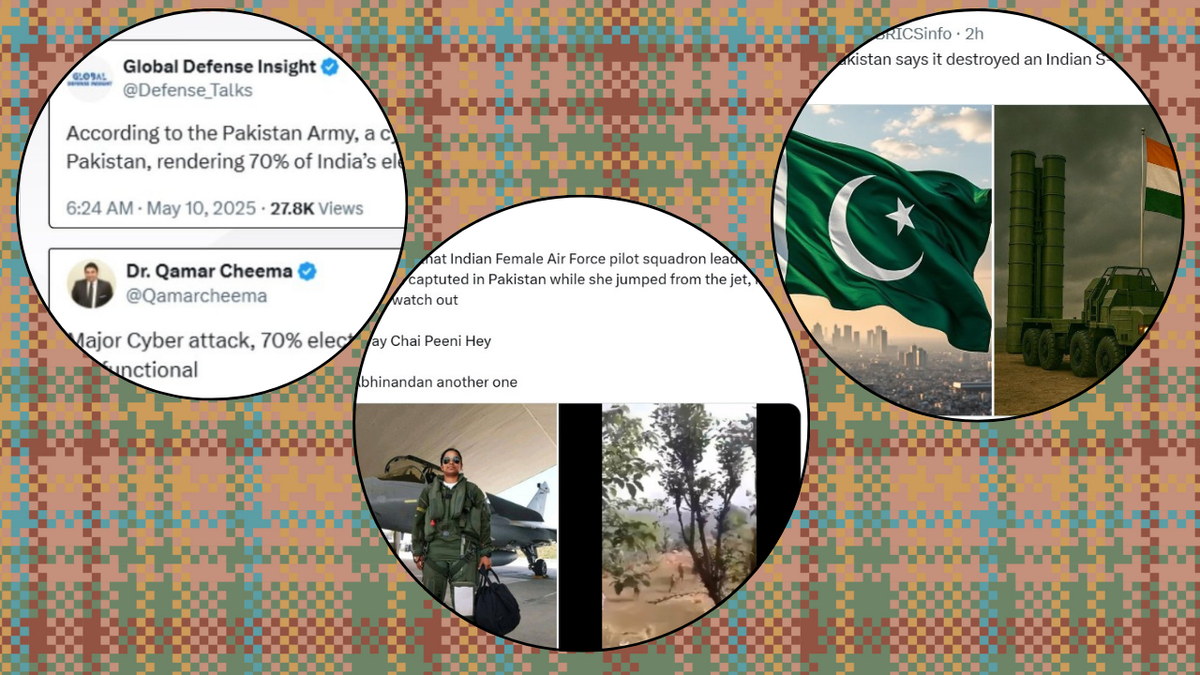
India Debunks Pakistani Misinformation Amid Escalating Tensions
New Delhi has vehemently refuted a series of misleading claims propagated by Islamabad, as tensions between the two nuclear-armed neighbors continue to escalate. The Indian government has labeled the Pakistani narratives as blatant attempts to distort facts and spread disinformation, further exacerbating the already strained relationship. This surge in misinformation campaigns coincides with a period of heightened diplomatic friction between India and Pakistan, stemming from a range of complex geopolitical issues including, but not limited to, territorial disputes and alleged cross-border activities.
The specific instances of fake news identified by Indian authorities include fabricated reports of human rights violations in the disputed region of Kashmir, exaggerated accounts of Indian military aggression, and the dissemination of doctored images and videos purporting to show Indian atrocities. These narratives, often amplified through social media platforms and dubious news outlets, seek to portray India in a negative light internationally and garner sympathy for Pakistan’s position. Indian officials have presented concrete evidence debunking these claims, highlighting their fabricated nature and malicious intent. This includes exposing manipulated media content, providing verifiable counter-narratives based on factual information, and offering documented proof contradicting Pakistani assertions.
The Indian government’s robust response to these misinformation campaigns underscores its commitment to transparency and factual accuracy. Dedicated fact-checking units within the government have been working tirelessly to identify and expose the fabricated narratives. Official statements have been released, providing detailed rebuttals and presenting verifiable evidence to counter the false information. Additionally, India has actively engaged with international media outlets and diplomatic channels to ensure the accurate portrayal of events and prevent the spread of misleading narratives. This proactive approach reflects India’s resolve to counter the malicious propaganda and prevent it from influencing international perceptions.
Pakistan’s motivations for spreading misinformation are multifaceted. Analysts suggest that these campaigns aim to divert international attention from Pakistan’s own internal challenges, including its struggling economy and its alleged support for extremist groups operating in the region. By portraying India as the aggressor, Pakistan also seeks to rally international support for its stance on Kashmir and gain leverage in bilateral negotiations. Furthermore, the spread of inflammatory narratives contributes to a climate of distrust and hostility, potentially escalating tensions and exacerbating the existing conflict. This tactic serves to create a volatile environment that can be exploited for political gain.
The proliferation of fake news poses a significant challenge to regional stability and international relations. It undermines trust in reliable sources of information, fuels social unrest, and can even incite violence. In the context of the already strained India-Pakistan relationship, the spread of misinformation carries a particularly high risk of further escalating tensions and potentially leading to unintended consequences. Both countries possess nuclear arsenals, making even limited conflict a grave concern for global security. Hence, the international community has a vested interest in promoting dialogue and de-escalation, while actively combating the spread of misinformation.
The current situation underscores the urgent need for enhanced mechanisms to combat fake news and hold those responsible accountable. International cooperation is crucial in identifying and dismantling networks involved in the creation and dissemination of false information. Social media platforms also bear a responsibility to implement more effective measures to prevent the spread of misinformation and ensure the amplification of credible sources. Promoting media literacy and critical thinking skills among the public is also essential in empowering individuals to discern fact from fiction and resist manipulation. As tensions between India and Pakistan remain high, the international community must play a proactive role in fostering dialogue, promoting factual accuracy, and mitigating the risks posed by misinformation. A coordinated international effort is required to address this challenge and prevent further escalation of an already precarious situation.