


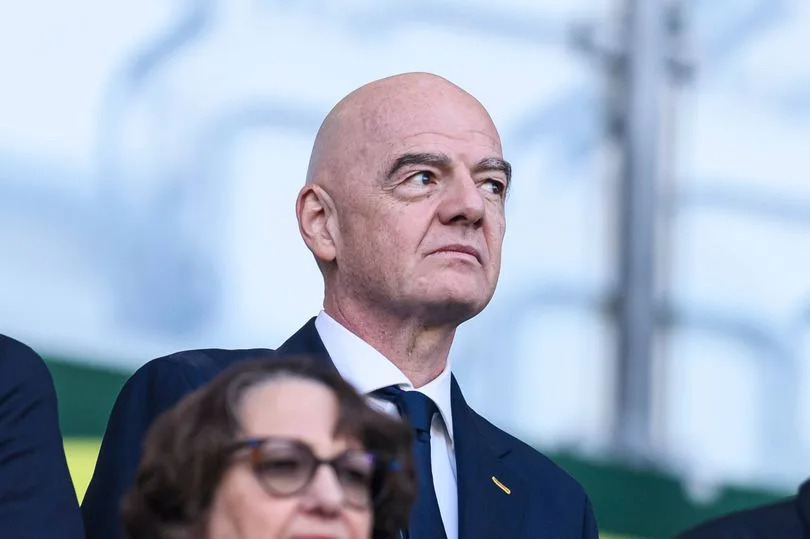
FIFA has accused UEFA of attempting to sway the upcoming presidential election by filing fresh legal papers in the United States that it says are designed to spread misinformation about Gianni Infantino. In a counter-filing submitted to the Southern District of Florida, FIFA said the European governing body’s application contains “numerous false or misleading statements” about both the world governing body and its president. The filing is the latest escalation in a bitter dispute that began when UEFA asked U.S. courts to compel FIFA to disclose evidence and documents in anticipation of potential legal proceedings in Switzerland, where UEFA has accused Infantino of “criminal mismanagement.” FIFA argues that UEFA has filed the application, along with three others, at a politically sensitive moment, just before Infantino seeks re-election in March. Challengers have until 18 November to enter the race. FIFA’s response insists that the proposals at the centre of the dispute were subject to proper oversight and that suggestions of personal profit are “categorically without merit.” The court, FIFA said, “should reject any attempt to influence FIFA’s presidential election based on these grounds.” The clash has exposed deep divisions between FIFA and UEFA, with major European leagues also weighing in. The dispute centres on the FIFA Forward Enterprise (FFE) initiative, a plan to sell stakes in FIFA tournaments that was abandoned after a fierce backlash. Infantino has faced enormous scrutiny since the World Cup in North America, and the FFE proposal became a lightning rod for critics who argued that it would allow private investors to profit from football’s most valuable assets. UEFA has seized on the episode to press its case, describing FFE in court filings as “a fraudulently off-market price promoted by [Infantino] for his own benefit.” FIFA, however, maintains that the plan was never a private scheme and that any suggestion of wrongdoing is baseless. The legal fight is now unfolding in Florida, where FIFA has asked the court to reject UEFA’s discovery requests and to dismiss what it characterises as an election-driven smear campaign.
At the heart of the dispute is the FIFA Forward Enterprise (FFE) initiative, a plan that emerged after the 2026 World Cup in North America and would have allowed investors to buy stakes in FIFA tournaments. The proposal was abandoned within days after a wave of criticism from football stakeholders. UEFA, however, has continued to pursue the matter. In its filings, UEFA described FFE as “a fraudulently off-market price promoted by [Infantino] for his own benefit,” according to The Mirror. UEFA’s broader legal action seeks to obtain documents from FIFA that could be used in Swiss proceedings, where the allegations have been framed as “criminal mismanagement.” FIFA rejects this characterisation outright. In its counter-filing, it argues that the FFE plan was never a private scheme. It was subject to approval by both the FIFA member associations and the FIFA Council, and would have been overseen by those same bodies. “With no basis whatsoever, UEFA suggests that Mr Infantino sought to profit personally from the FFE proposal,” FIFA said. “UEFA’s suggestions that Mr Infantino violated any law or ethical principle are categorically without merit.” The FFE plan was reportedly designed to create a new commercial entity that would sell minority stakes in FIFA’s tournaments, including the World Cup, to outside investors. Supporters argued that it would unlock new revenue; critics said it would undermine football’s governance and hand control of the sport’s flagship events to private equity. The backlash was so intense that FIFA was forced to abandon the proposal within days. But UEFA’s legal action suggests that the matter is not closed. By seeking evidence in the United States, UEFA is attempting to build a case that could be used in Switzerland, where allegations of criminal mismanagement can carry serious consequences. FIFA’s counter-filing is designed to block that effort and to portray UEFA’s legal strategy as an abuse of process. The organisation also points out that FFE would have required approval from the FIFA Council, which includes representatives of UEFA itself, as well as from the broader membership. That, FIFA argues, undermines any claim that Infantino could have pushed the plan through for personal gain.
FIFA’s latest filing goes further, accusing UEFA of using the U.S. legal system as a vehicle for political interference. The organisation points out that UEFA filed its 1782 application — a U.S. statute that allows parties in foreign proceedings to request discovery from American courts — “just before FIFA’s election.” FIFA says the application and three others are part of a strategy to spread misinformation about Infantino. “This court should reject any attempt to influence FIFA’s presidential election based on these grounds,” the filing states. It is not the first time FIFA has made such an accusation. Earlier this month, FIFA said in court documents that UEFA had issued a press release that marked “the beginning of a weeks-long smear campaign against FIFA and its leadership.” According to FIFA, UEFA should have participated in the democratic process rather than turning to the courts. The counter-filing is intended to block UEFA’s discovery requests and to push back against what FIFA sees as an effort to undermine Infantino’s candidacy before the election. The legal battle is unfolding against a backdrop of growing criticism of Infantino’s leadership from within European football. The 1782 application is a powerful legal tool because it allows parties involved in foreign litigation to obtain evidence from U.S.-based individuals and organisations. FIFA argues that UEFA is using it not for legitimate evidence-gathering but as a public relations weapon, timed to damage Infantino before the election. The court filing repeatedly stresses that the FFE proposal was never finalised and that FIFA’s internal governance structures would have prevented any unilateral action by the president. FIFA also notes that the FIFA Council, which includes representatives from UEFA’s own confederation, would have had to approve the plan. The tone of the filing reflects the depth of hostility between the two organisations, which have clashed repeatedly over the direction of world football.
Infantino’s position is not only being challenged in court. The English Football Association’s chair, Debbie Hewitt, has written to the FIFA president demanding answers over FFE and over the controversial decision to suspend U.S. Men’s National Team forward Folarin Balogun’s one-match red card ban by a year during the World Cup. The Balogun case has raised questions about whether FIFA’s disciplinary processes are being influenced by political considerations. Hewitt’s letter adds to the pressure on Infantino as he prepares to stand for re-election in March. The deadline for alternative candidates is 18 November, and no high-profile challenger has yet emerged, but the criticism from national associations and leagues suggests that the president may face a more difficult path than in previous elections. FIFA has consistently denied any wrongdoing in relation to FFE or the Balogun matter. However, the combination of UEFA’s legal action, the English FA’s letter, and the collective statement from Europe’s biggest leagues has created a climate in which Infantino’s leadership is under sustained scrutiny. The Balogun episode was particularly damaging because it appeared to show FIFA intervening in a disciplinary matter. Balogun, a forward for the U.S. men’s national team, had been given a one-match red card ban, but the ban was suspended for a year, meaning he would not miss any World Cup matches. Critics saw this as an example of football’s governing body using its power to protect a player from the consequences of a red card, possibly for commercial or political reasons. FIFA has not explained the reasoning behind the decision, and the English FA’s letter suggests that even member associations are not satisfied. Hewitt’s intervention is significant because the FA is one of FIFA’s founding members and usually avoids public confrontation with the world governing body. The letter is believed to have raised questions about the FFE proposal and about the broader governance of FIFA, including the relationship between the president and the disciplinary bodies. With the election approaching, these issues are likely to become central topics of debate among FIFA’s 211 member associations.
Last week, the Premier League, Bundesliga, La Liga and Serie A issued a joint statement calling for a complete overhaul of FIFA. The leagues said football’s foundations had been threatened by a fundamental governance problem, and accused the FIFA president of actively promoting exploitative ideas rather than safeguarding against them. “Football’s longstanding foundations have, in recent years, been threatened by a fundamental governance problem, whereby FIFA’s president has actively promoted exploitative ideas rather than safeguarding against them,” the statement said. The leagues acknowledged that the FFE scheme had been withdrawn, but warned that the conditions that led to it remained. They said the FIFA president had now acknowledged the need for reform, but that surface-level process changes would not be enough. “Fundamental governance reform is essential to restore clear constitutional boundaries within FIFA, including confidence that individual disciplinary matters remain demonstrably insulated from political interference,” they added. The reference to disciplinary matters was widely seen as a response to the Balogun case and to concerns about the independence of FIFA’s judicial bodies. The statement was remarkable because it brought together four of the most powerful domestic leagues in world football, representing hundreds of clubs and billions of pounds in revenue. These leagues have often been rivals, but they have found common ground in their concern about FIFA’s direction under Infantino. The leagues did not explicitly call for Infantino’s defeat, but their language was unambiguous. They spoke of a “fundamental governance problem” and accused the president of promoting “exploitative ideas.” They also made clear that the withdrawal of FFE was not enough, because the underlying conditions that allowed such a proposal to emerge remained in place. The demand for “clear constitutional boundaries” suggests that the leagues want to see limits on the president’s power, as well as guarantees that disciplinary decisions are made independently. The mention of “political interference” was a direct reference to the Balogun controversy, which has become a symbol of what critics see as FIFA’s lack of accountability. By uniting, the leagues are signalling that they intend to have a voice in the election and in the future governance of the sport.
The leagues concluded with a call for a new model of leadership. “Now is the moment to decide not only who will lead FIFA, but also how FIFA should be led,” they said. “Leagues have a crucial role to play in this process, and we want to ensure that the voice of every league is heard.” They added: “Football needs FIFA to be a strong institution. But strength must be matched by accountability. FIFA’s authority can only come from sharing responsibility, accepting scrutiny and earning trust.” The statement reflects a broader anxiety about the direction of global football governance. With the FIFA presidential election scheduled for March and the legal battle between FIFA and UEFA continuing in U.S. courts, the coming months will be decisive. FIFA has dismissed UEFA’s accusations as baseless and has called on the court to reject any attempt to use the judiciary to influence the election. UEFA, for its part, shows no sign of backing down. The outcome of the legal proceedings and the election will determine not only who leads FIFA, but whether the institution can restore the trust of the leagues and associations that say they want reform. FIFA’s counter-filing is also an attempt to frame the narrative. By accusing UEFA of election interference, FIFA is casting itself as the victim of a politically motivated campaign rather than the subject of legitimate scrutiny. That framing may resonate with some member associations, particularly those outside Europe that have benefited from Infantino’s leadership and from FIFA’s increased investment in global football. At the same time, the unanimity of the European leagues’ statement is hard to ignore. The Premier League, Bundesliga, La Liga and Serie A control some of the most valuable competitions in the sport, and their voices carry significant weight. If they continue to press for reform, they could influence the debate among FIFA’s members. The legal proceedings in Florida will be watched closely, but the real decision will be made by the 211 member associations when they vote in March. Infantino has survived challenges before, but the combination of a legal offensive from UEFA, a letter from the English FA, and a united statement from Europe’s biggest leagues suggests that this election will be different. The question is not simply whether Infantino will win another term, but whether the institution he leads will be forced to change.