


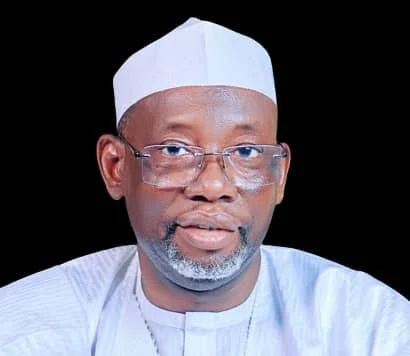
Governor Umar Namadi of Jigawa State has issued an urgent call for Nigeria’s media leaders to transform the way news is verified, published, and protected in an era of advanced digital manipulation. Speaking on Saturday at the 2026 All Nigeria Editors Conference, organised by the Nigerian Guild of Editors in Enugu, the governor addressed a room of editors-in-chief and senior media executives under the theme “The Ballot, the Media and the Task of Keeping Democracy Alive,” with the subtheme “When Lies Look Real…” His speech was a direct warning that Artificial Intelligence-powered disinformation has become one of the most serious threats to modern democracy. Namadi argued that the media’s responsibility goes far beyond reporting events to the public; it must ensure that citizens are not deceived by manufactured content designed to influence elections and destabilise the country. He stressed that the measure of editorial success should no longer be speed or the race to break news first, but the ability to publish responsibly and protect the truth. “For me, the challenge before editors should not be about ‘breaking news’—who breaks the news first—but about ensuring responsible publishing, protecting the truth, and helping citizens understand it with clarity and confidence,” he said. That statement captured the core theme of the conference and set a demanding agenda for editors who must now operate in a landscape where lies can look indistinguishable from reality. The governor’s appearance in Enugu was significant not only because of his message but because it came at a time when Nigeria is preparing for elections and when public trust in institutions is under strain. He called on newsroom leaders across the nation to fortify their verification systems, build robust fact-checking capacity, and enforce ethical technology standards. Without these measures, he said, democracy itself would be imperilled. The challenge, he noted, is not merely technological but professional and moral, and it requires every editor to recognise that the final line of defence against deceptive narratives is the editorial judgement exercised before the publish button is pressed.
Namadi warned that emerging AI tools, advanced image-editing software, and digital platforms have made it easier than ever to manufacture convincing text, audio, and video falsehoods that mimic reality and manipulate public perception. These tools, he said, have created conditions in which malicious actors can produce content that appears authentic yet carries no link to the truth. The danger is especially acute during electoral cycles, when false narratives can be weaponised to mislead voters, distort candidates’ records, incite distrust in electoral institutions, and ultimately destabilise the integrity of the ballot. “In this era of digital transformation, AI-based disinformation is among the most serious threats to modern democracy,” Namadi told the gathering. “Credible elections depend not only on the ballot box, but also on well-informed citizens who can make their choices free from deceptive narratives, lies that look real, or AI-generated falsehoods designed to appear real.” The governor’s words resonated with editors who have witnessed the rise of deepfakes, doctored photographs, fake audio recordings, and sophisticated online propaganda campaigns. He reminded them that while technological tools facilitate modern news production and enable media houses to reach wider audiences than ever before, the editor remains the crucial final line of defence for accuracy, fairness, balance, ethics, and national responsibility. This is a heavy burden, he acknowledged, because editors must make split-second judgements about content that could shape public opinion and influence political outcomes. The temptation to prioritise engagement, clicks, and ratings over truth is real, but Namadi insisted that the consequences of yielding to that temptation are catastrophic for the country. A media environment in which lies look real is a danger to every citizen, every voter, and every institution. He therefore called on editors to see themselves not merely as content managers but as guardians of democratic culture, responsible for ensuring that the public sphere is not poisoned by engineered falsehoods. His warning was grounded in a conviction that the battle for Nigeria’s future will be fought not with weapons alone but with narratives, and that those who control the stories citizens believe will ultimately determine the country’s democratic destiny.
To mitigate the rapid spread of harmful online false narratives, Namadi outlined key strategies that media houses and policymakers must adopt. He emphasised that media organisations must prioritise institutional verification tools, rather than relying on individual reporters to spot fakes on their own. This means investing in technology, building dedicated fact-checking desks, and developing clear protocols for verifying user-generated content, images, and audio before publication. He also called for training reporters in digital literacy so that journalists can understand how AI-generated content works, how to detect manipulation, and how to assess the authenticity of digital evidence. Equally important, he stressed the need for cross-platform collaboration among news organisations to identify and debunk fake news before it spreads. No single outlet can combat the scale of disinformation alone, and partnerships between mainstream media, civil society organisations, and technology platforms are essential to expose false narratives quickly and effectively. On the legal and regulatory side, Namadi pointed to Section 24 of the Cybercrimes Act as amended in 2024 and Section 123 of the Electoral Act 2022 as important tools for accountability. He advocated for fair, rights-respecting enforcement against deliberate malicious falsehoods, while making clear that such enforcement must not infringe on press freedom or legitimate public discourse. His position was nuanced: he did not ask for censorship or heavy-handed state control of the media, but rather for a calibrated approach that holds bad actors responsible without silencing dissent. In addition, he urged governments and media entities to collaborate on sustained public education campaigns to help citizens recognise and reject manipulated content. The public cannot be defensive against AI-generated lies if they are not equipped to know what they are looking at. Citizens need to understand that images can be faked, voices can be cloned, and videos can be manufactured, and they need practical skills to verify what they see online before sharing it. Namadi’s call to action was therefore comprehensive, covering not only the production side of news but also the consumption side. He was clear that the fight against disinformation is a shared responsibility, and that lasting success will require a culture of verification at every level of Nigerian society.
Namadi illustrated his message with practical examples from his own state, where the government has launched initiatives aimed at bridging the gap between citizens and leadership while strengthening the public’s resilience to false information. He highlighted Jigawa’s Gwamnati da Jama’a, meaning Citizens’ Engagement, a programme that took government leadership directly to citizens across all 27 local government areas of the state. Through this programme, government officials presented scorecards of their performance, answered questions directly from residents, and worked to build public trust through transparency and direct accountability. The programme’s success, he said, demonstrated the power of face-to-face engagement in a digital age where anonymous online narratives often overshadow real-world interactions. Building on this momentum, Jigawa is developing a new Digital Social Responsibility Programme, which will complement the recently signed Mass Mobilisation for Societal Reorientation Executive Order No. 2 of 2026. The initiative aims to enhance digital literacy, promote civic responsibility, and strengthen democratic resilience against digitally manufactured falsehoods. Namadi explained that this programme is designed not merely to teach people how to use technology, but to teach them how to question it, how to verify information, and how to participate in civic life without being manipulated by malicious actors. The approach reflects a growing recognition that disinformation cannot be defeated only by journalists and regulators; it must also be confronted at the community level, where citizens decide what to believe and how to act. By engaging citizens directly and providing them with tools to assess information critically, the government hopes to create a more informed electorate and a more stable democratic environment. The programmes also provide a model for other states and for national institutions seeking practical responses to the disinformation crisis. Namadi’s presentation made clear that, in his view, the fight for democratic resilience starts with the relationship between the government and the governed. When citizens trust their leaders and have direct channels to question them, they are less likely to fall for fabricated stories designed to sow division. The digital transformation of media presents risks, but it also presents opportunities for governments that are willing to embrace transparency and invest in the civic health of their people.
Reflecting on the long history of the Nigerian Guild of Editors, Namadi paid tribute to the institution that had brought together the nation’s top editorial leaders. He noted that the NGE has a 65-year history, having been founded in 1961, and that its survival and evolution over six decades is itself a testament to the commitment of Nigerian editors to the principles of press freedom and professional journalism. He honoured the founding pioneers, including Alhaji Lateef Jakande, a legendary figure in Nigerian journalism and politics, and acknowledged the eminent past leaders who have steered the guild through different eras. Among them were Prince Tony Momoh, Chris Okolie, Ray Ekpu, Garba Shehu, Oluremi Oyo, and Bala Dan Tiye, under whose tenure the All Nigeria Editors Conference was inaugurated in 2004. The conference, which has since become a major fixture on Nigeria’s media calendar, was an idea nurtured by past leaders and has grown into a platform for dialogue between editors, governments, and other stakeholders. Namadi commended the current NGE President, Mr Eze Anaba, and the host state of Enugu for organising what he described as a timely and important gathering. The governor’s historical reflection served as a reminder that the challenges facing editors today are not entirely new; previous generations of media leaders also faced pressures from government, from commercial interests, and from the public, and they responded by defending editorial independence and ethical practice. But the new twist, he suggested, is the scale and sophistication of the disinformation threat. In the past, a lie could be exposed by checking a source or consulting an expert; today, AI can create a convincing video of a person saying something they never said, and that video can be circulated to millions of people before the truth has a chance to catch up. This is why the lessons of the past must be combined with new tools and new skills. Namadi urged the guild to maintain high ethical standards, hold erring members accountable, and champion truth in service of national unity. He expressed confidence that the NGE, drawing on its rich heritage and its experience of past struggles, would rise to the occasion and ensure that Nigerian journalism remains a force for democracy.
In conclusion, Namadi’s address in Enugu was more than a ceremonial speech at a professional conference; it was a declaration of the central place of media ethics in the future of Nigerian democracy. As the 2026 conference theme asked, the task of keeping democracy alive is inseparable from the task of keeping the truth credible. The governor’s warning that “lies look real” in the digital age is a challenge to every editor, reporter, and media owner in the country. It is also a challenge to the public, which must become more discerning consumers of information, and to the state, which must regulate without smothering the press. Namadi called for a collective campaign to protect the integrity of the electoral process, not only on election day but in every moment of reporting, comment, and analysis that precedes it. The stakes could not be higher: if citizens cannot trust what they see, hear, and read, then their votes cannot reflect their true will, and democracy becomes a hollow ritual. His proposed strategies—stronger verification systems, digital literacy training, cross-platform collaboration, public education, and careful enforcement of existing laws—offer a roadmap for action. His state’s initiatives, including the Gwamnati da Jama’a programme and the forthcoming Digital Social Responsibility Programme, demonstrate that governments can be proactive rather than reactive in building resilience against disinformation. And his tribute to the NGE’s 65 years of history reminds us that Nigerian editors have faced difficult times before and have always emerged with their commitment to truth intact. The message from Enugu should be carried into every newsroom in Nigeria: the future of the republic depends on the quality of its information, and the responsibility for that quality lies squarely with editors. They must be willing to slow down, check their facts, question the authenticity of every image, and resist the pressure to chase engagement at the expense of accuracy. In doing so, they will be fulfilling the highest calling of their profession. The Governor’s speech ended with a clear charge to the Nigerian Guild of Editors to continue promoting ethics, holding members to account, and placing the national interest above partisan or commercial gain. If that charge is heeded, Nigeria can withstand the digital storm and ensure that when citizens enter the polling booth, they do so with clarity, confidence, and a genuine understanding of the choices before them.