


Georgia Lawmakers Convene in Augusta to Examine Social Media’s Impact on Kids
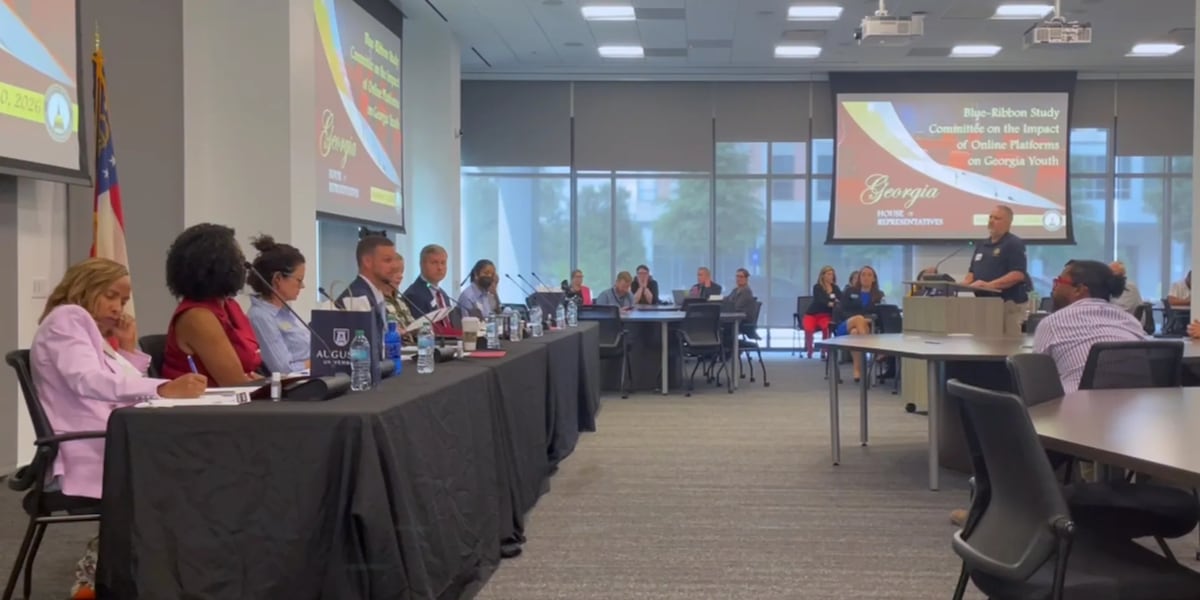
Georgia state lawmakers met in Augusta this week for a public hearing on social media’s impact on children, a session that drew parents, educators, doctors, and advocates to address the growing crisis of youth mental health and online harm. The event was part of a bipartisan legislative study, organized by the General Assembly, to determine whether Georgia should impose new regulations on social media companies and provide schools and families with stronger tools to protect young users. According to WRDW, the hearing was structured as a listening session: lawmakers sat behind microphones, allowed each speaker a set time, and took extensive notes as the testimony unfolded. A mother spoke about her teenage daughter being relentlessly bullied on a popular app, leading to weeks of missed school and suicidal thoughts. A school principal described fights that had started online the night before and spilled into the hallway the next morning. A pediatrician described seeing more young patients with depression, disordered eating, and self-inflicted injuries, and said the evidence clearly points to social media as a major factor in the national pediatric mental health crisis. Another witness, representing a civil liberties organization, cautioned that any new law must protect privacy and avoid violating free speech. Several committee members noted that the state cannot simply ban a widely used technology, but it can set conditions on how platforms serve minors and require greater transparency. By the time the last speaker finished, committee members from both parties said they had heard a far more nuanced and alarming picture than they had expected, and they promised that the testimony would inform the recommendations they take to the full legislature in the coming session.
The research presented at the Augusta hearing echoed recent public health warnings from the U.S. Surgeon General, the American Psychological Association, and the Centers for Disease Control and Prevention. Federal data show that most teenagers use social media daily, and a significant share say they use it almost constantly. In the decade before the COVID-19 pandemic, rates of persistent sadness, hopelessness, and suicidal ideation among adolescents climbed sharply, especially among girls. Researchers who testified said social media platforms are not simply neutral spaces; their recommendation algorithms are designed to maximize engagement, and for young users that often means promoting content that is dramatic, shocking, or socially validating. Speakers drew particular attention to features such as infinite scrolling, auto-playing videos, streaks, badges, and notifications that encourage children to check their phones throughout the night. Several experts explained that the adolescent brain is especially vulnerable to social rewards and peer comparison, making it difficult for children to resist the pull of short-form video and social validation. One researcher compared the experience to a slot machine, with intermittent rewards that train the brain to keep checking. Lawmakers were told that while correlation is not causation, the repeated convergence of data from longitudinal studies, clinical case reports, and surveys of teens and parents makes a compelling case for urgent action. The testimony underscored the difficulty of designing policy, because the same tools that can expose a child to harmful content can also connect an isolated teenager to supportive communities, allow young artists to share their work, and help students research school projects. Any successful policy, witnesses said, should address the underlying design of these platforms rather than simply ordering children to spend less time online.
Parents and local educators from the Augusta area provided some of the most powerful testimony of the day. One mother told the committee that her daughter was twelve years old when she was added to a private messaging group on a social platform, where older strangers began sharing explicit images and pressuring her to send photos in return. The mother said she had no idea what was happening until law enforcement became involved. Another parent described how video game chat rooms and social media were used by a classmate to spread rumors so damaging that the family felt forced to move their child to a different school. Teachers and administrators said the phone has become a daily disruption. In one middle school, teachers described confiscating a dozen phones during a single period because students were watching videos, shopping, and sending threatening messages to one another during class. A high school counselor noted that many students arrive at school having slept only four or five hours because they were scrolling social media late into the night. School district representatives said they are caught between a desire to protect children and a lack of legal clarity about how far they can go in restricting off-campus online speech. Several educators called on the legislature to fund digital literacy programs and to provide clear guidelines for when schools can discipline students for online behavior that spills over into campus life. They also asked for help securing parental support for phone-use policies, arguing that many parents give their children phones at young ages and then receive no guidance from the platforms or from public health institutions. The hearing highlighted a growing gap between the digital world, where children are increasingly autonomous, and the real-world institutions that are left to manage the fallout.
The committee is now considering a range of policy responses, and the proposals discussed during the Augusta hearing reflect the broader national debate over how to regulate social media. One option is age verification: require platforms to confirm that users are at least thirteen years old, and in some cases require parental consent before minors create accounts. Several lawmakers said they are interested in a model that would create a digital credential or age-assurance system, though the details are extremely sensitive because such systems could create new privacy risks. Another option is to require platforms to set strong privacy protections for minors by default, prohibiting targeted advertising based on children’s data and limiting the collection of location information. Some witnesses endorsed legislation that would require parental oversight tools, such as allowing parents to see privacy settings, restrict in-app purchases, and limit the time their children can spend on individual applications. Another set of ideas focuses on schools: providing grants for phone-free classroom programs, updating cellphone policies, and creating mandatory media literacy courses that teach students how to recognize manipulated media, understand algorithms, and manage their own online habits. Lawmakers also discussed the possibility of regulating addictive feeds by requiring platforms to show chronological content and turn off autonomous recommendations for minors. Some conservative and progressive lawmakers have found common ground on the idea that the platforms’ algorithmic business model intentionally exploits child psychology, but they disagree about the proper remedy. Members said the final package might include a combination of rules, along with a requirement that platforms submit to independent annual audits of their impact on minors. The panel promised to consult with the Georgia attorney general’s office, school districts, technology companies, and child safety advocates before finalizing its report.
Technology trade associations and digital rights groups are unlikely to remain on the sidelines, and the Augusta hearing gave an early glimpse at the arguments that will shape the legislative battle. Platform representatives have long argued that social media has helped millions of young people find friends, learn new skills, and explore creative hobbies. They point to survey data showing that most teens report positive experiences online and say the mental health crisis has deeper causes, including the pandemic, economic insecurity, and the loss of safe places for children to gather outside school. Industry representatives also warn that age-verification laws could force users to surrender sensitive personal information, increasing privacy risks and potentially making identity theft more likely. They argue that existing federal laws, including Section 230 of the Communications Decency Act, shield websites from liability for most third-party content and that state attempts to impose new content-moderation duties could be preempted by federal law. Legal scholars who have reviewed similar laws in California, Texas, Utah, and Arkansas note that courts have already blocked parts of state social media regulations, and any Georgia law will need careful construction to survive a constitutional challenge. During the Augusta session, one speaker warned that a mandate to deprioritize certain content for minors might be treated by courts as content-based regulation of speech, requiring the state to prove that it is narrowly tailored to meet a compelling governmental interest. Another warned that a private right of action, allowing parents to sue platforms for harming their children, could lead to a flood of lawsuits and endless litigation over what counts as a harmful recommendation. Lawmakers said they are aware of these concerns and are committed to drafting legislation collaboratively with attorneys, technology companies, and advocates. They noted that several states have already passed bills, and they are waiting to see which pieces survive judicial review before Georgia commits to a single approach.
At the conclusion of the Augusta hearing, the committee repeated that its work is not finished. Additional listening sessions are planned around the state, and the panel will accept written testimony from Georgians who could not attend. The committee is expected to issue a formal report with recommendations before the next legislative session, giving lawmakers, lobbyists, and the public time to debate the details. Some members predicted that social media reform will be one of the most consequential issues before the Georgia General Assembly, affecting not only children but also parents, schools, law enforcement, and the technology industry. They also acknowledged the limits of state legislation: a single state cannot easily police platforms headquartered in California, and any law will require close coordination with federal agencies, attorneys general in other states, and international regulators. Still, the lawmakers said they are not prepared to wait indefinitely. The stories heard in Augusta were too painful and too consistent to ignore. The committee expects to consider not only restrictions and penalties but also positive investments, including mental health services in schools, digital literacy classes, and community programs that give teenagers alternatives to screen time. Several members said they hope Georgia can become a model for the rest of the country, proving that it is possible to address the harms of social media without throwing away its benefits. For the parents, educators, and young people who attended the Augusta meeting, the most important outcome was simply that someone in power was listening. As one speaker put it, the question is no longer whether social media is changing childhood, but how far adults will go to protect children from changes that no one consented to. The committee expects to take up that question again within weeks, with a final report likely to shape Georgia’s strategy for years to come.