


Scammers Prey on Compassion: Fake Missing Children Posts Exploit Iowans’ Empathy on Social Media
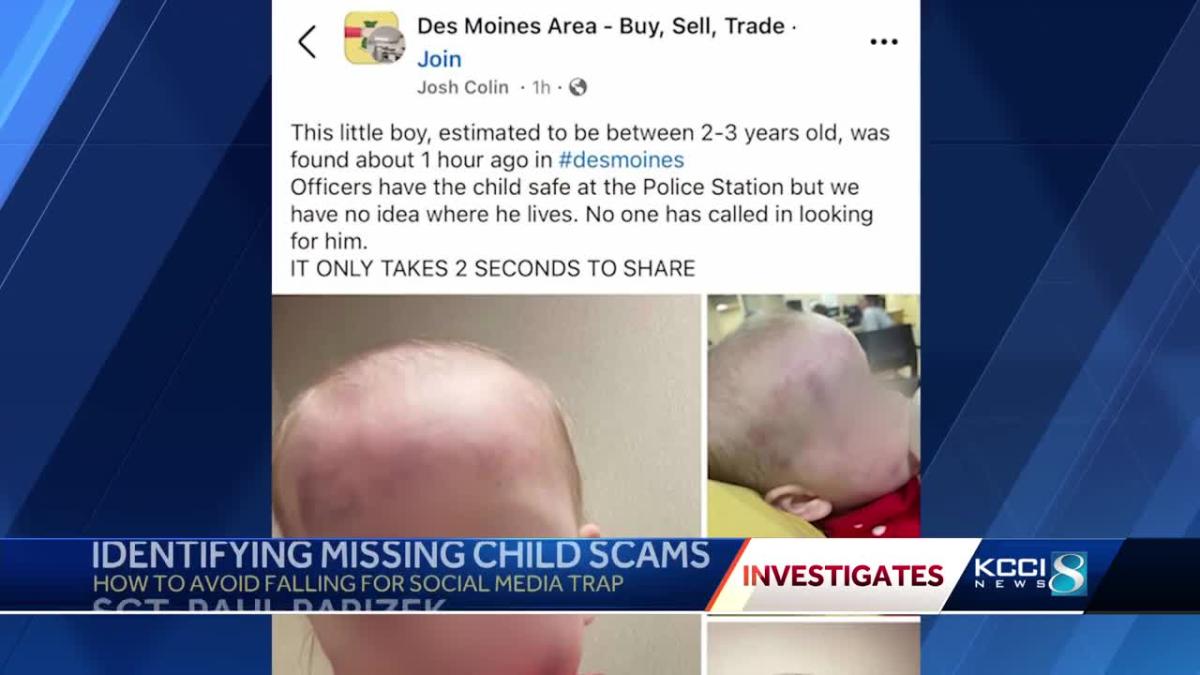
DES MOINES, IA – A new wave of online scams targeting Iowans is exploiting the public’s concern for missing children. These fraudulent posts, circulating primarily on platforms like Facebook and Instagram, feature heart-wrenching images of children accompanied by fabricated stories of abduction or disappearance. Designed to trigger an immediate emotional response, these posts often urge users to share widely, inadvertently amplifying the scammers’ reach while simultaneously gathering valuable personal information from unsuspecting individuals. Authorities are warning Iowans to exercise extreme caution when encountering such posts and are emphasizing the importance of verifying information before sharing. The emotional nature of these scams makes them particularly insidious, preying on the innate human desire to help.
The mechanics of these scams vary but often involve several deceptive tactics. Some posts direct users to external websites posing as legitimate news sources or missing children organizations. These websites may request personal information, supposedly to assist in the search, but in reality, this information is harvested for identity theft and other malicious purposes. Other variations involve embedded links or QR codes that, when clicked, download malware onto the user’s device, compromising their security and potentially granting scammers access to sensitive data. Still others employ a more direct approach, soliciting donations through fraudulent crowdfunding platforms, pocketing the money contributed by well-meaning individuals. The common thread among these scams is the exploitation of empathy and the manipulation of social media algorithms that prioritize widely shared content.
The Iowa Attorney General’s office, in conjunction with the Iowa Department of Public Safety, has issued a statewide alert regarding these scams. They advise Iowans to be wary of posts containing overly sensationalized language, blurry or low-resolution images, and a lack of verifiable information. Crucially, they emphasize the importance of verifying the legitimacy of missing children reports through official channels such as the National Center for Missing and Exploited Children (NCMEC) or local law enforcement agencies. Furthermore, individuals are urged to refrain from sharing posts from unverified sources and to report suspicious activity to the platform on which it was encountered. Increased awareness and a cautious approach are vital in combating this emerging threat.
The rise of these scams underscores the growing sophistication of online criminals and the vulnerabilities inherent in social media platforms. The inherent virality of emotional content creates a fertile ground for misinformation and manipulation. While social media can be a powerful tool for raising awareness about genuine missing children cases, its open nature also allows malicious actors to exploit the system for personal gain. The challenge lies in striking a balance between leveraging the power of social media for good and mitigating the risks posed by those who seek to abuse it. Increased media literacy, coupled with stronger platform accountability, is crucial in addressing this complex issue.
Law enforcement agencies across Iowa are actively investigating these scams and working to identify the perpetrators. However, the often transnational nature of cybercrime makes prosecution challenging. International cooperation and enhanced information sharing between law enforcement agencies are crucial in combating this growing threat. Furthermore, social media companies are facing increasing pressure to implement more robust measures to detect and remove fraudulent content. This includes utilizing advanced algorithms to identify suspicious patterns, improving reporting mechanisms, and collaborating with law enforcement to track down and prosecute those responsible. A multi-pronged approach involving law enforcement, social media platforms, and public awareness is essential to curtailing the spread of these harmful scams.
Protecting oneself from these scams requires a proactive and informed approach. Iowans are encouraged to remain vigilant and skeptical of online content, particularly posts related to missing children. Verifying information through reputable sources, refraining from sharing unverified content, and reporting suspicious activity are crucial steps in safeguarding personal information and preventing the spread of misinformation. By exercising caution and critical thinking, individuals can contribute to a safer online environment and prevent themselves from falling victim to these manipulative tactics. The power to combat these scams ultimately lies in the hands of informed and empowered individuals.