


Close Menu
DISADISA
  • Home
  • News
  • Social Media
  • Disinformation
  • Fake Information
  • Social Media Impact
Trending Now

The influence of social media addiction on recreation anxiety in individuals.

August 26, 2026

Analyzing the Proliferation of Disinformation Following the Latest School Shooting.

August 26, 2026

German Embassy Issues Formal Warning to Nigerian Nationals Regarding Unauthorized Visa Agents and Misinformation.

August 26, 2026
Facebook X (Twitter) Instagram
Facebook X (Twitter) Instagram YouTube
DISADISA
Newsletter
  • Home
  • News
  • Social Media
  • Disinformation
  • Fake Information
  • Social Media Impact
DISADISA
Home»Fake Information»False Information Attributed to Azerbaijani Officials Circulates
Fake Information

False Information Attributed to Azerbaijani Officials Circulates

Press RoomBy Press RoomJuly 23, 2025No Comments
Facebook Twitter Pinterest LinkedIn Tumblr Email

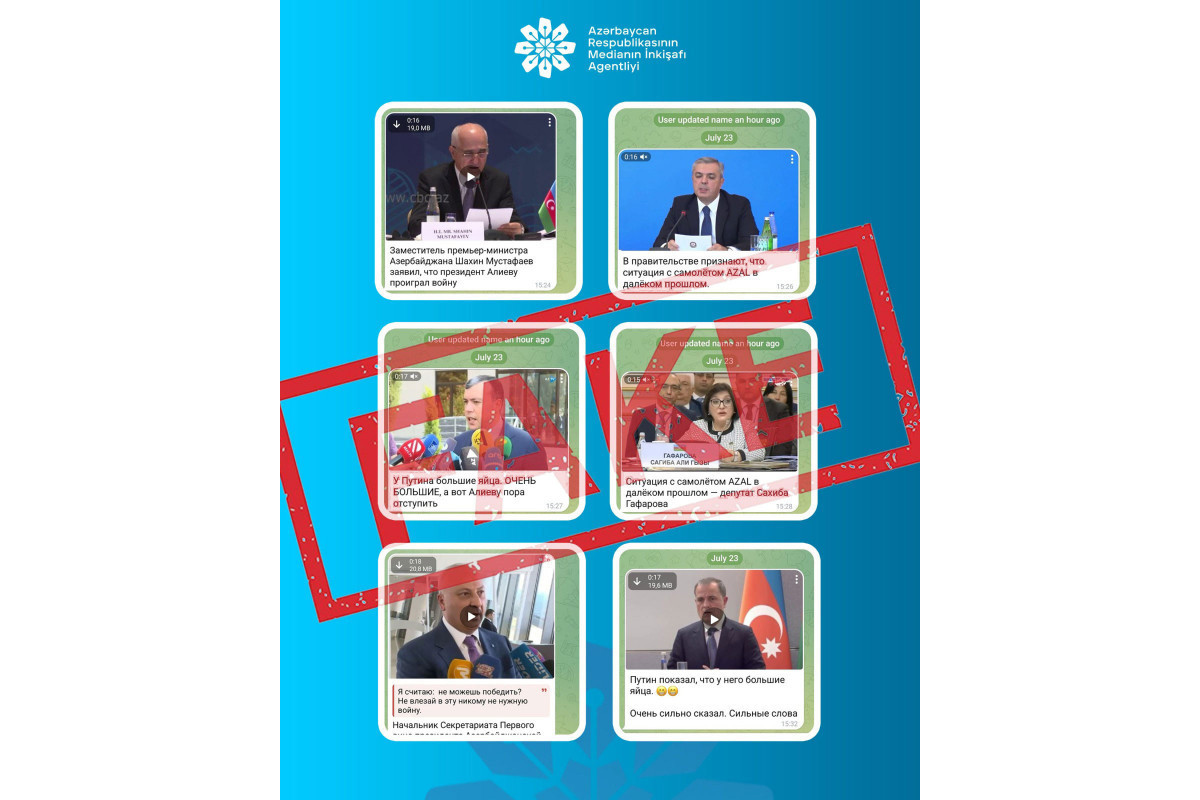
Azerbaijan Grapples with Surge in Deepfake Disinformation Targeting Public Officials

Baku, Azerbaijan – The Republic of Azerbaijan is facing a growing wave of disinformation campaigns employing sophisticated “deepfake” technology to fabricate statements attributed to high-ranking government officials. These manipulated videos, disseminated across various social media platforms, have raised serious concerns about the potential to mislead the public and erode trust in official communication channels. The Azerbaijani government has issued a stern warning, urging citizens to exercise caution and rely solely on information provided by official sources.

Deepfakes, a portmanteau of “deep learning” and “fake,” leverage artificial intelligence algorithms to create highly realistic but entirely fabricated videos. This technology allows malicious actors to superimpose faces and manipulate lip movements, making it appear as if individuals are saying things they never actually uttered. The recent spate of deepfakes targeting Azerbaijani officials represents a significant escalation in the use of this technology for disinformation purposes.

The government’s response has been swift and unequivocal. In a statement released to the press, officials condemned the deepfake videos as a “gross manipulation” aimed at deceiving the public. They emphasized the importance of relying on official sources for accurate information, including government websites, news agencies, and established media outlets. This underscores the critical role of responsible journalism and verified information in combating the spread of disinformation.

The Azerbaijani government’s warning also extends to citizens, journalists, and public activists, urging them to remain vigilant and demonstrate a principled approach in the face of such deceptive tactics. This call for collective responsibility reflects the understanding that combating disinformation requires a multi-faceted approach, encompassing both government action and informed public engagement.

The emergence of deepfakes as a potent tool for disinformation poses a formidable challenge to governments and societies worldwide. Distinguishing authentic content from manipulated media is becoming increasingly difficult, necessitating a heightened awareness of media literacy. The Azerbaijani government’s proactive response serves as a valuable case study for other nations grappling with similar threats.

The ongoing battle against deepfake disinformation highlights the urgent need for international cooperation and technological advancements in detection and prevention. As artificial intelligence technology continues to evolve, so too must the strategies and tools employed to counteract its malicious applications. The Azerbaijani government’s call for vigilance is a timely reminder of the shared responsibility in safeguarding the integrity of information and upholding public trust in an increasingly complex digital landscape. The situation in Azerbaijan serves as a stark warning about the potential for deepfakes to disrupt political discourse and undermine democratic processes, underscoring the importance of proactive measures to address this emerging threat.

Share. Facebook Twitter Pinterest LinkedIn WhatsApp Reddit Tumblr Email

Read More

Tate Brothers Acknowledge Their Ostentatious Displays of Wealth Are Fabricated

August 25, 2026

Formal Advisory Warns Social Media Users of Fraudulent Protection Services

August 25, 2026

Identifying the Most Common Scams Originating on Social Media

August 25, 2026
Add A Comment
Leave A Reply Cancel Reply

Our Picks

Analyzing the Proliferation of Disinformation Following the Latest School Shooting.

August 26, 2026

German Embassy Issues Formal Warning to Nigerian Nationals Regarding Unauthorized Visa Agents and Misinformation.

August 26, 2026

Social Media Addiction: Consequences, Risks, and Legal Remedies

August 26, 2026

ActionSA Lodges Formal Disinformation Complaint with IEC Against ANC’s Kgoši Maepa.

August 26, 2026
Stay In Touch
  • Facebook
  • Twitter
  • Pinterest
  • Instagram
  • YouTube
  • Vimeo

Don't Miss

News

Health Experts Offer Evidence-Based Guidance for Navigating Online Nutrition Misinformation

By Press RoomAugust 26, 20260

In an era where dietary advice proliferates across social media platforms, blogs, and podcasts, distinguishing…

The Threat of Anti-Disinformation Legislation to the Public Square

August 26, 2026

NCIC and Faith Leaders Warn of Misinformation Threat Ahead of 2027 Elections

August 26, 2026

  1. Analyze the Request:

    • Original title: “How to spot ethnic disinformation on social media”
    • Task: Rewrite this to 1 title in English in a formal tone.
    • Constraints: Only 1 title, formal tone, must retain the core meaning (identifying/detecting ethnicity-based disinformation/falsehoods on social platforms).
  2. Evaluate the Original: The original is clear but uses “spot” (informal/colloquial for this context) and “ethnic” (slightly broad). “Disinformation” is a good formal term.

  3. Brainstorm Formal Alternatives:

    • “Identifying Ethnic Disinformation on Social Media Platforms” (good, formal, direct).
    • “Detecting Disinformation Targeting Ethnic Groups on Social Networks” (more specific, emphasizes targeting).
    • “A Guide to Identifying Ethnically-Focused Misinformation and Disinformation on Social Media” (too long).
    • “Recognizing Ethnic Disinformation in Social Media Environments” (wordy).
    • “Techniques for Uncovering Ethnic Disinformation on Digital Platforms” (practical).
    • Let’s synthesize. Formal titles usually prefer nouns like “Identifying”, “Detecting”, “Assessing”. The subject is specifically disinformation that is ethnic (based on ethnicity/race).
    • Option A: “Identifying Ethnic Disinformation on Social Media” (Best balance of formality, conciseness, and accuracy).
    • Option B: “Detecting Ethnic Misinformation and Disinformation on Digital Networks” (a bit longer).
    • Option C: “Strategies for Identifying Ethnic Disinformation in Social Media”.
  4. Select the Best Title: Option A is the most natural and formal direct translation. Let’s ensure it doesn’t sound like a casual tutorial. “Identifying” is academic/formal. “Ethnic disinformation” is precise. “Social Media” is standard.

    Let’s refine it slightly to be more impactful: “Detecting Ethnic Disinformation within Social Media Platforms” – a bit wordy. “Identifying Ethnic Disinformation on Social Media” – perfect.

  5. Final Check: Does it meet the criteria? 1 title (yes). English (yes). Formal tone (yes – “Identifying” is formal). Same meaning (yes). Let’s goIdentifying Ethnic Disinformation on Social Media

August 26, 2026
DISA
Facebook X (Twitter) Instagram Pinterest
  • Home
  • Privacy Policy
  • Terms of use
  • Contact
© 2026 DISA. All Rights Reserved.

Type above and press Enter to search. Press Esc to cancel.