


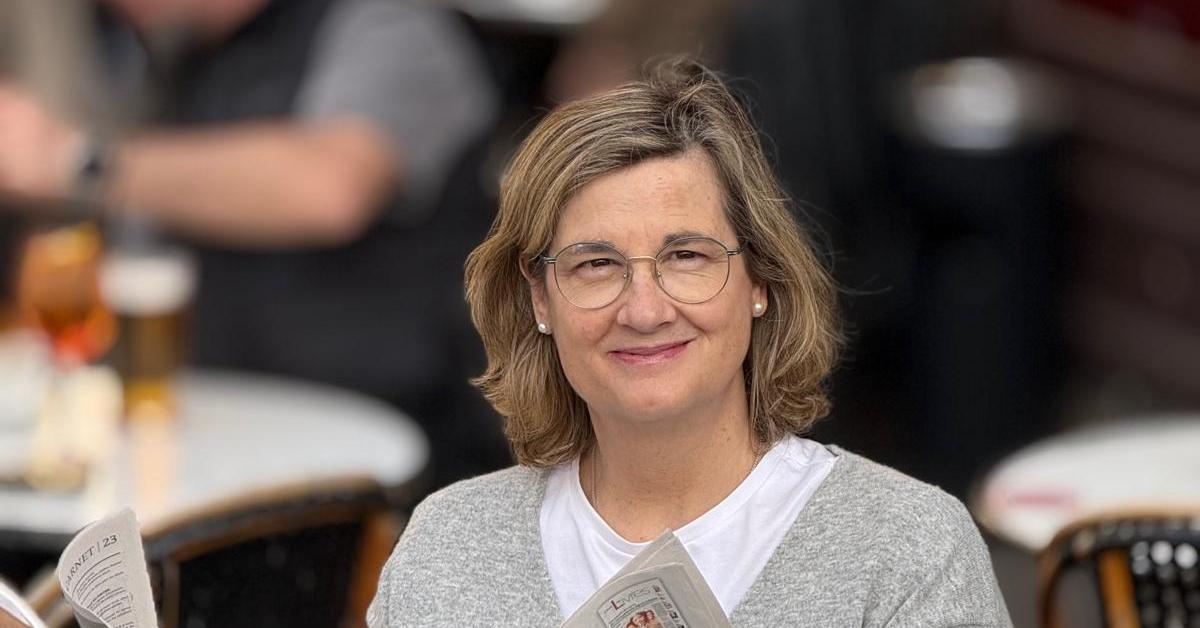
Barcelona — When Carmela Ríos, a journalist from Ceuta and an expert in social media and disinformation, began following the unprecedented crisis in her hometown in late July, she did not see a spontaneous border rush. She saw the culmination of weeks of engineered narratives, viral falsehoods and organised expectations that turned migration into a weapon. The massive entry of people from Morocco into Ceuta, which reached a point of total urban collapse, was not simply a humanitarian or border-control failure, according to Ríos. It was also a disinformation operation, amplified by social media platforms and private messaging apps, that convinced thousands of people that the border was open and that they could not be expelled. In an interview, Ríos detailed how the crisis unfolded, who may have benefited from it, and why Europe must understand that wars today are not fought only with weapons. The journalist stressed that the roots of the episode lie in a confluence of legal, social and technological factors, and that the consequences are still being felt through a new wave of health-related rumours aimed at destabilising the city.
Ríos explained that the groundwork for the mass entry was laid long before July 30, pointing to studies indicating a sharp increase in disinformation from July 8, immediately after Spain’s Supreme Court ruling that eliminated the rejection of migrants who entered the country by swimming into Spanish territory. The ruling was based on the argument that the sea, unlike the land border, does not constitute a containment element. From that moment, Ríos said, a series of manipulated reports began circulating with the clear message that entry into Spain was now possible and that the border was effectively open. Social media accounts spreading this narrative multiplied rapidly, alongside advertisements offering transport to the border and selling gear meant for crossing. These messages were forwarded through WhatsApp and Telegram groups, creating false expectations for thousands and thousands of people. The journalist noted that while the origin of this coordinated information campaign remains unclear, its effect was undeniable: it transformed a legal nuance into a mass delusion that the route to Europe was free of consequences. The sheer volume of accounts and commercial offers suggested a level of organisation that went beyond spontaneous online chatter, pointing instead to networks with a vested interest in moving people toward the border.
The immediate trigger, according to Ríos, came days before the mass entry, when attempts to cross by swimming increased significantly. On July 27 and 28, a large number of people entered Ceuta in this manner, including two young sportswomen who were photographed by the local newspaper El Faro after they had crossed. The image, showing the two women making victory signs with their fingers, was uploaded to Instagram and became one of the most-viewed pieces of content produced by the media outlet. It was shared extensively and sent a powerful message: “This is possible, it can be done, there has been a relaxation of the Spanish law.” That visual proof, combined with the existing narrative of an open border, created a powerful pull effect. When asked who coordinated the logistics and provided the material for crossing, Ríos pointed to the existence of a large market of expectation for migration to Spain and Europe. She emphasised that Ceuta is not the final destination for most migrants; many intend to move onward to other European countries. Clandestine migration groups prefer WhatsApp and private messaging channels because they are harder to monitor, and Ríos argued that Morocco, under agreements signed with the European Union, has an obligation to combat these groups. Its role, she said, is fundamental, and while the situation must be analysed carefully, all evidence points to the mafias charging migrants significant sums to make the crossing.
Ríos rejected the idea that the viralisation of the calls to cross was purely a spontaneous youth mobilisation, insisting instead on a confluence of factors. There was, she acknowledged, an atmosphere that encouraged many young people to try their luck, but that atmosphere was deliberately cultivated. The Supreme Court ruling, the frantic activity of WhatsApp groups preparing for the move north, the mass crossing action and the trading of products to cross all fed into a single narrative: “It is easier to cross,” “they cannot kick us out” and “the border is open.” The Moroccan authorities’ role remains a major question. Ríos asked why Morocco did not deploy a police presence scaled to the tragedy that was unfolding. She noted that 80,000 people did not appear at the border by magic, implying that the lack of preventive action was either a catastrophic failure or a deliberate choice. Comparing the episode to the 2021 mass entry, Ríos said the earlier crisis was resolved very quickly because the majority of those who entered left within a matter of weeks. At that time, returns were allowed and the city recovered its normality fast. What happened now is different in kind: it is not a border incident but the collapse of a city. When the number of people entering equals the entire population of the city, she explained, the collapse is absolute in every sense, from health services to sanitation to public order.
The Ceuta crisis, in Ríos’s view, is a textbook example of disinformation as a tool of hybrid warfare. She warned that this should be a wake-up call for those who believe that wars are only fought with weapons. Using people as a weapon is very easy to do, especially in a country where there is so little respect for human rights. The episode exposed a profound vulnerability in Europe’s southern border and raised urgent questions about cyberintelligence and digital monitoring. Ríos noted that one of the points of friction in Europe is that there is no shared conviction that this kind of digital warfare matters. The most desirable outcome, she said, would be for Morocco to be a trusted neighbour and a reliable partner. Even after the crisis, the European Union appears committed to entrusting Morocco with the management of the southern border. But Ríos argued that this relationship should change in nature. The EU should become directly involved in the southern border rather than outsourcing it entirely. Morocco has shown that it can be a reliable partner, but it has also shown that it can stop being one, leaving a very large margin of vulnerability. This, she said, should alarm a divided Europe that lacks the unity of action seen in other migration crises.
Disinformation, Ríos stressed, did not end with the mass entry. It continues to circulate and has distorted the entire narrative of the crisis. Now, she said, we are seeing a wave of health-related rumours about Ceuta, including the false claim that following the settlement of migrants on the beach of El Trampolín, the waters of Ceuta have been contaminated due to a tuberculosis outbreak. This is a lie, she insisted, but it is a dangerous lie because it feeds fear, stigmatises migrants and further destabilises a city already under immense strain. The pattern is consistent with the broader disinformation campaign: first, lies were used to create a pull effect and encourage massive entry; now, lies are being used to poison the aftermath and undermine any sense of normalcy. Ríos concluded that disinformation is difficult to quantify and measure, but it is always present and has had a very relevant weight in all phases of this crisis. The lesson for Europe, she said, is that digital vigilance is no longer optional. It is as essential as physical border security. If resources are not provided to monitor and counter these narratives, the probability of repetition is high. Ceuta is not just a remote Spanish enclave; it is a laboratory for hybrid warfare, and what happened there could happen anywhere in Europe. The journalist’s warning is clear: the border was not opened by a court ruling alone, but by a stream of lies, amplified by algorithms and private channels, that turned human desperation into a strategic weapon. Until Europe treats this threat with the seriousness it deserves, the collapse of Ceuta will remain a blueprint for future crises.