


Pre-bunking Workshop Aims to Shield South Africa’s Local Government Elections from Online Disinformation
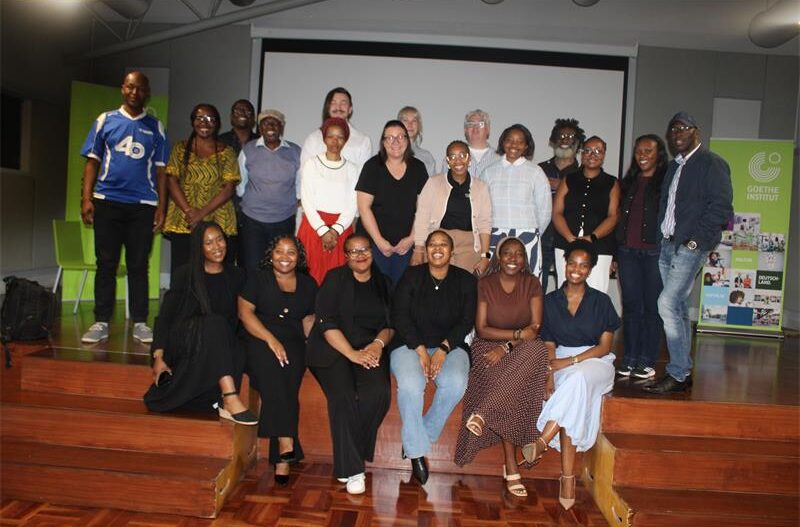
In the run-up to South Africa’s local government elections, electoral authorities and civil society are turning to “pre-bunking” to counter the online misinformation and disinformation that threaten the integrity of the vote. On 1 September, the Partnership on Information and Integrity in Elections (PIIE) hosted a workshop at the Goethe-Institut in South Africa, bringing together representatives from the Electoral Commission of South Africa (IEC), PIIE members and other key partners. The aim was to identify likely false narratives before they gain traction and to develop practical, coordinated strategies for response. The session reflected a growing awareness that in an era of platform-facilitated communication, falsehoods can travel faster and farther than corrections. Rather than waiting to debunk viral falsehoods after they have already penetrated public consciousness, the pre-bunking model seeks to build immunity in advance. Participants examined past elections, social media trends and emerging technologies, and discussed how to make the information ecosystem more resilient. With local government elections pivotal to South Africa’s democratic consolidation, the stakes are high. Voter trust is fragile, and disinformation campaigns can exploit existing social fissures, including ethnic tensions, service delivery grievances and migration anxieties. The workshop was thus not merely a technical exercise but a democratic necessity. By aligning on a shared understanding of the threat and committing to common standards, stakeholders hoped to ensure that the upcoming poll is decided by informed choice rather than manipulated emotion. This proactive stance is especially important because electoral outcomes in a country with South Africa’s history carry profound symbolic and material consequences. As the IEC and its partners prepare for the campaign season, the event at the Goethe-Institut is likely to be remembered as a turning point in how election integrity is defended in the digital age.
The data presented at the workshop underscored the scale of the challenge. Ntsako Manganyi, community building and engagement programme manager, presented feedback collected from 31 July to 31 August through Real 411, an evidence-first tool that monitors media in real time, reports digital harms, visualises trends and enables journalists, educators and communities to turn data into action. The trend analysis revealed that 184 complaints had been received since 31 July, averaging 46 complaints per week, with 60% of those complaints related to elections. This concentration is unsurprising given the proximity of the polls, but it nonetheless signals an organised effort to undermine public faith in electoral processes. Manganyi said recurring disinformation narratives included political collusion claims, fraudulent IEC recruitment posts, unverified corruption accusations, and legitimate scrutiny blended with speculation. The last category is particularly insidious: by mixing verified facts with conjecture, purveyors of disinformation can make their content harder to refute and more shareable. The complaints logged on Real 411 range from fake social media accounts impersonating political candidates to manipulated images and audio clips designed to provoke anger. The platform’s role as a real-time monitoring tool means that trends can be detected early, enabling rapid response before a falsehood becomes entrenched. However, Manganyi and others cautioned that complaint data represent only the tip of the iceberg, as many citizens are unwilling or unable to report harmful content. The high volume of election-related complaints also suggests that ordinary South Africans are taking an active role in safeguarding electoral integrity, using tools like Real 411 to flag content that they suspect is false. This grassroots engagement is a positive sign, but it also places additional pressure on electoral authorities to respond quickly and transparently.
Across the monitoring period, Manganyi said, three distinct but increasingly connected narrative trends emerged, with elections and the IEC featuring consistently and intersecting with migration narratives and AI-generated political content. The first trend—disinformation targeting the IEC and electoral processes—included false allegations of rigged voter rolls, manipulated results and claims that election officials are colluding with political parties. These narratives are dangerous because they can undermine trust in the very institutions responsible for delivering credible elections. The second trend involved migration, with xenophobic content being used to inflame tensions and mobilise voters around exclusionary platforms. Disinformation about migrants voting illegally, taking jobs or committing crimes has become a recurring feature of South African online discourse, and such content often spikes ahead of elections as political actors seek to exploit anxieties. The third trend, AI-generated political content, represents an emerging and particularly challenging frontier. Deepfakes and other synthetic media can be used to create realistic but entirely fabricated videos of politicians making inflammatory statements, or to impersonate election officials and spread false instructions on how to vote. As AI tools become more accessible and sophisticated, the barrier to creating convincing disinformation has lowered dramatically. Manganyi warned that these three trends are increasingly connected, with AI-generated content being used to amplify migration-related disinformation and to create fake evidence of electoral fraud. The convergence of these trends means that those monitoring online conversation must adopt an integrated approach, looking not just at individual falsehoods but at the broader narrative ecosystems in which they operate. This requires sophisticated data analytics, media literacy and cross-sectoral collaboration between technology platforms, civil society and electoral authorities.
The IEC has responded by expanding its digital team, a move that project manager Anele Ngwenya said was essential because misinformation and disinformation “moves at platform speed; it doesn’t move face to face.” Speaking at the workshop, Ngwenya argued that “capacitating our organisation with a team that can be proactive in communicating is less expensive than fixing a crisis.” This statement reflects a pragmatic understanding of the economics of disinformation: the cost of prevention is far lower than the cost of response. The IEC’s digital team is tasked with monitoring online conversation, countering false narratives and engaging directly with voters through digital platforms. In addition to capacity expansion, Ngwenya identified the establishment of a WhatsApp channel as a key focus area for the upcoming election. WhatsApp is one of the most widely used messaging applications in South Africa, and it has been a vector for political disinformation in previous election cycles. By creating an official channel, the IEC hopes to provide voters with a trusted source of information and to counter the spread of false content in private groups. The WhatsApp channel will allow users to verify information, report suspicious content and receive official updates from the electoral body. This initiative is particularly important because private messaging platforms are notoriously difficult to monitor, and pre-bunking efforts must therefore include a strong presence on the platforms where voters are actually spending their time. Ngwenya also hinted that the IEC is exploring partnerships with technology companies to expedite the takedown of harmful content, while respecting freedom of expression and due process.
Another cornerstone of the IEC’s strategy is the promulgation of a disinformation code of conduct. Ngwenya announced that this code will soon be promulgated, and it aims to give practical effect to the constitutional rights to freedom of expression and political participation. The code is also designed to foster an informed, credible and diverse information environment, and to provide guidance to political parties, candidates and other influential actors on standards of conduct. In a context where political advertising and campaigning have moved online, there is a pressing need for clear rules that distinguish between legitimate criticism and harmful disinformation. The code of conduct is expected to address issues such as the use of deepfakes, the manipulation of electoral data and the spreading of false information about voting procedures. It may also impose obligations on political parties to monitor their supporters’ online activity and to distance themselves from disinformation networks. However, the code is not intended to restrict freedom of expression; rather, it seeks to provide a framework for responsible speech during the electoral period. This is a delicate balance to strike, and the IEC will need to ensure that its enforcement mechanisms are transparent, proportionate and consistent with constitutional values. The code could also be supported by self-regulation by technology platforms, which have already introduced their own policies on political advertising and election integrity. By combining hard and soft regulation, the IEC hopes to create an environment in which voters are able to make choices based on reliable information. The upcoming promulgation of the code is thus a landmark moment in South Africa’s efforts to adapt its electoral framework to the challenges of the digital age.
The final strand of the multi-stakeholder strategy involves ongoing data analysis and social media listening. Keamogetswe Sere, a junior data scientist at Moxii Africa, explained that the organisation will compile weekly social media brief reports to monitor, analyse and provide insights into online conversations and emerging trends during the election period. “Through social media listening and data analytics, we can track public sentiment and also detect misinformation and disinformation,” Sere said. These weekly reports will serve as an early-warning system, alerting the IEC and its partners to new narratives as they emerge and enabling a swift, evidence-based response. The reports will also provide valuable insights into voter concerns, helping the IEC to tailor its communication campaigns to address the issues that matter most to South Africans. The use of social media listening is not without its challenges, including concerns about privacy, data protection and the potential for surveillance. However, when conducted in a transparent and accountable manner, it can be a powerful tool for defending democratic processes. As South Africa approaches the local government elections, the combination of pre-bunking workshops, real-time complaint monitoring, expanded digital capacity, a disinformation code of conduct and weekly data analysis represents a comprehensive and forward-looking approach to protecting electoral integrity. While no strategy can completely eliminate the risk of disinformation, the collaborative efforts of the IEC, PIIE, civil society and data scientists are a strong defence against those who would use falsehoods to undermine democracy. The ultimate test will be on election day itself, when South African voters go to the polls to exercise their hard-won right to choose their local representatives.