


Information Warfare Fuels Sikh-Hindu Tensions in Canada
A surge of misinformation targeting Canadian institutions is exacerbating tensions between Sikh and Hindu communities, fueled by suspected bot activity on social media and amplified by pro-Modi Indian news outlets. An investigation by CBC News reveals a concerted effort to disseminate misleading and inflammatory narratives about the Khalistan movement and Sikh Canadians, often originating on social media and subsequently picked up and amplified by Indian media sympathetic to Prime Minister Narendra Modi. This online manipulation, coupled with real-world clashes outside Hindu temples in Canada, is stoking fears and anxieties within both communities and threatens to undermine decades of peaceful co-existence. The underlying tensions were ignited by Prime Minister Justin Trudeau’s allegations of Indian government involvement in the killing of Hardeep Singh Nijjar, a prominent Khalistan activist, in Surrey, B.C.
The investigation involved an in-depth analysis of social media posts on X (formerly Twitter) and YouTube videos in the aftermath of clashes near Hindu temples in Surrey and Brampton, Ontario. The analysis uncovered a pattern of misinformation, particularly regarding the Khalistan movement, being spread by suspicious accounts exhibiting bot-like behaviour. These accounts, characterized by unusually high posting frequencies, disproportionately amplified negative portrayals of Sikhs and the Khalistan movement. While pro-Khalistan accounts also circulated unverified claims, their reach was significantly less amplified and did not exhibit the same level of coordinated bot activity. This asymmetry in amplification suggests a deliberate strategy to disseminate a specific narrative targeting the Sikh community.
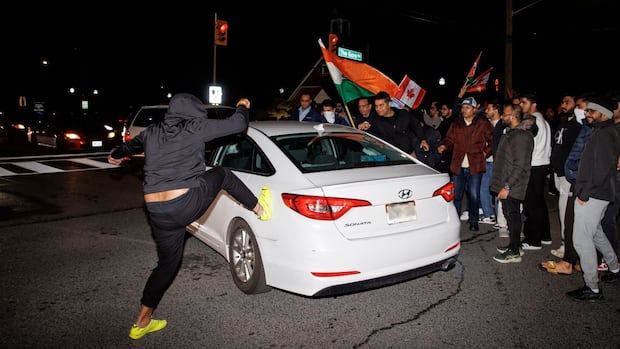
The rise in tensions follows a series of protests by Sikh separatists outside Hindu temples hosting Indian consular events. These demonstrations, although small, often feature provocative slogans, contributing to a growing sense of unease among Hindus in Canada. Counter-protests and confrontations have ensued, leading to arrests and widespread condemnation from political leaders. Members of both communities, especially long-time residents, express concerns about the escalating tensions and a newfound sense of insecurity in Canada. The rapid spread of misinformation in the wake of these clashes further fueled anxieties and distrust between Sikhs and Hindus.
CBC News’s investigation focused on the activity of six prominent X accounts: three critical of the Khalistan movement and three advocating for it. The analysis revealed a stark contrast in bot activity. While pro-Khalistan accounts saw minimal amplification by suspected bots, accounts critical of the movement experienced significant boosting. One account, belonging to a right-wing journalist with a large following, saw thousands of retweets from hundreds of suspected bots, amplifying misleading and inflammatory content about Sikhs. This content subsequently found its way into reports by prominent Indian media outlets, further broadening its reach and potentially influencing perceptions in India and among the diaspora.
One specific example highlights the spread of misinformation. A video of a Sikh religious procession was misrepresented by a right-wing journalist as a Khalistani march with threatening slogans. This distorted narrative, amplified by bot activity, was then reported by major Indian media outlets. The original video creator clarified that his comments were directed at racist remarks in the livestream chat, not at the broader Canadian population. This incident underscores how easily online misinformation can be manipulated and disseminated to create division and mistrust.
The role of pro-Modi media outlets in amplifying these narratives cannot be overlooked. Many of India’s largest media outlets are owned by Modi loyalists and often align their coverage with the government’s agenda. This creates a significant advantage in disseminating negative narratives about Canada and the Sikh community, especially among the diaspora. The reach and influence of these outlets, coupled with coordinated bot activity on social media, contribute to a potent information ecosystem capable of manipulating public perception and exacerbating existing tensions. The Canadian government has recognized this influence, noting the pro-Modi outlets’ "distinct advantage in amplifying negative narratives about Canada."
The spread of misinformation and the resulting tensions between Sikh and Hindu communities represent a growing challenge. The increasing use of social media manipulation techniques, combined with the amplificatory power of partisan media, creates an environment ripe for the escalation of conflict. This incident highlights the urgent need for media literacy, critical thinking, and robust fact-checking mechanisms to counter the spread of misinformation and mitigate its damaging impact on communities. The proliferation of bot activity and coordinated disinformation campaigns signifies a "new normal," demanding vigilance from policymakers, social media platforms, and individuals alike. The future of peaceful coexistence between Sikh and Hindu communities in Canada hinges on addressing this challenge effectively and promoting understanding and dialogue in the face of manufactured division.