


Close Menu
DISADISA
  • Home
  • News
  • Social Media
  • Disinformation
  • Fake Information
  • Social Media Impact
Trending Now

Social Media Addiction: Consequences, Risks, and Legal Remedies

August 26, 2026

ActionSA Lodges Formal Disinformation Complaint with IEC Against ANC’s Kgoši Maepa.

August 26, 2026

Health Experts Offer Evidence-Based Guidance for Navigating Online Nutrition Misinformation

August 26, 2026
Facebook X (Twitter) Instagram
Facebook X (Twitter) Instagram YouTube
DISADISA
Newsletter
  • Home
  • News
  • Social Media
  • Disinformation
  • Fake Information
  • Social Media Impact
DISADISA
Home»Fake Information»Dissemination of False Information Attributed to the First Vice-Premier of Azerbaijan
Fake Information

Dissemination of False Information Attributed to the First Vice-Premier of Azerbaijan

Press RoomBy Press RoomJuly 21, 2025No Comments
Facebook Twitter Pinterest LinkedIn Tumblr Email

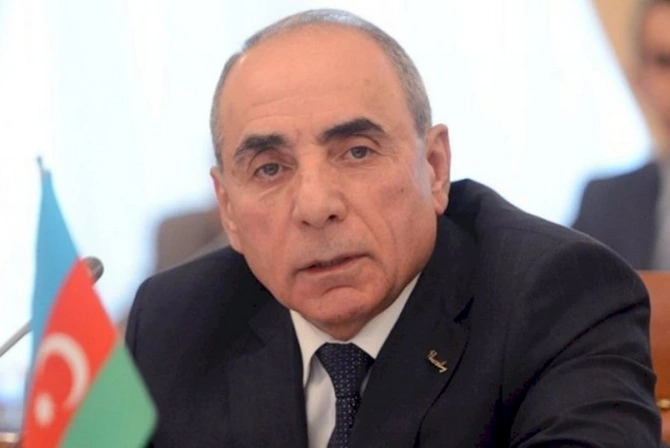
Deepfake Targets Azerbaijani Deputy Prime Minister, Sparks Information Warfare Concerns

Baku, Azerbaijan – A sophisticated disinformation campaign employing deepfake technology has targeted Azerbaijan’s First Deputy Prime Minister, Yagub Eyyubov, falsely portraying him as advocating an aggressive stance against Russia. The fabricated video, circulated across various social media platforms, has prompted a strong condemnation from the Media Development Agency of Azerbaijan (MEDİA), which has labeled it a blatant attempt to manipulate public opinion and sow discord. This incident underscores the growing threat of deepfakes in the geopolitical landscape, raising concerns about the potential for such fabricated content to escalate tensions and undermine international relations.

The deepfake video purportedly shows Eyyubov making inflammatory statements against Russia, a narrative diametrically opposed to Azerbaijan’s official position. MEDİA swiftly responded, denouncing the video as a malicious fabrication designed to mislead the public and damage relations between Azerbaijan and Russia. The agency urged citizens to rely solely on official government channels and reputable news organizations for accurate information, highlighting the crucial role of media literacy in combating disinformation. This incident serves as a stark reminder of the ease with which deepfakes can be created and disseminated, potentially triggering diplomatic crises or even military conflict if left unchecked.

The emergence of this deepfake targeting a high-ranking Azerbaijani official raises several critical questions about the source of the disinformation and its intended objectives. While the perpetrators remain unidentified, the timing of the release and the specific content suggest a deliberate attempt to exploit existing geopolitical complexities and sow discord between Azerbaijan and Russia. This underscores the growing sophistication of disinformation campaigns, which increasingly leverage cutting-edge technologies like deepfakes to achieve their malicious goals. The incident also highlights the vulnerability of even technologically advanced nations to these forms of information warfare.

The Azerbaijani government’s response to this deepfake incident reflects a growing awareness of the threat posed by disinformation and the need for proactive measures to counter it. MEDİA’s call for increased vigilance and critical consumption of information is a crucial step in mitigating the impact of such campaigns. However, this incident also underscores the need for more robust technological solutions to detect and debunk deepfakes, as well as international collaboration to address the broader issue of disinformation and its potential to destabilize global security. The development of effective deepfake detection technologies and the establishment of international norms against the malicious use of such technology are vital to safeguarding the integrity of information ecosystems.

The attempted manipulation of public opinion through the use of deepfakes targeting Eyyubov is not an isolated incident. Similar tactics have been employed in other geopolitical contexts, demonstrating the increasing prevalence of this form of disinformation warfare. The implications of these fabricated videos extend beyond the immediate targets, eroding trust in media and institutions, and potentially inciting social unrest or even violent conflict. The international community must work together to develop effective countermeasures, including legal frameworks, technological solutions, and educational initiatives, to combat this emerging threat and protect the integrity of democratic processes.

This incident serves as a wake-up call for governments, media organizations, and individuals alike to be more vigilant and discerning in the face of rapidly evolving disinformation tactics. As deepfake technology becomes increasingly sophisticated and accessible, the potential for its misuse in political manipulation and information warfare grows exponentially. Addressing this challenge requires a multi-faceted approach, encompassing technological innovation, media literacy education, and international cooperation to establish norms and regulations against the malicious use of deepfakes. The future of democratic discourse and international stability hinges on our ability to effectively counter this emerging threat.

Share. Facebook Twitter Pinterest LinkedIn WhatsApp Reddit Tumblr Email

Read More

Tate Brothers Acknowledge Their Ostentatious Displays of Wealth Are Fabricated

August 25, 2026

Formal Advisory Warns Social Media Users of Fraudulent Protection Services

August 25, 2026

Identifying the Most Common Scams Originating on Social Media

August 25, 2026
Add A Comment
Leave A Reply Cancel Reply

Our Picks

ActionSA Lodges Formal Disinformation Complaint with IEC Against ANC’s Kgoši Maepa.

August 26, 2026

Health Experts Offer Evidence-Based Guidance for Navigating Online Nutrition Misinformation

August 26, 2026

The Threat of Anti-Disinformation Legislation to the Public Square

August 26, 2026

NCIC and Faith Leaders Warn of Misinformation Threat Ahead of 2027 Elections

August 26, 2026
Stay In Touch
  • Facebook
  • Twitter
  • Pinterest
  • Instagram
  • YouTube
  • Vimeo

Don't Miss

Social Media

  1. Analyze the Request:

    • Original title: “How to spot ethnic disinformation on social media”
    • Task: Rewrite this to 1 title in English in a formal tone.
    • Constraints: Only 1 title, formal tone, must retain the core meaning (identifying/detecting ethnicity-based disinformation/falsehoods on social platforms).
  2. Evaluate the Original: The original is clear but uses “spot” (informal/colloquial for this context) and “ethnic” (slightly broad). “Disinformation” is a good formal term.

  3. Brainstorm Formal Alternatives:

    • “Identifying Ethnic Disinformation on Social Media Platforms” (good, formal, direct).
    • “Detecting Disinformation Targeting Ethnic Groups on Social Networks” (more specific, emphasizes targeting).
    • “A Guide to Identifying Ethnically-Focused Misinformation and Disinformation on Social Media” (too long).
    • “Recognizing Ethnic Disinformation in Social Media Environments” (wordy).
    • “Techniques for Uncovering Ethnic Disinformation on Digital Platforms” (practical).
    • Let’s synthesize. Formal titles usually prefer nouns like “Identifying”, “Detecting”, “Assessing”. The subject is specifically disinformation that is ethnic (based on ethnicity/race).
    • Option A: “Identifying Ethnic Disinformation on Social Media” (Best balance of formality, conciseness, and accuracy).
    • Option B: “Detecting Ethnic Misinformation and Disinformation on Digital Networks” (a bit longer).
    • Option C: “Strategies for Identifying Ethnic Disinformation in Social Media”.
  4. Select the Best Title: Option A is the most natural and formal direct translation. Let’s ensure it doesn’t sound like a casual tutorial. “Identifying” is academic/formal. “Ethnic disinformation” is precise. “Social Media” is standard.

    Let’s refine it slightly to be more impactful: “Detecting Ethnic Disinformation within Social Media Platforms” – a bit wordy. “Identifying Ethnic Disinformation on Social Media” – perfect.

  5. Final Check: Does it meet the criteria? 1 title (yes). English (yes). Formal tone (yes – “Identifying” is formal). Same meaning (yes). Let’s goIdentifying Ethnic Disinformation on Social Media

By Press RoomAugust 26, 20260

Ethnic Disinformation Emerges as Major Threat Ahead of Nigeria’s 2027 Elections, Experts Warn By: Nurudeen…

Identifying Ethnically Targeted Disinformation on Social Media Platforms

August 26, 2026

Identifying Health Misinformation

August 26, 2026

AFP Advocates for Countering Foreign Disinformation in the West Philippine Sea

Alternatively: AFP Urges Measures to Curb Overseas Misinformation Regarding the West Philippine Sea

August 26, 2026
DISA
Facebook X (Twitter) Instagram Pinterest
  • Home
  • Privacy Policy
  • Terms of use
  • Contact
© 2026 DISA. All Rights Reserved.

Type above and press Enter to search. Press Esc to cancel.