


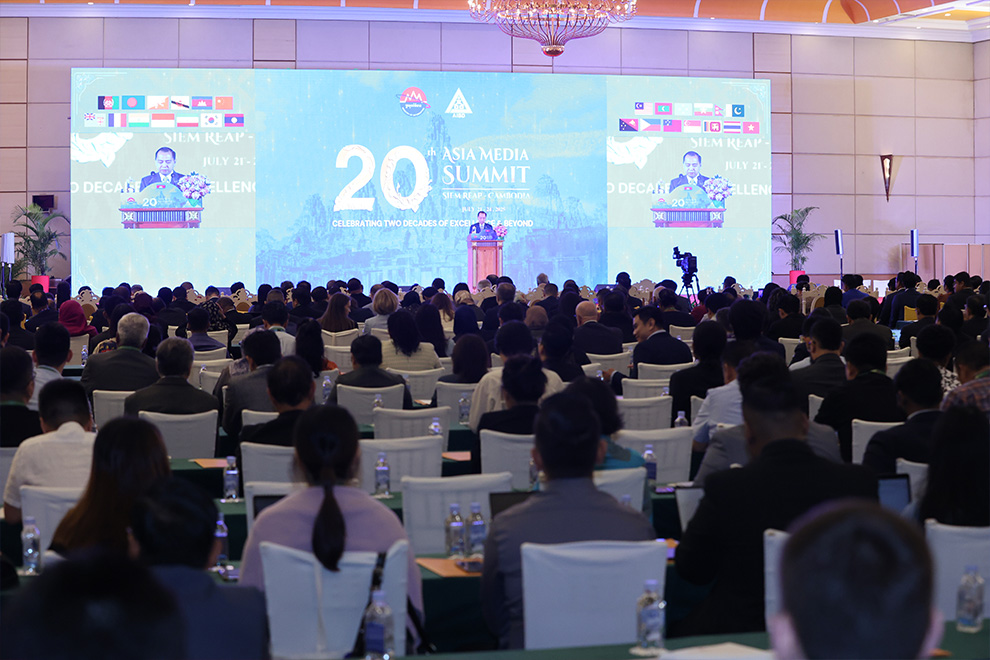
Asia Media Summit 2025: Navigating the Information Age in Siem Reap
The 20th Asia Media Summit (AMS 2025), held in Siem Reap, Cambodia, from July 22nd, brought together media leaders from across the Asia-Pacific region to address the pressing challenges and opportunities facing the media landscape in the digital age. The central theme of the summit, “Celebrating Two Decades of Excellence & Beyond,” encapsulated the need to reflect on past achievements while charting a proactive course for the future, particularly in combating disinformation and harnessing the transformative power of Artificial Intelligence (AI).
The pervasiveness of disinformation and fake news in the digital sphere dominated the discussions. Cambodian Minister of Information, Neth Pheaktra, highlighted the paradox of increased connectivity alongside growing fragmentation in understanding, emphasizing the decline of trust in information despite its abundance. He underscored the dual nature of technology, empowering citizens while simultaneously enabling the distortion of truth on a massive scale. This concern was echoed by ASEAN Secretary-General Kao Kim Hourn, who recognized the unprecedented transformation of the global media landscape and its impact on information flow. He stressed the importance of addressing information fragmentation and the rise of echo chambers, emphasizing the need for regional cooperation to empower citizens and safeguard trust.
Cambodia’s proactive “Say No to Fake News” campaign, launched in April 2025, served as a case study for combating disinformation. The nationwide initiative focuses on media literacy education, fact-checking partnerships, and grassroots outreach to equip citizens with the skills to differentiate between reliable information and manipulation. This campaign reflects a broader call for collective action against disinformation, with Minister Pheaktra emphasizing the need for shared values, technological collaboration, and multilateralism to tackle this global challenge effectively. No single nation, regardless of its technological advancement, can address this issue in isolation.
Cambodia’s own media landscape has undergone a significant transformation over the past two decades, evolving from a limited number of radio and TV stations in the 1990s to a diverse ecosystem encompassing various platforms, including digital media and citizen journalism. Hosting the AMS for the second time, Cambodia showcased its commitment to media development, building on the legacy of former Prime Minister Hun Sen, who championed press freedom. Under the current leadership of Prime Minister Hun Manet, the focus remains on digital transformation, professional integrity, and ethical conduct in media. However, this progress also presents challenges, including digital disruption impacting advertising revenue, the rise of online misinformation, and shifting content consumption patterns. The Cambodian government is actively supporting the digital transition through training programs, infrastructure investments, and collaborations with technology companies and journalism schools.
The integration of AI into the media industry emerged as a significant focal point of discussion. While acknowledging the potential of AI to revolutionize content creation and distribution, leaders also recognized the inherent risks associated with deepfakes, data bias, and automated misinformation. Gaurav Dwivedi, President of the Asia Pacific Institute for Broadcasting Development (AIBD), highlighted the opportunities presented by AI, particularly in automating content curation, enhancing fact-checking, and personalizing user experiences. He stressed the importance of AI workshops to equip media professionals with the necessary skills in digital journalism and data storytelling. While embracing technological advancements, the ethical considerations surrounding AI remain paramount. Minister Pheaktra proposed a regional charter for AI ethics in journalism to ensure transparency, fairness, and respect for human dignity.
The summit underscored the crucial role of media literacy and professional integrity in navigating the evolving information landscape. Philomena Gnanapragasam, Secretary-General/CEO of AIBD, emphasized the ongoing journey of media development and the need for continuous improvement. The summit served as a powerful reminder of the fundamental purpose of media: to inform, empower, inspire, and unite. In an era where virality often overshadows veracity, the focus must remain on providing accurate and reliable information to the public. The commitment from leaders at AMS 2025 signifies a determined effort to empower citizens with the necessary tools to navigate the digital age and combat the spread of misinformation. The discussions and initiatives highlighted the vital role of media in upholding truth and fostering a well-informed society.