


Paragraph 1: The Core Warning and the Call for Societal Preparedness
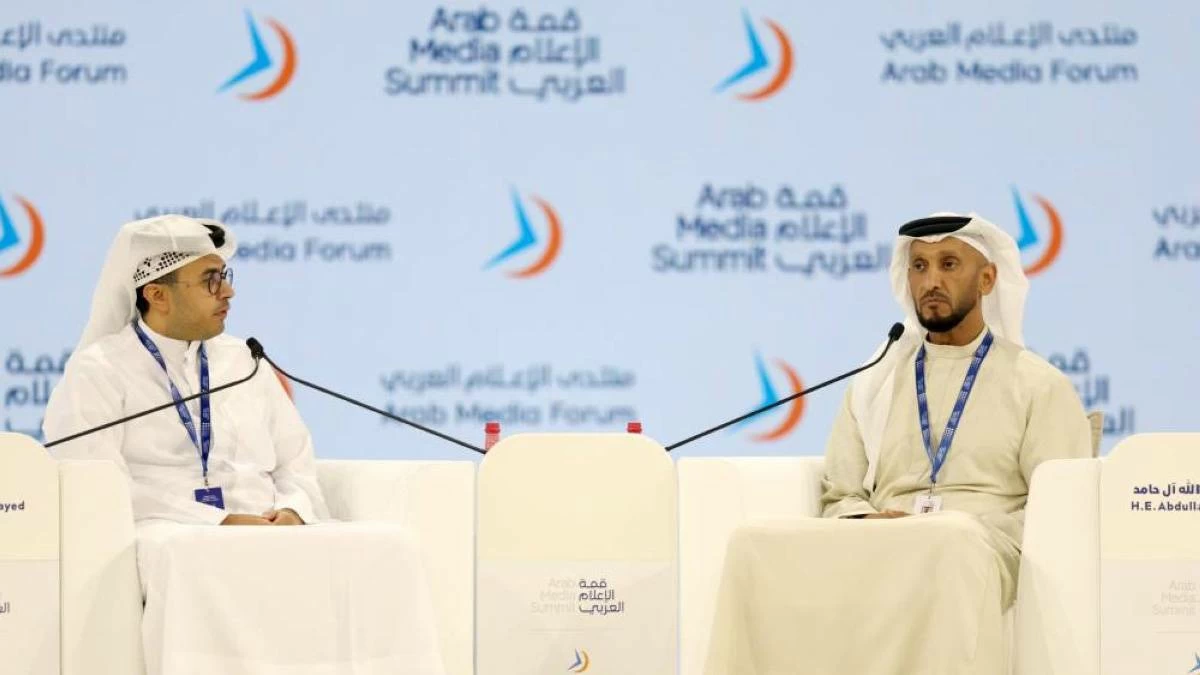
At the Arab Media Summit 2026, His Excellency Abdullah Al Hamed, Chairman of the National Media Office, delivered a stark warning about the dual-edged nature of artificial intelligence, framing it as a potential existential threat to nations that fail to adequately prepare for its pervasive influence. Speaking during the session “Arab Media in a Changing World,” Al Hamed emphasized that readiness for this technological revolution cannot remain the sole purview of governments, corporations, or institutions; rather, it must permeate the very fabric of society, reaching individuals, families, and even children. He characterized the current global landscape as one of rapid, relentless transformation that demands continuous adaptation. The approach to these changes, he argued, must be characterized by a blend of caution, confidence, and expertise—a delicate balancing act required to maximize the immense benefits of AI while simultaneously mitigating its potential for societal disruption and harm. His remarks set the tone for a discussion centered on resilience, awareness, and the collective responsibility to navigate an increasingly complex information ecosystem.
Paragraph 2: The UAE’s Community-Centric Defense Against Disinformation
Al Hamed underscored that recent regional events have starkly illustrated the dangers of misleading news and fabricated content proliferating on social media platforms. However, he pivoted to highlight a powerful countermeasure unique to the UAE: the deep-seated trust between the community and its leadership. This bond, forged since the nation’s establishment and even before, has proven to be a fundamental line of defense against the tide of misinformation and rumors. He provided a compelling example of this societal resilience in action, noting that citizens and residents themselves took a direct and proactive role in countering disinformation. When false posts claimed that specific locations had been targeted or affected by incidents, ordinary people took the initiative to publish their own videos from those very sites, revealing the ground truth and effectively debunking the fabricated content. This spontaneous, community-driven response, Al Hamed asserted, was a testament to the high level of public awareness and readiness to confront the risks posed by AI-generated falsehoods, complementing the media’s own efforts to challenge fake news and clarify facts for the public.
Paragraph 3: The Imperative of Individual Verification and Critical Consumption
The crux of Al Hamed’s message centered on the principle of individual responsibility in the digital age. He stressed that engaging with content on social media demands a critical eye and personal caution; the public should not accept everything at face value, particularly given the increasing sophistication of fabricated material. He called for the positive use of these platforms, urging users to avoid becoming unwitting amplifiers of false information. The Chairman articulated a clear hierarchy of responsibility, stating that the onus of verification begins with the individual and their handling of information. The state’s role, he elaborated, is to prepare society by providing the necessary tools, resources, and education on mechanisms that help distinguish between accurate and inaccurate content. He issued a firm directive: no information should be accepted before being verified through reliable sources. This principle of verification, he insisted, should apply universally, even to information heard from trusted individuals. In an era where AI can produce content nearly indistinguishable from reality, this vigilance is not just recommended; it is paramount.
Paragraph 4: The UAE’s Transparency and the Role of Official Channels
In times of crisis, Al Hamed identified the verification process as beginning and ending with official channels and trusted state sources. He explicitly cautioned against relying on accounts or individuals outside the country who circulate unverified information about events within the UAE. The nation’s commitment to transparency was a recurring theme in his address. He noted that recent events have showcased the UAE’s dedication to making information readily available through official channels to clarify facts, explain developments, and respond to public inquiries, thereby ensuring citizens have direct access to the source. He further illustrated the personal application of these principles by admitting that he, too, has been fooled by AI-generated content. However, he stressed that he never forms an opinion or takes action based on such content before rigorous authentication. His own methodology involves using technical tools, including AI applications, to trace the provenance of images and information, and then cross-referencing with the original source to assess its credibility as an official entity or reputable media outlet.
Paragraph 5: Embracing AI as an Inevitable Tool for Progress
Addressing the question of whether individuals can afford to ignore AI, Al Hamed gave a resolute answer: keeping pace with the technology is no longer an option but a necessity. He argued that individuals must continuously update their knowledge and develop skills to understand AI’s risks while harnessing its capabilities. Drawing a historical parallel, he compared AI to the calculator, which was once feared as a threat to education before becoming an indispensable tool of daily life. AI, he suggested, is currently navigating a similar trajectory of acceptance and adaptation. Crucially, he asserted that refusing to use AI does not shield one from its risks; conversely, understanding its tools and following its developments enhances one’s ability to deal with it effectively. He framed AI as a designed aid to improve human performance, with the true challenge lying in its application. Given that AI is already embedded in daily life and its development will only accelerate, continuous learning is essential for minimizing risks and maximizing the opportunities it presents.
Paragraph 6: A Personal Glimpse into AI’s Verification Potential
In a revealing disclosure, Al Hamed shared his extensive personal reliance on AI technologies, stating that he works with more than 120 AI agents that assist him in real time with tasks ranging from email management and scheduling to tracking developments. He highlighted the rapid pace of innovation, noting that building an AI agent, which once took days, can now be accomplished in about five minutes. He recounted a practical experiment where he used a custom-built AI agent to instantly verify the accuracy of speakers’ statements during a meeting. The tool, which recorded and analyzed remarks in real time, indicated that a staggering 80 percent of one speaker’s statements were inaccurate—a finding he confirmed through additional checks. In another instance, the tool verified 70 to 90 percent of a speaker’s statements as accurate. This hands-on experience gave him profound insight into AI’s potential for information verification, and he noted that when he introduced the concept in his office, participants became noticeably more careful with their statements, aware that their claims could be instantly scrutinized by such powerful tools.