


UK announces offensive against Russian disinformation and global AI standards push, Burnham says
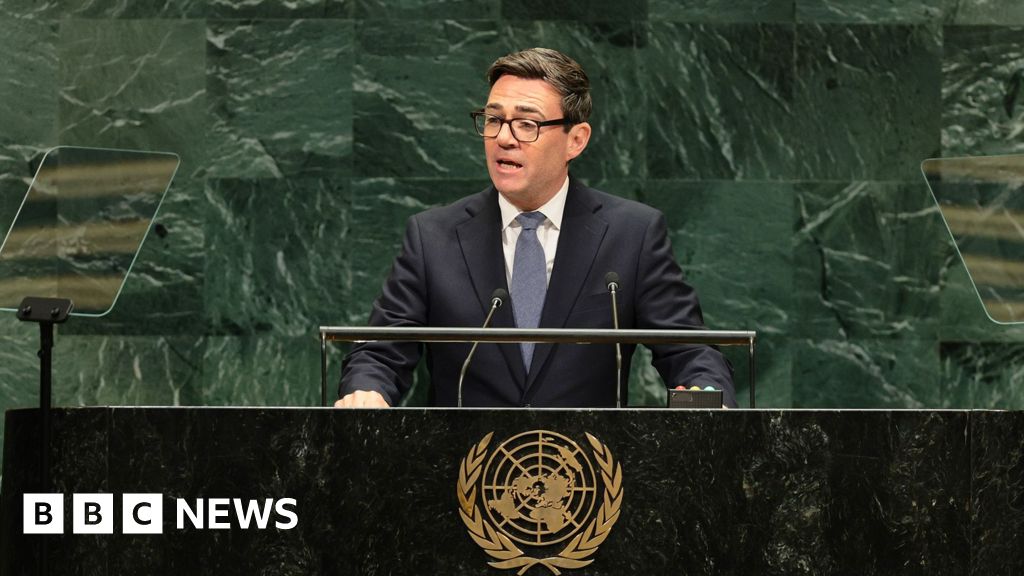
At the United Nations, the United Kingdom has pledged to mount a new and robust offensive against Russian disinformation while simultaneously laying the groundwork for an international charter on artificial intelligence. In a speech that drew together two of the past year’s most urgent policy challenges, the British official Burnham said the spread of falsified online content had moved from being a nuisance to being a serious national security threat, one that could destabilise elections, inflame communal tensions and undermine the credibility of democratic institutions. The announcement pairs a domestic crackdown with diplomatic leadership. It follows months of escalating concern in London about state-sponsored interference, particularly from Russian intelligence, and coincides with a broader international debate about how to regulate a technology that has outpaced existing legal safeguards. Burnham described the proposals as “both a shield and an opening move,” explaining that Britain intended to defend itself at home and to help shape the rules of the road for the rest of the world. He said that AI could be used for social good, but its misuse by hostile states had turned it into a weapon of mass persuasion. The UK’s package includes more funding for cyber defence, a new disinformation analysis hub, and a formal diplomatic campaign to have global AI standards adopted by the United Nations. The immediate reaction in Westminster was broadly supportive, with all major parties backing the creation of a new anti-disinformation unit, although the initiative has also provoked warnings from freedom-of-expression campaigners. Burnham’s comments came as the Prime Minister’s fresh push for a more resilient information environment gained cross-party momentum, and as UN officials signalled that the British initiative could become a model for other nations.
The new anti-disinformation unit will be staffed by a mix of analysts drawn from the intelligence agencies, civil servants, police units, and specialists from the media and technology sectors. Its remit will be to monitor, expose and attribute influence operations that target the UK, with an emphasis on Russian operations. Government sources say the unit will act as an early warning system, moving ahead of the current model in which disinformation is usually debunked only after significant damage has been done. Burnham said the unit would be “proactive, not reactive,” using threat intelligence to predict the narratives the Kremlin may deploy and to build resilience in communities that are likely to be targeted. One of the immediate priorities is the protection of elections, including the many local contests that are less visible but still highly susceptible to disruption. The unit will also liaise with journalists and independent fact-checking organisations, sharing classified assessments where possible and giving them guidance on how to identify and verify suspicious material. Critics in Parliament, however, have asked who inside the unit will decide what constitutes disinformation, especially when the boundary between foreign interference and domestic political spin is blurred. Burnham acknowledged that there was no simple answer but insisted that the unit’s focus would be exclusively on foreign state actors and their proxies. The principle, he said, is not to regulate opinion but to expose unauthorised interference by hostile powers. The unit is expected to work closely with the National Cyber Security Centre, GCHQ, MI5, and intelligence fusion units, and to draw on open-source intelligence from private-sector partners in order to identify the origin of AI-generated content, manipulated video, and false narratives before they are amplified across major platforms.
The debate in Westminster has been far from smooth. The Guardian reported that the Prime Minister’s plans received cross-party backing in a Commons statement, with the Conservative Party and the Liberal Democrats supporting the basic architecture of the new unit. But Nigel Farage, the leader of Reform UK, used a raucous intervention to condemn the entire project as an attack on free speech. Farage questioned whether the unit would become “a new thought police” and claimed that independent journalists who reported critically on immigration, climate policy or Covid measures were likely to be placed under surveillance. His remarks were rejected by ministers, who said the unit had no mandate to silence criticism, but they struck a chord among some digital rights activists. A number of MPs from all sides expressed a need for clear safeguards, including a definition of “foreign state-backed disinformation” that would be independently reviewable and a requirement for warrants before the home intelligence apparatus can investigate a UK-based individual. Burnham attempted to address these concerns in public comments, stressing the importance of legal limits, but also pushing back at what he called “false equivalences” between state interference and legitimate political debate. He warned that disinformation campaigns are specifically designed to make people distrust all information, and that refusing to tackle them would itself be a victory for those who want to fracture the public sphere. Cross-party backing, therefore, is real but guarded; the true test will come when the unit announces its first major operation and has to demonstrate that its powers are being used only against the targets Parliament has agreed upon. The controversy has already exposed a deeper tension about the nature of modern democracy, where protection from external manipulation must be balanced against the right to dissent, and where the definition of harm in the digital age remains fiercely contested.
On the international stage, the UK’s announcement of a global AI standards push is being treated as one of the most significant attempts yet to insert common norms into the world’s use of artificial intelligence. The plan calls for a treaty-like arrangement, building on earlier diplomatic efforts such as the Bletchley Declaration and the Council of Europe’s AI convention, but extending them into a more formal system of commitments. Under the proposed framework, countries would agree to require that high-risk AI systems are registered, that synthetic content is labelled, and that government-funded AI applications are subject to public audit. They would also commit to international cooperation in investigating suspected AI-generated disinformation campaigns, including a fast-track mechanism for sharing forensic evidence across borders. Burnham argued that the world had reached “a pre-Wikipedia moment” for AI, in which there is still a chance to structure the technology’s development properly, but that this window will soon close. He compared the task to the era of creating rules for civil aviation or nuclear power, when it was possible to design safety mechanisms before the industry reached massive scale. The UK hopes to hold a second global standards conference in the autumn, with a focus on interoperability of AI systems and the creation of an international incident-reporting system for harmful models and deepfake abuse. There is, of course, a great deal of political friction to overcome. China and Russia are likely to reject any framework that gives more power to Western institutions, while some private companies fear that strict standards will stifle innovation. But Burnham said that the UK would not water down its proposals and that the Russian disinformation threat made the need for international cooperation more acute. He stressed that global AI standards were not intended to punish any particular country, but rather to establish a shared baseline of transparency, safety, and accountability that all governments could adopt without sacrificing their sovereign values.
Reactions around the world have been mixed but cautiously supportive. United Nations officials welcomed the UK’s move to link disinformation with AI governance, arguing that the two issues are inseparable in practice. Human rights groups have stressed that any global AI standards must be based on human rights principles, non-discrimination and transparency, and that governments which sign up should not use anti-disinformation laws to imprison journalists. The UK has been at pains to point out that its own proposal would not prescribe content but rather establish procedures for accountability. Yet some countries in the Global South have expressed concern that they lack the capacity to build the technical units needed to participate in the proposed system. In response, Burnham indicated that the UK would establish a new international fund to provide training and tools for election monitoring bodies and civil society organisations in developing countries. This would be a departure from standard diplomacy, in which draft treaties are usually agreed before capacity-building is discussed. By prioritising assistance at the same time as standard-setting, the UK hopes to avoid a two-track world in which rich countries dominate cyberspace and poor countries are left at the mercy of disinformation campaigns. Domestically, the government is also under pressure to ensure that the new unit does not jeopardise the UK’s relationship with the global tech industry. Some social media companies have acknowledged privately that they are willing to do more to remove Russian disinformation, but they are worried about liability for content that is later found to be harmless or mislabelled. The government says it will design safe harbour protections for platform companies that cooperate in good faith, while retaining the power to impose penalties on those that refuse to act against malicious state campaigns. Burnham called on tech firms to see themselves as “trustees of the digital public square,” not simply commercial platforms, and to adopt the emerging international standards before they are compelled to do so by law.
The road ahead is likely to be defined by a tug of war between urgency and caution. The UK government is determined to show that it is acting decisively at a time when Russian sabotage and influence operations are on the rise. But the political and legal constraints are substantial. The new anti-disinformation unit must be transparent enough to command public trust but discreet enough to be effective. The global AI standards project must be ambitious enough to take on the largest technological challenge of the age but flexible enough to accommodate countries with different legal systems, cultures and political values. Burnham’s final remarks suggested that he understands the balance: “We cannot win a war on falsehood by losing ourselves in censorship. We can, however, make it harder for foreign actors to use our own democratic systems against us.” With cross-party backing and broad support at the UN, the UK has won the first battle, the battle to place the issue on the world stage. The next battle, over the specifics of the new rules, will determine whether the fight against disinformation and the push for AI standards lead to a safer digital era or to a new set of unintended consequences. For now, the government can point to a rare moment of political agreement and an international stage ready to listen. The challenge is to maintain that consensus in the face of a determined adversary and a technology that evolves faster than any statute or diplomatic text. Whether the UK succeeds will depend as much on its ability to persuade as on its power to monitor, and as much on the credibility of its standards as on the strength of its resolve. As Burnham concluded, the efforts are not merely digital policies but “a test of whether democracies can defend themselves without ceasing to be democratic.”