


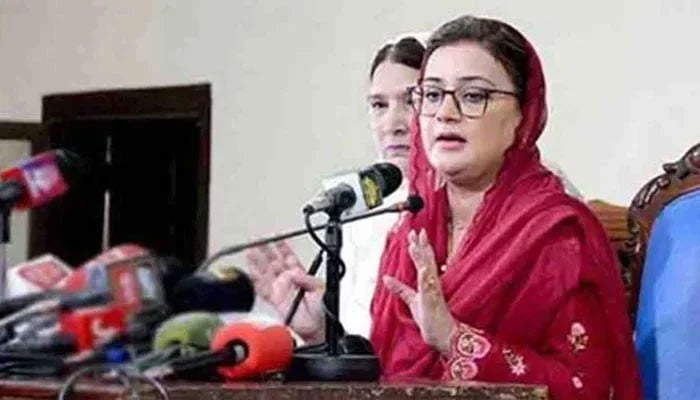
Punjab Information Minister Azma Bokhari Calls for Unified Strategy to Counter Disinformation and Anti-State Narratives
LAHORE: Punjab Information and Culture Minister Azma Zahid Bokhari has underscored the urgent need for a coordinated, proactive, and fact-based strategy to effectively counter disinformation, hate content, negative propaganda, and anti-state narratives, as she addressed the fourth meeting of the Information Steering/Review Committee here on [date]. The high-level meeting, convened at the Civil Secretariat, was dedicated to reviewing the implementation of the revised National Action Plan (NAP) in Punjab, assessing the progress made on previous decisions, and charting out future measures to strengthen the province’s information management and counter-narrative framework. The gathering brought together the provincial Information Secretary, Syed Tahir Raza Hamdani, along with representatives from various relevant departments, including education, home, and law enforcement, all of whom play a critical role in shaping and disseminating the government’s message to the public. The meeting comes at a time when Pakistan faces significant challenges from hybrid warfare, digital propaganda, and the misuse of social media platforms to spread falsehoods and incite social discord, making the committee’s work more vital than ever.
During the session, the Information Secretary delivered a comprehensive briefing on the measures undertaken by his department to strengthen inter-departmental coordination, ensure the responsible dissemination of information, and timely counter misleading narratives. He highlighted the progress achieved in establishing a rapid-response mechanism to address emerging threats in the digital space, as well as the development of a more robust framework for coordinating with provincial and federal agencies. The briefing also touched upon the need to streamline communication channels between government departments so that accurate information reaches the public without delay, especially during crises or sensitive security operations. The committee reviewed the status of directives issued in previous meetings, noting both successes and areas requiring further attention. It was observed that while significant headway has been made in improving the flow of official information, the rapidly evolving nature of online propaganda demands constant vigilance and adaptation. Senior officials acknowledged that the battle against disinformation is not limited to governmental efforts alone, and that civil society, media, and educational institutions must be engaged as equal partners in this endeavor.
The minister, while addressing the participants, was categorical in her assertion that a reactive approach alone would never suffice in countering disinformation and negative narratives. She stressed that all relevant departments must operate under a joint strategy, characterized by close coordination and complete harmony, so that the potential of every institution is fully harnessed. “The era of one-off responses to propaganda is over; we need a structured, anticipatory, and well-resourced mechanism that not only rebuts falsehoods but also proactively projects the truth of our national stance,” she stated. Bokhari praised the Information and Culture Department for playing an effective and proactive role in achieving the objectives of the National Action Plan, particularly in promoting the state’s narrative and countering extremist ideology. She emphasized that Pakistan’s achievements during what she termed the “Battle of Haq”—a symbolic reference to the country’s ongoing struggle for truth, justice, and the supremacy of law against militancy and foreign-sponsored disinformation—should be highlighted more effectively on both domestic and international forums. She called upon the media and government spokespersons to amplify the success stories of Pakistan’s security forces and civil administration in eliminating terrorism and upholding the constitution.
Turning her attention to the demographic most vulnerable to digital manipulation, the minister stressed the absolute necessity of protecting youth and students from misleading digital and social media content. She noted that the younger generation, owing to its extensive use of social networking platforms, is often exposed to fake news, sectarian propaganda, and extremist recruiting material. In this regard, she directed that school counselling sessions and other student-centred forums in educational institutions be used as a primary vehicle to raise awareness about responsible social media use, the identification of fake content, and the fundamental importance of fact-checking. She instructed the education department to integrate media literacy modules into the curriculum, where feasible, and to organize regular workshops and seminars led by trained professionals. The minister also called for the active involvement of parents and teachers in this awareness campaign, as they are best positioned to guide students through the complicated digital landscape. Furthermore, she stressed that the government must collaborate with telecommunication companies and social media platforms to expedite the removal of unlawful content and to promote positive, constructive online discourse.
In her remarks, the minister elaborated that developing critical thinking and media literacy among students is not an optional extra but an essential requirement for safeguarding the nation’s future. “Our children must be equipped with the intellectual tools to distinguish between verified information and fabricated content,” she asserted, adding that this cognitive capability is a form of defence that no army can replace. She underscored the need for educational institutions to transcend their traditional role of mere academic instruction and become active agents for promoting social harmony, tolerance, and a positive national narrative. Universities and colleges should encourage healthy debate, critical inquiry, and respect for diversity, all of which are foundational to a resilient democratic society. The minister noted that extremist narratives often thrive in an environment of ignorance and intolerance; therefore, the classroom must be transformed into a bulwark against such pernicious influences. She also recommended the establishment of digital literacy clubs and peer-mentoring programmes at major educational campuses, enabling students to share responsible online practices with their peers. This, she suggested, would create a ripple effect that would permeate families and communities, thereby amplifying the impact at the grassroots level.
In its concluding session, the meeting resolved to further strengthen inter-departmental coordination and the joint strategy aimed at effectively countering disinformation, hate speech, and anti-state propaganda. It was decided to establish a dedicated monitoring cell, comprising officials from the Information, law enforcement, and cybercrime departments, to track hostile narratives in real time and recommend swift countermeasures. The committee also agreed to hold more frequent meetings and to conduct regular training sessions for government spokespersons and public information officers, equipping them with the latest techniques in crisis communication and digital engagement. Additionally, the participants reaffirmed their commitment to the full implementation of the revised National Action Plan, with a particular focus on preventing the spread of extremist ideologies and protecting state institutions from malicious campaigns. As the meeting concluded, Minister Bokhari reiterated that the collective responsibility of ensuring the integrity of Pakistan’s information space rests on every official and citizen. She expressed confidence that with the unwavering resolve of all stakeholders, the nefarious designs of forces seeking to destabilize the country would be thwarted, and the truthful narrative of Pakistan’s resilience and progress would prevail.