


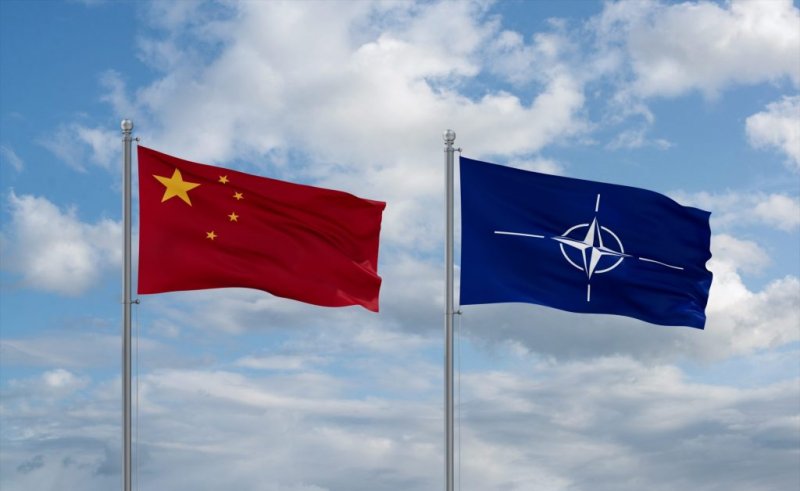
Great Power Maneuvering: Analyzing the Shifting Sands of Geopolitics
The global geopolitical landscape is in constant flux, marked by escalating great power rivalries, intricate disinformation campaigns, and significant regional economic realignments. The evolving relationship between China and Russia, NATO’s anxieties surrounding a potential alliance between these two powers, and allegations of Chinese disinformation campaigns targeting Western defense industries are just a few examples of the complex dynamics reshaping international relations. From Eurasia to the Indo-Pacific, nations are recalibrating their strategies in response to these shifting sands.
NATO’s concerns about a potential Sino-Russian axis, particularly in the context of a hypothetical Chinese invasion of Taiwan, are not unfounded. While a direct Russian attack on NATO remains a low-probability event in the short term due to Russia’s commitment to the war in Ukraine, the potential for China to exploit global instability to divert Western attention from the Indo-Pacific cannot be dismissed. This echoes historical precedents where major powers have employed proxy conflicts and strategic distractions to advance their agendas. While a coordinated attack is unlikely, the possibility of China leveraging a crisis to its advantage warrants careful consideration.
Allegations of Chinese disinformation campaigns targeting Western defense systems, like the French Rafale fighter jets, underscore the growing sophistication of information warfare in great power competition. Discrediting competing weapon systems serves China’s ambition to expand its arms exports. While definitive public proof of Chinese involvement remains elusive, the plausibility of such actions is undeniable. This highlights the broader anxiety surrounding China’s increasing use of soft power and influence operations, particularly within strategic industries. The need for robust mechanisms to counter disinformation and protect critical infrastructure is increasingly apparent.
The ongoing conflict in Ukraine presents a complex strategic puzzle for China. While Beijing officially maintains a neutral stance, a prolonged war arguably serves several Chinese interests. It diverts US and NATO resources away from the Indo-Pacific, strengthens Russia’s dependence on China, and further destabilizes the existing global order, potentially creating opportunities for China to reshape international institutions. However, a protracted war also carries risks for China, including economic volatility and the potential for escalation beyond its control. China’s cautious approach suggests a strategy of carefully navigating the situation to maximize potential benefits while mitigating risks.
The evolving economic relationship between China and Georgia, exemplified by the revision of their free trade agreement, underscores the strategic importance of economic ties in the current geopolitical climate. For Georgia, the revised agreement offers enhanced access to the vast Chinese market, bolstering its ambition to become a key transit hub between Europe and Asia. For China, strengthening ties with Georgia advances its Belt and Road Initiative, providing alternative trade routes that bypass Russian-controlled territories. This move also aligns with China’s broader strategy of diversifying economic partnerships in the face of increasing Western trade restrictions.
In conclusion, the current geopolitical landscape is defined by a complex interplay of great power rivalry, evolving alliances, and sophisticated information warfare. The potential for a Sino-Russian axis, though not immediately probable, necessitates careful monitoring. Allegations of Chinese disinformation highlight the increasing importance of information operations in international competition. China’s calculated approach to the Ukraine conflict reflects its ambition to strategically exploit the situation to its advantage. Meanwhile, evolving economic partnerships, such as the revised China-Georgia trade agreement, demonstrate how nations are adapting to the shifting global dynamics by forging strategic alliances and diversifying economic relationships. These interconnected developments underscore the intricate and rapidly evolving nature of 21st-century geopolitics, requiring constant vigilance and strategic adaptation from all actors involved.