


Social Media Conspiracy Theories Plague South Australia’s Bird Flu Response as Wildlife Deaths Mount
ADELAIDE, Australia – As South Australia grapples with the largest outbreak of H5 bird flu in its history, with 303 confirmed cases and more than 11,000 reports of dead and sick wildlife logged since June, a parallel crisis is unfolding across social media pages. Major news outlets, government agencies, and conservation groups have become battlegrounds for misinformation, with Facebook comment sections flooded with laughing reactions, accusations of “propaganda,” and unfounded fears of a “Covid-style lockdown.” The triggering event for the latest wave of denial was the death of the first sea lion at Seal Bay on Kangaroo Island last weekend, an announcement that drew hundreds of mocking emojis and calls for authorities to “stop this lie already.” The infestation of conspiracy theories has become so severe that environmental and public health experts are now spending as much time debunking false claims as they are tracking the virus itself, which has already killed seals, little penguins, pelicans, and countless other wild birds across the state’s coastline and beyond.
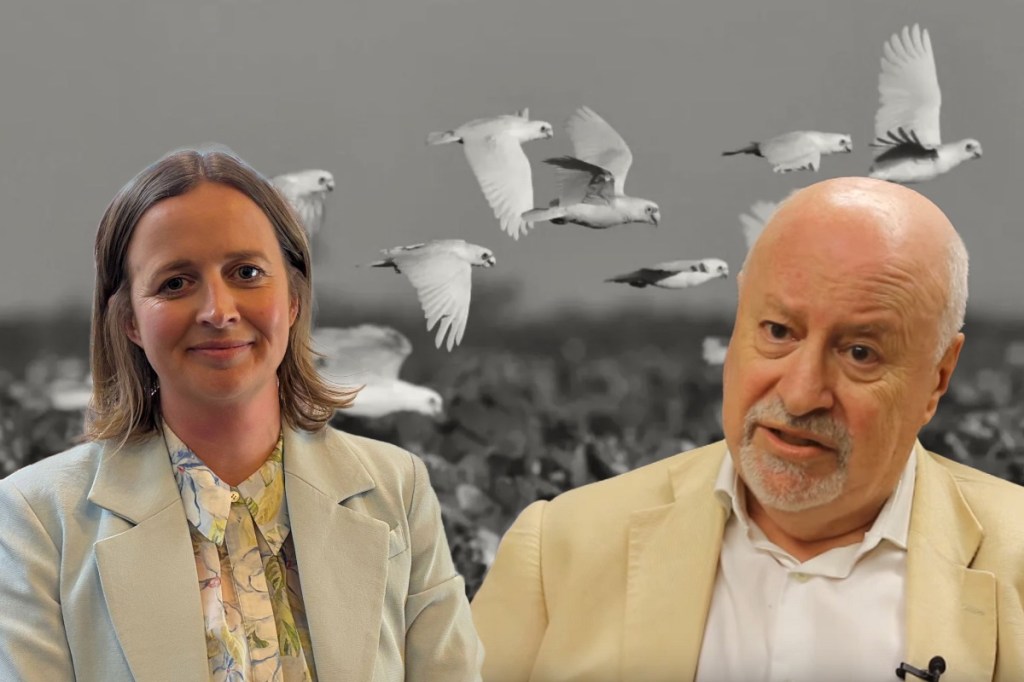
The phenomenon has a familiar ring to leading epidemiologists. Adelaide University professor Adrian Esterman, one of Australia’s most experienced voices in disease control, says the pattern is a direct echo of the Covid-19 pandemic. “This is like Covid with feathers, and this is exactly what we saw during the Covid pandemic years, and it’s just now being swapped to avian flu,” Esterman told InDaily. He attributes the fertile ground for conspiracy theories to the failures of government messaging during the pandemic. “I put a lot of these issues with conspiracy theories and false claims down to the fact that the governments, both federal and state, mishandled Covid to a certain extent. Each state and territory response had different ways of quarantining. It had different lockdown periods, and the whole thing became a mess. And on top of that, they were very poor at messaging.” The professor’s comments come as the H5N1 strain continues its devastating march through Australia’s wildlife, having previously wiped out millions of birds and marine mammals worldwide. The current outbreak, which scientists say is unprecedented in its scale and geographic reach, has overwhelmed existing wildlife surveillance systems and stretched government resources to their limit.
The deep history of avian influenza stands in stark contrast to the false narratives circulating online. Avian influenza viruses have existed for thousands of years, with the first recorded description of bird flu dating back to 1878 in northern Italy. The H5 subtype has been recognized for over three decades, and the current H5N1 strain has been circulating globally for the past five years. “It’s wiped out millions and millions of wild birds and marine mammals all over the world,” Esterman said. “It has the potential and almost certainly will wipe out vast numbers of our wild birds. There’s no question about that because it’s done it all over the world.” The professor’s warnings are not hypothetical; scientists have documented mass die-offs of seabird colonies, marine mammal strandings, and the collapse of local penguin populations. In South Australia alone, the hotline has received more than 11,000 reports of dead and sick wildlife since June, a figure that reflects both the severity of the outbreak and the public’s willingness to participate in surveillance. However, the same online platforms that enable this crowdsourced detection are also amplifying dangerous misinformation, creating a paradox where public engagement both helps and hinders the response.
For those on the front lines of wildlife management, the conspiracy theories are an unwelcome distraction that risks undermining decades of conservation work. Jack Gough, CEO of the Invasive Species Council, said he was “not surprised” to see public messaging hijacked in this way. “It’s definitely a concerning trend when something at the scale of bird flu does need a really serious government response and community response. Unfortunately, these conspiracy theories can do some real damage and undermine that,” Gough said. “We’ve seen across a number of issues in society that conspiracy theories seem to crop up very quickly, particularly where it involves large government responses.” The concern is not merely reputational; misinformation can discourage people from reporting sick birds, lead to refusal of needed interventions, and create false confidence that the threat is exaggerated. Yet Gough also sees a broader silver lining: the vast majority of the public is responding constructively. “There’s a huge amount of concern widely from the public around the impact, particularly on wildlife, of bird flu and so I think we’re not facing a crisis of confidence at a society-wide scale,” he said. “Certainly it’s disappointing that whenever anyone, whether it’s a news organisation, government, an on-ground organisation, puts out information about birds at the moment, it gets very quickly taken over by some of these conspiracy theories.”
Addressing the misinformation effectively requires a strategic approach, experts argue. Esterman warns against getting drawn into one-on-one online arguments, which he says are time-consuming and often counterproductive. Instead, he recommends repeatedly publishing evidence-based corrections alongside the accurate facts. “The way you do that is you provide evidence-based correct information. You explain why the statement is false, and then again repeat the correct information,” he said. “If we can explain clearly and evidence based the general population, and I do mean clearly, what is happening, why it’s happening, what the government is doing, and why they’re doing it, then I think we’re getting there.” The challenge is that public trust in institutions has been eroded over years of mixed messaging and the politicisation of health measures. Building trust now, in the midst of an ecological emergency, is a daunting task. Still, Esterman remains optimistic that with the right approach, the majority of South Australians can be reached. His strategy is threefold: clear communication, consistent repetition, and a willingness to name falsehoods without amplifying them. This is particularly important as the outbreak expands beyond coastal wildlife and begins to affect more species, raising the stakes for public cooperation.
On the government side, officials are pushing back against the idea that online negativity reflects public sentiment. Environment Minister Emily Bourke told InDaily that the volume of calls and reports had demonstrated “how seriously South Australians are taking the threat of bird flu.” Bourke emphasised the critical role of citizens as part of the surveillance network. “The community is a critical part of our surveillance network and when people report sick or dead birds and wildlife, it helps us detect new cases earlier and support faster decision-making to minimise the impacts on wildlife,” she said. “Emoji reactions and conspiracy-related commentary on social media is not a true reflection of public sentiment in our state as South Australians have well and truly shown their support.” Her comments aimed to reassure both the public and the conservation community that the government is not being swayed by online noise. With the outbreak showing no signs of slowing, state emergency responses are being scaled up, involving wildlife rescue networks, veterinary pathologists, and national parks staff. The coming weeks will be critical: if the misinformation campaign continues to spread, it could hamper the state’s ability to track the virus in remote areas where social media remains the primary source of news. For now, the message from scientists, public health officials, and environmental leaders is unified: the avian flu is real, it is catastrophic, and the only way to respond effectively is through cooperation, not conspiracy.