


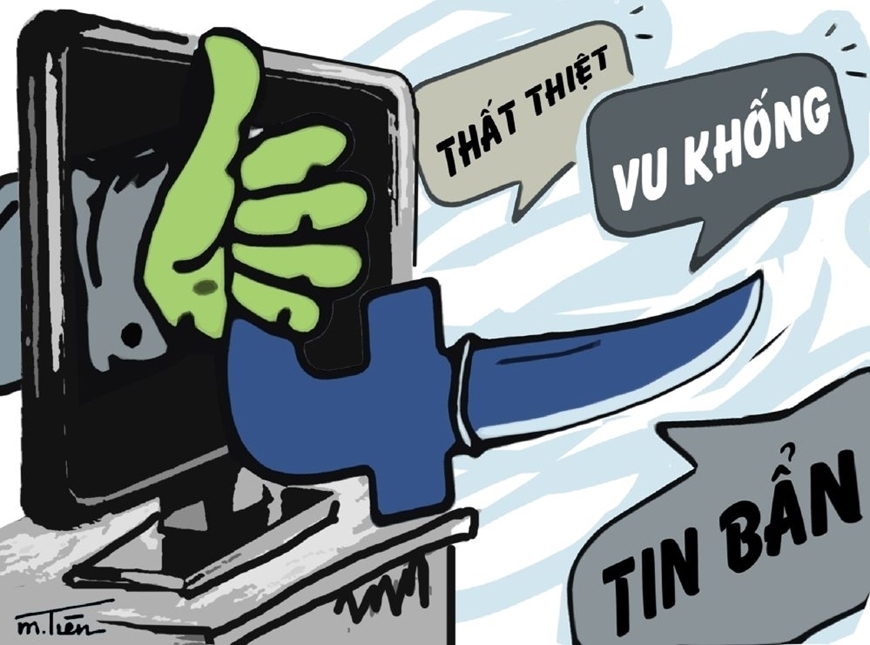
Strengthening the Fight Against False and Hostile Viewpoints in the Digital Age: Characteristics, Requirements, and Solutions
Paragraph 1: The Emerging Landscape of Digital Misinformation
The current fight against false and hostile viewpoints in the digital environment is defined by a set of daunting characteristics: the rapid velocity of dissemination, the remarkably wide scope of impact, and the exceptional difficulty of controlling information once released. On social media platforms, content can be created, circulated, and modified almost instantaneously, ignoring all geographic boundaries. This has rendered traditional approaches to countering misinformation obsolete, because if false information is not addressed promptly, it can quickly generate a bandwagon effect, altering the perceptions, attitudes, and behaviors of users on a massive scale. The methods and content used by forces aiming to sow discord are growing more sophisticated and diverse, moving far beyond simplistic propaganda. Modern disinformation is now portrayed through a complex spectrum of formats, including fake articles, manipulated images, edited videos, fabricated comments, memes, provocative livestreams, and content that meticulously blends half-truths with outright lies. A particularly troubling trend is the exploitation of sensitive social issues that the public genuinely cares about, using these as vehicles to distort the truth, exaggerate institutional shortcomings, seed doubt regarding governance, and stoke societal division. Users today face a staggering information landscape, struggling to distinguish accurately between hard facts, deliberate falsehoods, and personal opinion. Because the digital ecosystem allows anyone to produce and distribute content, defeating misinformation requires more than merely spotting distorted text; it demands rigorous source verification, data cross-checking, and a delicate differentiation between genuine errors, differing opinions, and intentionally inflammatory fabrications. Furthermore, the emotional and interactive nature of modern media—dominated by algorithms promoting controversial and shocking content—means counter-arguments must be psychologically astute, not arguably logically superior and emotionally intelligent.
Paragraph 2: Core Requirements for the Struggle Against Hostile Views
To address an equally hostile and complex digital environment, the critical demands placed on the forces tasked with the struggle have been clearly identified, with proactivity and timeliness being the absolute first pillars. Those defenders—whether state bodies, journals, or concerned citizens—must constantly monitor the digital pulse, forecast threat trends, and detect misinformation at its inception. Waiting until a false narrative has already gone viral is a failure of approach. Public opinion on people’s forums has overwhelmingly emphasized the need for greater warfare or greater cognitive advantage in this digital battleground. As underscored by high-level Vietnamese leadership, including in the remarks by General Secretary and President To Lam, any refutation of misinformation must be “well-founded, accurate, and persuasive.” It is insufficient to simply unhappy loudly; counter-attack must be based on verified facts, reliable datasets, legal statutes, and logical deduction. Those aiming to refute false claims have a strict responsibility to avoid the very tactics they are combatting—namely unverified information or sensationalist headline-grabbing, which risk amplifying the disinformation they seek to remove. A necessary balance is epitomized by the concept of combining “construction” and “combat,” wherein the foundation of all counter-efforts remains a steady stream of positive, constructive information. Rather than simply tearing apart falsehoods, the state messaging must proactively voluminous publish authentic information, explain policy, and clear up public concerns and issues. The required to focus on narrative—”prioritizing construction,” “overcoming ugliness with beauty,” and “using positivity to push back negativity”—has become the core operating principle. The modern digital environment demands that communicators adapt honed, targeted language and forms for each distinct segment of the audience. Content must become concise, manipulable, visually compelling, and interactive, fusing CDs and newspapers with infographics, short-form videos, podcasts, and live Q&A sessions. These arguments are designed to fit the unique culture and norms of each platform, mastering each platform’s mode of long-term effective communication. Urgency is also placed on the “combined strength,” moving beyond the press as a single force to a multi-stakeholder coalition involving state agencies, media outlets, experts, scientists, party members, and ordinary users. Finally, the rule of law and media ethics must overlay all actions. The damaging “extreme denunciation” seen with some online activists is a stark demonstration of what happens when individuals act without legal knowledge or abandon the ethical standards of communication. Therefore, defenders are bound by arguments based only on facts, respecting the rights and dignity of others, avoiding summary generalizations, slander, defamation, or uncontrolled spread of controversial.
Paragraph 3: First Solution: Applying Knowledge and Building Digital Resistance
The most effective, fundamental and long-term strategy for neutralizing false and hostile perspectives is to fortify the “resistance” of all digital citizens through education and digital skills. First, officials, party members, and regular social media users must be systematically trained in political theory, legal sciences and practical cyber-defensive skills. The curricula for propaganda and education in this regard should shift from abstract theory to directly addressing problems relevant to the digital waters today: identifying a sophisticated fake news article, recognizing right ideological distortions, understanding the implications of manipulated images and videos, spotting fraudulent accounts, and unmasking deepfakes or content synthesized by malicious artificial intelligence. Most importantly, a permanent habit of verification before sharing must be forcibly and internalized. Each user, when faced with unverified claims, emotionally charged controversies, panic, or polarizing material, should be conditioned to ask a set basic questions: Who is the original creator of this information? What is his or her record and agenda? Is there justifiable evidence provided to support the claim? Has an independent and reliable source confirmed the facts? Are the images or videos contextually relevant to the event, or have they been taken out of context or manipulated? By creating a healthy sense of fear and individual responsibility before clicking ‘share,’ the viral amplification mechanism of disinformation loses its fuel. These details are considered inseparable from the legal framework. As a consequence, it is imperative that all citizens stay fully updated on new, updated cybersecurity laws and regulations, particularly the coming into force on the new Law on Cybersecurity in July 2026, replacing the earlier legal framework. This updated law is not simply a matter for government officers—it decisively clarifies that cybersecurity protection is a shared responsibility shared by all agencies, organizations, businesses, and individuals. A thorough understanding of cybersecurity and its legislation will help users understand that their role includes active participation in protecting the information infrastructure: detecting, reporting, and cooperating in handling violations; protecting personal data and account integrity; and, guarding above all, they do not allow their individual actions online to inadvertently become a part of the problem by freely reposting unverified content, advertisements, or cause of information spread. This dedication extends to integrating information identification and verification skills into standard education and training, not solely as a specialist, but bringing such skillsets to the school age to be honed continuously.
(Word Count estimate: ~ 1200 words for paragraphs 1-3)
Paragraph 4: The Priority of Proactive and Constructive Communication
Effective communication extends far beyond mere refutation: it must actively build a more persuasive and trusted information ecosystem. A single-party content establishment strategy must decisively pivot the terrain toward proactive, accurate, honest, and easily understandable information. The best way to counter a falsehood is to prevent an information gap from forming in its first place, prioritizing established fact before falsehood and distortion can take root. Rather than reacting solely to emergencies, agencies and digital media outlets must systematically and constantly address social issues of public concern, focusing on those topics particularly prone to misinformation, public anxiety, and downturns. The press must consistently “the moment the issue breaks,” quickly explaining the nature, presenting key data, patiently explaining policy, and answering the questions the public genuinely cares about, all before the digital rumor mill or hostile agitators can insinuate their own harmful narrative. This approach implements the core directive to “put fact first,” to void the notion of the internet as a settled avenue for ideological propaganda. This level of outreach requires constant innovation in format and strategy. Straightforward press articles must be supplemented by engaging alternatives such as infographics, immersive short videos, commentary turn podcasts, and data graphics. Selecting the right format for each specific, platform and audience segment ensures the information remains digestible, informative, and stimulating—it engages viewers by prioritizing accuracy but presenting it within the safe ecosystem of the medium. It is essential to shift away from the reactive posture of only clarifying falsehoods once challenged. Officers and the established media-centered crisis management groups should use this medium to lead the public discourse, and build a structural flow of positive, useful content.
Hence, this dual approach—building and future—is implemented to unequivocally narrow the information gap. By consistently having a constant and clear flow of verified, credible, and constructively validated information, state authorities effectively shut down the spread food for adversarial stories. As everyone has the essential information and answers to public concern, radical and false narrative loses its value. Their leveraging of public discontent diminishes as their lies no longer fill a necessary information void. The requirement of creating a consistent, positive flow is not merely about offering a counter-narrative; it is about comprehensively occupying the information mind-space with transparent, useful data that prevents the seeds of disinformation from taking root in fertile ground, creating a healthy environment for a healthy. This proactive method stands in contrast to the negative posture of correcting; instead, it seizes the offensive. The approach uses “building” not just as a counteraction to “combatting,” but as the most sophisticated method of combat itself, constantly erecting a digital bulwark that pushes the audience towards reliable anchors and creates a psychological state of ‘well-informed’ that offers that block out hostile.
Paragraph 5: Elevating Standards for Professional Refutation and Multi-Agency Coordination
When a rebuttal is needed, the approach must move beyond a simple blank “no” to become a scientifically rigorous, nuanced procedure. A truly effective rebuttal must first accurately identify exactly which premise is incorrect—where it breaks down, how it violates the factual chain, and what is verifiable data exists to provide a robust foundation. The requirement for precision becomes the decisive factor in ensuring the refutation. Information verification should prioritize reliability industry-wide sources, including legal texts, government of permits, reports from state bodies, official statistical data, and primary independent scientific research papers. For contentious cutoff, it is critically important to compare, align, and analyze multiple sources to verify a story’s core. The argument itself must be scientifically sound, avoiding the sees of logical leaps. Those who seek to expose disinformation must likewise uphold standards of personal dignity, refraining from ad hominem attacks, overgeneralizations or uses of unverified claims. The ultimate reason for the refutation is to give the reader clarity and understanding, not just heated or evaluative conflict. Readers/social media users should not share the false content itself to denounce it—without adding rigorous evidence to disprove the suspect—as this also violates or amplifies the disinformation. For those grave cases, bystanders are to use the platform’s reporting mechanisms and preserve necessary evidence to report an offense to the relevant enforcement agencies in due course. It explicitly stated that such a struggle is policed by the law: fighting misinformation does not imply arbitrary revealing others’ personals, switching doxxing, suppressing accounts, or organizing vigilante public exposes of wrongdoers. The efficacy of these counter-information networks relies on a multi-stakeholder constellation with a comprehensive legal structure backing them. The legal, policy, and operational mechanisms must show the exact responsibilities of each actor—state agencies, media outlets, digital platforms, experts—in clarifying roles in receiving, verifying, storing incident reports, and utilizing training and skills.
(Word count target check: Thus far the draft is around 1500-1700 words)
Paragraph 6: Fostering Human-Technology-Focused Partnerships for a Healthy Digital Environment
A new infrastructure for this crucial method in the era of digital media demands a convergence of political acumen, legal expertise, sharp journalistic skills, and an insight into technological operations, fit specifically for the requirements. This means building advanced human resource capabilities to operate on the cohesive internet—training a corps of specialists skilled in detection, analysis, and decisive, legally compliant rebuttal processes. To accomplish this, society must develop a comprehensive ecosystem of experts, cooperating with state agencies, universities, media organizations, professional associations, digital platforms, and tech industrialists, alongside respected public with a legitimate presence. Within this closeness, the press provides the core mission of investigation and validation, an essential role for shaping collective awareness—while with double experts give precise, evidence-based arguments, and educational institutions shape the digital resilience of the next generation.
Strategic deployment of technology is foundational to advancing these new social systems. Modern methods (data analysis, AI to monitor trends, automation, and display of unusual patterns) are essential for detecting the hidden tactics of automated manipulation and anomalous information. Outlets and campaign groups step up data protection, cybersecurity, and secure the backend of accounts and databases against hacking attempts and unauthorized intrusion. Individuals are encouraged to adopt basic cyber hygiene—strong, unique passwords, multi-factor authentication, ensuring the software is updated, exercising caution about links and attachments, and careful sharing personal data. Yet, technology is a tool, not a savior. Equations cannot replace systems of law and mechanism; technology-based detection must be intricately tied to human professional oversight, context analysis, and a legal responsive process. No matter how sophisticated detection systems become, the bodies that take strategic action will be human anhuman, and their mandate is critical to strict, proper, rule-based jurisdiction and transparency. Their powers must remain strictly judicious, avoiding arbitrary decisions or crossing set limits.
Ultimately, reinforcing the dissemination and resilience of a world connected with resilient truth is not the outcome of a single measure. It requires a comprehensive legislation, an integrated practice that combines information literacy propaganda with proactive ‘constructive’ dissemination, with robust verification and proof, coordinated public action, and coordinated technological innovation, and consistent application of law in facilitating transparency. A decisive operate established by the daily logic of the internet is: accurately identify, thoroughly verify, effectively refute, proactively connect, leverage – advanced tools, and correctly handle. Every day that a courageous member of the global online community contributes to the digital media and information arena, each simple habit—not sharing a story unless proven, not scrolling or twisting into emotionally distraught reactions, actively choosing to search for sources, and proactively sharing genuine and honest knowledge—becomes a sturdy brick in a fortress against hostile narratives. These practical actions, aggregated across millions of users, propel a secure, trustworthy, and respectful cyberspace ecology that guards against false and divisive narratives. Ultimately, it is every modern citizen’s duty to create an urgent and trusting, productive, honest and lawful information environment, strengthening national security, and neutralizes misinformation campaigns in this unprecedented era of communication we must carry forward.