


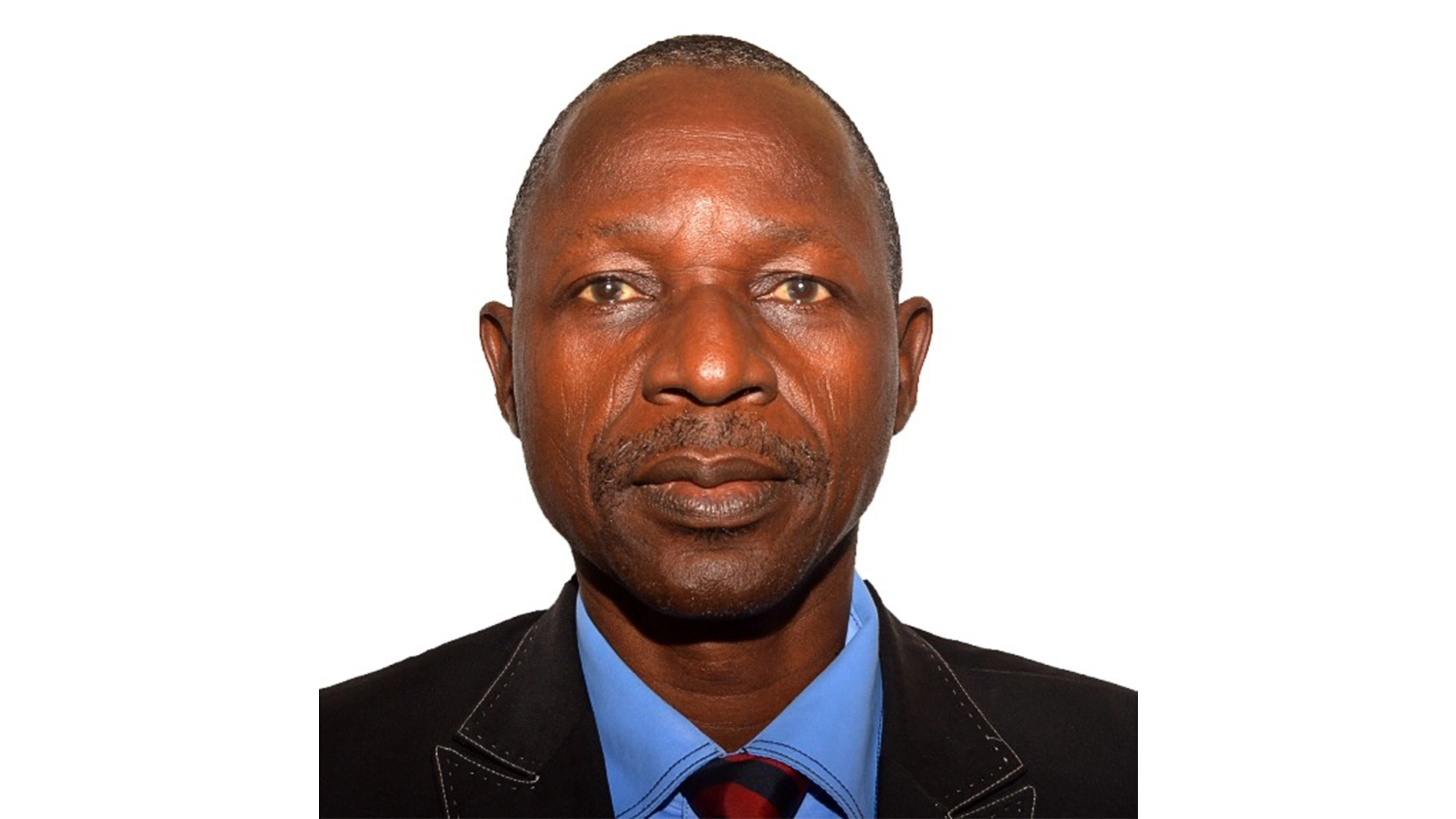
Para 1: Unveiling the Charge
The Association of Communication Scholars & Professionals of Nigeria (ACSPN) has issued a resounding call to the Nigerian media industry, urging it to drastically strengthen its capacity to fully understand and harness Artificial Intelligence (AI), while simultaneously building robust mechanisms to detect and counter the twin scourges of misinformation and disinformation, all in a concerted bid to safeguard electoral integrity as the nation charts its course toward the pivotal 2027 general elections. This pressing charge was delivered with gravity and urgency by the National President of the association, Prof. Rotimi Williams Olatunji, during a media briefing held in Abuja to herald the eagerly anticipated 2026 ACSPN yearly conference, which is scheduled to take place at the National Open University of Nigeria (NOUN). Standing as the collective voice of communication scholars across the federation, the association’s leadership underscored that the rapid and all-encompassing transformation of the communication ecosystem—driven by the proliferation of social media platforms, sophisticated algorithms, the ever-expanding footprint of digital platforms, and the infiltration of data-driven political communication—has fundamentally redefined the sociological and operational paradigms of modern governance, posing unprecedented challenges that directly impact the health, resilience and credibility of democracy, and by extension, the conduct of free, fair, and credible contests for political power.
According to Prof. Olatunji, the current media landscape is no longer the familiar traditional terrain of established outlets and formalized journalism; rather, it is a fiercely competitive global space where unverified content circulates at viral speed, often outpacing manual fact-checking in the fast lane of technology. The digital disruption brought by AI has opened new avenues for political actors to engage with voters, but simultaneously sowed the seeds of deep-seated polarisation, extensive digital chasms, public disenchantment, and campaigns laced with synthetic and unwholesome realities. Consequently, the request to bolster the media’s capacity was framed not merely as an academic exercise, but as a vital national security and democratic good that requires an active, deliberate, and multi-layered approach. The President emphasized that without an informed media and an enlightened citizenry, the foundational edifices of constitutional governance—transparency, accountability, and the free expression of choice—could easily be eroded by technologically irrelevant vulgarization and epistemological fatigue, leaving the electoral machinery and the democratic process of the nation deeply vulnerable to manipulation from both foreign and domestic so-called “digital instigators.”
Paragraph 2: The Conference Encryption – Theme and Strategic Agenda
Olatunji, who also doubles as the keynote visionary of the conference, provided an elaborate description of the conference’s chosen theme: “Media, Technology and Elections in Africa: Navigating Digital Disruption and the New Dynamics of Electoral Communication.” This theme, he explained, was borne out of a rigorous and far-sighted intellectual assessment of the current information environment, and the urgent requirement to dissect the new relations between content, technology, and political electioneering. He clarified that the conference, slated for 2026, will serve as an epicenter for intellectual brainstorming, pragmatic, and pan-African reflections to address the emerging and escalating challenges. As part of the conference’s broader mission, ACSPN has set out to generate new evidence, interrogate previously held assumptions, and propose concrete and executable solutions capable of strengthening the overlap between scholarship, professional practice, policymaking, and citizen participation. He stressed that the association is crafted to bring together senior scholars, senior editors, broadcast technicians, and media professionals who would deliberate on the structural ways in which AI is deployed to create, curate, and distribute communication, including the use of malformed deepfakes and the micro constitutional application of computational propaganda.
Critically, the ACSPN leader pointed out that the new dynamics of electoral communication have extended beyond the simple act of reporting the news. Modern electoral discourse is now shaped by an sophisticated algorithm-driven diffusion of data, which can create so-called “echo chambers”, and the principle of engagement-trigger-and-dilution that often privileges misinformation over factual reporting. The conference agenda will therefore proactively interrogate the legal and ethical dimensions of data-gathering, the morality of political persuasion, and the intersections of legacy media’s responsibility with that of tech giants. By focusing on the tripartite consumer—citizens, political actors, and media institutions—the programme seeks to provide a regulatory through line that keeps the market of ideas open and fair. Furthermore, the choice to hold the conference in the Federal Capital Territory, Abuja, is a strategic move to seat it at the clutches of power and policy, allowing findings and recommendations to directly influence electoral management bodies and reflect at the halls of the National Assembly, ensuring that Nigerian democracy benefits from a knowledge-production ecosystem that does not remain estranged from its institutional power base.
3. The Media’s Duty of Care and the Battle Against Disinformation
Within the core thrust of the briefing, Prof. Olatunji emphasized the inescapable burden placed on the media to promote and champion fact-based public discourse, as a direct counterweight to the rising tides of misinformation and disinformation. He maintained that the media—from established broadcasters to online journalists and community correspondents—must function as the lynchpin in guaranteeing that citizens have unhindered access to truthful information before, during, and after the 2027 election season. This means that journalists must not only be traditional gatekeepers but become vigorous fact-checkers, competent chart interpreters of algorithms, and trained skeptics who can distinguish between authentic and manufactured information cascades. In his submission, “the media has a critical responsibility to promote fact-based public discourse, challenge misinformation and disinformation, and provide citizens with reliable information to make informed democratic choices.” Merely aggregating news is insufficient; the industry must transform into a full-fledged grade of truth-telling for dispossession, and in possession of the necessary technological tools at AI and data analytics.
The expert counsel also extended a direct appeal to media organizations to deliberately interrogate the implications of AI, social media, and data algorithms for the upcoming elections. This means going beyond the routine reportage of politicians’ campaigns and rather challenging the dangerous underpinnings of digitally created narratives. While the media scrutinized the credibility of candidates, it must also be inquisitional of their digital presence and manipulated data. The advice was for journalists to not just cover the news but to decode the news machinery itself, thus exposing the neo-propaganda techniques that could deceive voters. In parallel, Olatunji’s call pressed scholars to make a decisive shift toward useful academic translation, ensuring that research findings are extracted from journals and other ivory towers and made accessible that as journalists, policymakers, and the general public can directly benefit. He argued that the absence of such an interface leads to a scenario in this cutthroat talk of theory and the world of practice often drift apart, undermining the effectiveness of both and leaving the public unprotected from the web of digital deceit. By intimately aligning classroom scholarship with the currently furious dynamic electoral arena, the ACSPN aims to forge a new defence line for the Nigerian media in 2027.
4. Extending the Conversation Beyond the Academy
Seeking to ensure that the findings and resolutions of the conference produce frequent, far-reaching effects across the fibre and chains of the Nigerian society. Prof. Olatunji appeal for a more intimate partnership between the media and ACSPN, which is meant to take the discussions beyond cognitive walls of the academic community and make them relevant to the everyday realities of citizens nationwide. He articulated that democracy is not an elitist project but a collective ownership for all Nigerians; hence, information and insight generated in the hallways of the NOUN must be aired across the airwaves, printed pages, and vibrant social media, reaching seamlessly from the working towns to the remote villages. The goal is to build a national consciousness about media and technology floral literacy, aiming not just for a well-informed cynic but for an active member in democracy, a vigilant citizen who can stand guard against manipulative infopolitics and handle election discrepancies. This civic education is actually the pivot around which the media’s capacity building revolves; to give ordinary people the radar to decode, dissect, and defend themselves against the looming digital tide.
Paragraph four also considered the role of the conference as a national talking shop for the future of democracy. While Africa faces a new technological tide like Nigeria, it is essential to assess whether the frontier can be turned from a double-edged sword into a pillar for increasing participation and evaluation in governance. The 2026 ACSPN conference will therefore serve as a strategically located midpoint between the theoretical blueprint of democracy, the digital vulgate of communication, and the dynamic ethnography of the Nigerian voter. The association clearly stands on faith that the media is not just a passive reflector but a central actor in the struggle for credible democratic futures and the negotiation of such a power. The conference will unpack the the elements of AI and data technologies which will be either exploit to produce a “blast” that submerges the constitution or yet reinforce it through openness, integrity, and accountability. By establishing these communications as business dealings of all stakeholders, the association expects to activate a mechanism that leads to the growth of a healthy public sphere and a stable political civilization characteristic of mature democracy, both within Nigeria and across the sub-Saharan regions.
5. Institutional Memories – The Fellowship and Special Awards
Institutionalizing honour was the Lang yet special highlight of the briefing, will be greater focal point for the fellowship. The association announced its intention to introduce a comprehensive package of Fellow and Special Awards, to be unveiled at the 2026 conference. These awards are designed to recognize and reward outstanding contributions to communication scholarship, professional practice, and national development. More profoundly, the ACSPN President disclosed that a posthumous fellowship award will be conferred on the association’s late pioneer president, Prof. Lai Oso, and on founding member the late Prof. Dayo Alao, along with other incorrigible heroes of the association. Prof. Olatunji made it clear that the array of awards serves a critical role in preserving the association’s deep institutional memory and promoting continuity and a strict line of intergenerational mentorship. He noted that when laurels to giants on whose erected the intellectual territories of Nigerian communication scholarship are laid, it reinforced the sense of identity and belonging among current scholars and professionals. It serves as an historical bridge linking the conceptual foundations of the discipline to its contemporary digital complexities, and ensures that new generations understand their roots and their responsibilities.
In the larger landscape, the imperative of the conference, the honouring of Prof. Lai Oso (often regarded as a colossal tree in development communication) and Prof. Dayo Alao, personifies the model of rigor, hard work, and forward-looking intellectualism that ACSPN desires to replicate. While the digital wave and its intrinsic flames might unconventional be redefining rules of communication, the connection to the foundational, rear values of ethical scholarship and public support remains vital. As ACESP. conducts its affairs into the digital future, these awards present a calibration grandmother symbiotic relationship between the top wisdom of the past and the novel approach of the current technology cohorts. Indeed, the special events is formed a central moment at this gathering, turning the platform into more than an operational panel but its celebratory convergence where pioneering efforts are venerated, and a clear signal sent to upcoming generations about the esteemed standard of excellence. This ensures that the institution remains not only relevant, centered, and adapt to the changing landscape, but also honors its past in shaping its future compass.
6. 2027 – The Horizon of Opportunity & Eternity
Rising from the calls of the future, the essence of the ACSPN program this umbrella is to firmly establish a comprehensive roadmap for the media, evaluation and technological stakeholders ahead of the 2027 polls. This is not simply a reminder of responsibilities but a foundation on the concerns that sharper technologies must be met, vicious disbeliefs, and the rule of the next election cycle is a decisive point for the application of resiliency and the guard of the Nigerian republic. The convening, proclaiming it roadmap, aims to fill a strategies vacuum and nurture more scholarship professional and professional-organizational collaborations. The organization is deliberately maturing into the awareness that scholars cannot remain in the shelves, while media professionals cannot operate without the theoretical foundations of knowledge. This conference is constructed to bridge the gap, generating insights that can power, by designing actionable context. Finally, the invitation to the media to partner with this ongoing dialogue is also a structural integration in the broader national crusade for electoral independence. As Nigerian approaches 2027 follows the twilight of 2023 challenges, the ACSPN message is of unmistakable hope but also a profound sense of responsibility that it is not left to the tech giants or AI systems to seek the truth, diagnosis. By embarking on this pathway of improved critical capacity, fact-checking and deliberative digitized Africa, Nigeria can emerge for a final deliverance from from marred outcomes. And the gleam of evidence-based progressive communication, the association’s President concluded that the association is committed to leverage every intellectual resource, to champion the Korean culpability of those committed to democratic continuity and survive the looming storm. The confab promises a conference experience but, crucially front, an action plan, bearing props to not only celebrate the late doyens of scholarship overnight protection of national fabric value, thus placing the power of information squarely in the hands, and hearts, and minds of a resilient electorate in 2027 and beyond.